Saltar al contenido principal
Cultura destacada

Voices of the Armenian Middle Bronze

Burials, bronze, and DNA from the highlands between Anatolia and the steppe

2127 CE - 1211 BCE
Armenia (South Caucasus)

La historia

Armenia_MBA (c. 2127–1211 BCE): nine Middle Bronze Age genomes from Armenian highland sites link local maternal continuity with hints of male-mediated admixture. Archaeology and genetics together reveal a patchwork of local traditions and interregional connections—preliminary but evocative.

Time Period

c. 2127–1211 BCE

Region

Armenia (South Caucasus)

Common Y-DNA

E, R

Common mtDNA

T, K, U, HV

Cronología

2127 BCE

Earliest sampled burial

One of the oldest directly dated genomes in this set comes from c. 2127 BCE, anchoring the Armenia_MBA cluster in the Middle Bronze Age highlands.

Origins & Emergence

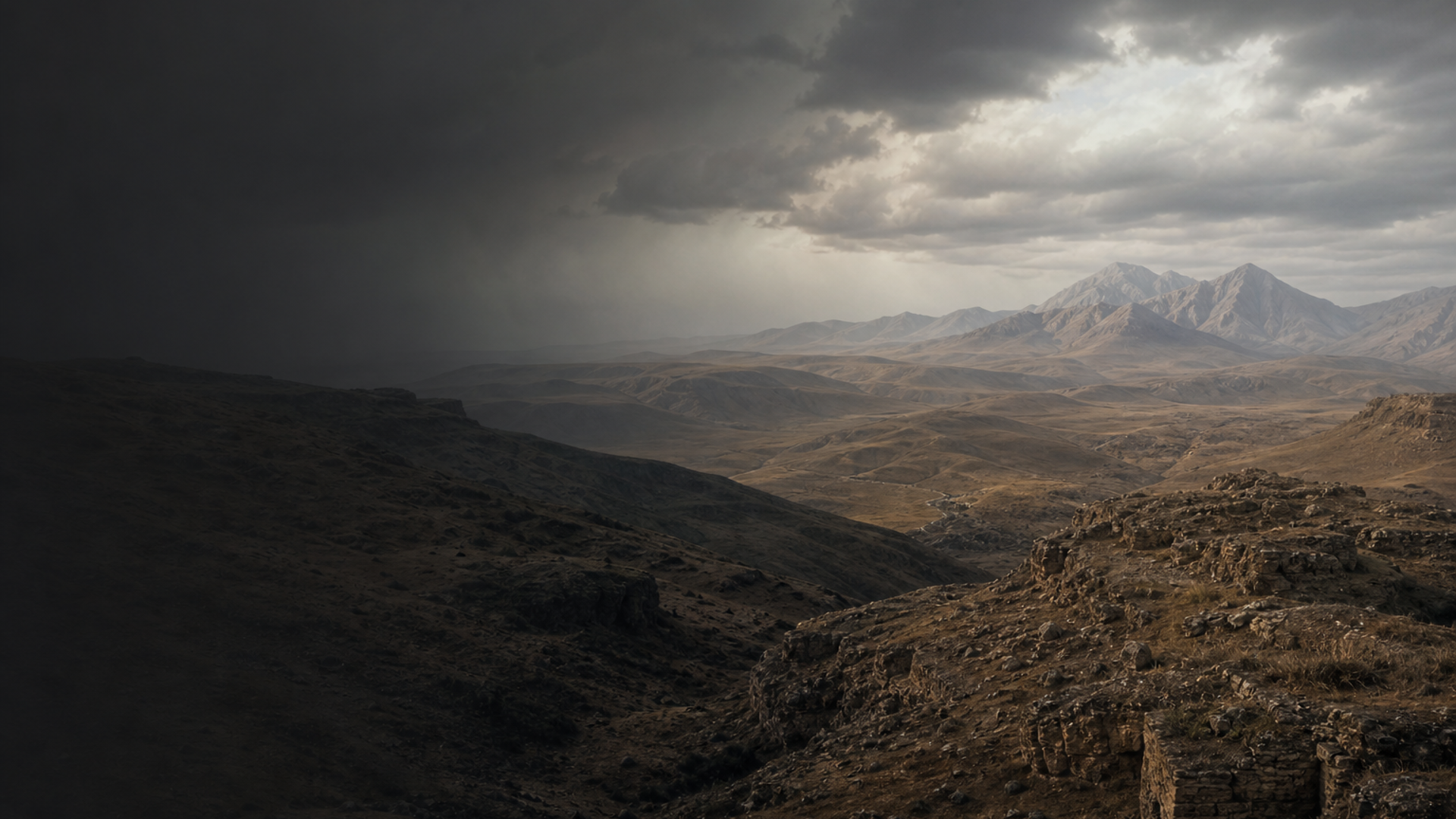
The Armenia_MBA cluster represents human stories carved into the terraces and cemeteries of the Armenian highlands during the Middle Bronze Age. Centred on sites such as Katnaghbiur 1, Tavshut, Keti, the Karashamb cemetery, Dzori Gekh and Nerquin Getashen, these occupants lived between roughly 2127 and 1211 BCE—a time of intensified metallurgy, mobile herding, and long-distance exchange across the South Caucasus.

Archaeological data indicates continuity with earlier Chalcolithic and Early Bronze Age traditions in pottery styles, burial rites, and settlement organization, while also showing new influences: bronze metallurgy becomes more widespread; exotic raw materials and finished goods point to links with Anatolia, the Levant and the northern steppe. Grave orientations, funerary goods and cemetery layouts vary by locality, suggesting diverse social practices within a shared landscape.

Limited evidence suggests that this was a mosaic of interacting communities rather than a single homogeneous polity. The nine genomes sampled so far provide tantalizing glimpses of biological ancestry layered onto this cultural complexity. Given the small sample count, genetic inferences are provisional: they invite hypotheses about local continuity and external contacts but require broader sampling to confirm population-level patterns.

  • Occupation across multiple highland sites, c. 2127–1211 BCE
  • Material culture shows both local continuity and interregional exchange
  • Evidence points to a mosaic of communities, not a single polity

Daily Life & Society

Life in Middle Bronze Age Armenia unfolded amid terraced fields, pastoral highlands and emerging metallurgical centers. Archaeological excavations at Karashamb cemetery reveal richly furnished burials with bronze implements, pottery and personal ornaments—material traces of social differentiation and craft specialization. Settlement remains at Keti and Tavshut show compact domestic architecture, storage pits and hearths, suggesting mixed farming, animal husbandry and household production.

Seasonal mobility was likely important: faunal remains and isotopic studies from comparable regional sites indicate herding of sheep, goats and cattle alongside cereal cultivation. Bronze production—small ingots, slag and finished tools—points to skilled metalworkers who tapped regional networks for copper and tin. Exchange routes running between Anatolia, Mesopotamia and the Pontic-Caspian steppe carried objects, raw materials and ideas; ceramic parallels and exotic artifacts in Armenian contexts attest to these connections.

Burial practice varied: single and grouped interments, differential grave goods and use of cemeteries such as Karashamb and Nerquin Getashen reflect complex social identities. Archaeological data indicates that ritual, status and kinship were expressed materially, but the fragmentary record means many social dynamics remain obscure.

  • Mixed farming and pastoralism with increased metallurgy
  • Varied burial rites indicating social differentiation

Genetic Profile

Nine Middle Bronze Age genomes from Armenian sites (Katnaghbiur 1; Tavshut; Keti; Karashamb Cemetery; Dzori Gekh; Nerquin Getashen) provide a snapshot of ancestry across c. 2127–1211 BCE. Maternal lineages among these samples are dominated by haplogroups T (4), K (2), and U (2), with one HV. These mtDNA types are widely observed across Neolithic and Bronze Age West Asia and southeastern Europe, suggesting substantial mitochondrial continuity with earlier farming populations and sustained connections to Anatolia and the Near East.

Y-chromosome diversity in this small set shows haplogroups E (2) and R (1). The presence of E-lineages in the Caucasus Bronze Age record can reflect links to Near Eastern or eastern Mediterranean male lineages, while R-lineages are often associated with broader West Eurasian and steppe-related ancestries. Interpreting sex-biased processes (for example, male-mediated influxes layered onto local maternal continuity) is tempting, but the sample count is small.

Because only nine genomes are available, all genetic interpretations are preliminary. The pattern of diverse maternal haplogroups with a few distinct paternal lineages is consistent with models of regional continuity punctuated by periodic inflows of people or lineages. More genome-wide data and larger sample sizes are needed to resolve the timing, direction and magnitude of these admixture events and to test links with contemporaneous groups in Anatolia and the steppe.

  • mtDNA dominated by T, K, U, HV—suggesting regional maternal continuity
  • Y-DNA shows E and R—indicative of mixed paternal influences; conclusions are preliminary

Legacy & Modern Connections

The Armenia_MBA assemblage sits at a cultural crossroads whose echoes reach into later Iron Age polities and the genetics of modern populations. Several mitochondrial haplogroups found among these nine individuals (T, K, U) persist in present-day Armenians and neighboring groups, supporting archaeological arguments for deep maternal continuity in the highlands. Material traditions—metallurgy, textile production and caravan exchange—laid infrastructural and social foundations that later states adapted and transformed.

Caution is essential: nine samples cannot trace direct ancestry lines to modern populations, but they do illuminate the tapestry of ancestries present in the Middle Bronze Age. Future, broader sampling will clarify how these Bronze Age communities contributed to the genetic and cultural landscape of the Caucasus and beyond, and how episodic migrations and enduring local traditions together shaped the region's long history.

  • Maternal haplogroups seen today suggest some continuity with modern populations
  • Cultural practices (metallurgy, trade) influenced later regional developments

Asistente de IA

Asistente de IA por DNAGENICS

Desbloquear esta función
Pregunta sobre la cultura Voices of the Armenian Middle Bronze. El asistente con IA puede explicar hallazgos genéticos, contexto histórico, pruebas arqueológicas y conexiones modernas, con sus límites de interpretación.
Ejemplo de análisis con IA

La cultura Voices of the Armenian Middle Bronze representa un capítulo de la historia humana...

El análisis genético permite estudiar similitudes con poblaciones anteriores y posibles adaptaciones. Las muestras de ADN antiguo aportan información para investigar patrones migratorios y relaciones entre poblaciones, con límites que dependen del estudio y del contexto arqueológico.

Esta es una vista previa del análisis con IA. Accede al asistente completo para explorar información sobre:

  • Composición y similitud genética
  • Patrones migratorios y orígenes
  • Vida cotidiana y prácticas culturales
  • Contexto genético moderno