Preparando el informe

Cargando la información y las referencias disponibles

Consultando el registro arqueológico...

Recopilando registros antiguos

Saltar al contenido principal
Yellow River: Xiaowu–Wanggou Neolithic
Cultura destacada

Yellow River: Xiaowu–Wanggou Neolithic

Eight Middle Neolithic individuals from Henan illuminate early Yellow River lifeways and genetics.

5302 CE - 3050 BCE
Henan, Yellow River basin (China)
Desplázate para empezar
Capítulo I

La historia

Comprender la cultura Yellow River: Xiaowu–Wanggou Neolithic

Archaeogenetic and archaeological data from eight individuals (5302–3050 BCE) at Xiaowu and Wanggou in Henan reveal a Middle Neolithic Yellow River community tied to millet farming and East Asian maternal lineages; conclusions are preliminary given small sample size.

Time Period

5302–3050 BCE

Region

Henan, Yellow River basin (China)

Common Y-DNA

Q (1), O (1) — low N=8

Common mtDNA

D, F1, B, M, C (each observed; low N=8)

Capítulo II

Cronología

Momentos clave de la historia de esta cultura

5302 BCE

Earliest sampled individual

One of the sampled individuals dates to ~5302 BCE, anchoring the assemblage in the early Middle Neolithic Yellow River period.

Capítulo III

Origins & Emergence

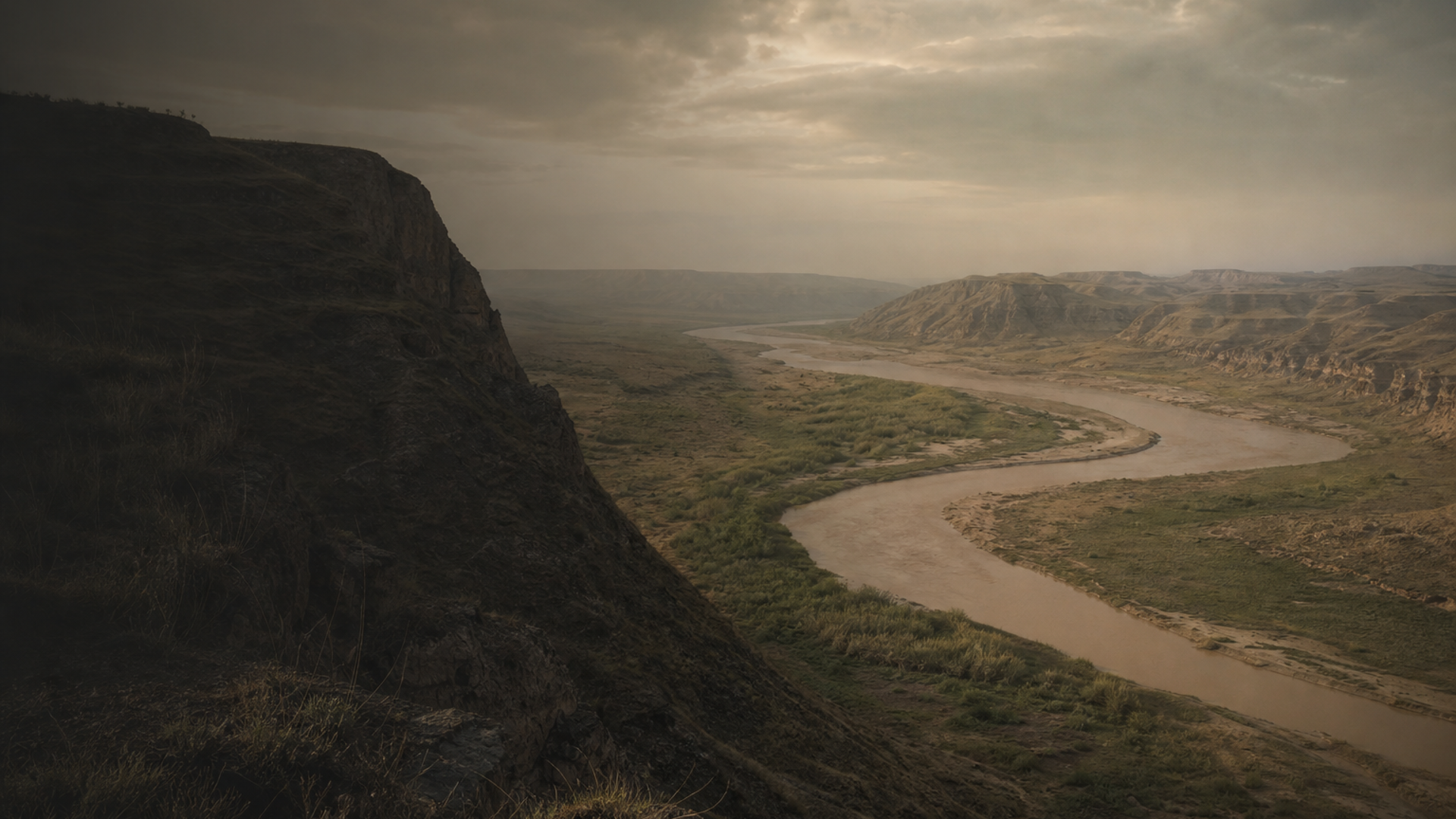
Beneath the loess-swept terraces of central Henan, at the Xiaowu site (Lingbao) and Wanggou site (Yingyang), people of the Middle Neolithic Yellow River world planted the first pale rows of millet and shaped clay into vessels that held seasonally harvested grain. Radiocarbon dates associated with the sampled individuals range from 5302 to 3050 BCE, placing them squarely in a period of increasing sedentism and regional cultural florescence.

Archaeological data indicates these communities participated in a mosaic of local traditions: earthen architecture, a diversity of pottery styles, and variable burial treatments. The sites lie along tributaries feeding the Yellow River, landscapes that encouraged mixed foraging and cultivation. Limited evidence suggests the social networks that connected communities across the basin were dynamic, with material traits exchanged along river corridors.

While the cinematic sweep of terraces, pits and hearths can evoke a coherent cultural horizon, the archaeological record is patchy. The eight individuals sampled provide windows into this past, but they cannot alone reveal the full range of variation across space and time. Ongoing excavation and future aDNA sampling will be essential to sharpen these origins narratives.

  • Sites: Xiaowu (Lingbao city) and Wanggou (Yingyang county), Henan province
  • Dates: 5302–3050 BCE (Middle Neolithic, Yellow River)
  • Evidence for early millet cultivation, pottery, and varied mortuary practices
Capítulo IV

Daily Life & Society

In the hush of prehistoric villages, daily life revolved around seasonal rhythms and riverine resources. Archaeological assemblages from the broader Middle Neolithic Yellow River region indicate a reliance on foxtail and broomcorn millet, supplemented by wild foods, freshwater fish and domesticates such as pigs. Houses were likely timber or wattle-and-daub on earthen floors; hearths and storage pits imply year-round occupation and planned food storage.

Pottery—both utilitarian and finely finished—served as mobile canvases for cooking and ritual. Burials recovered regionally show diversity in body position, grave goods, and clustering, suggesting households and kin groups with varying social roles. Craft specialization appears emergent: more elaborate ceramics and possible bone or shell ornaments point to skilled makers whose products circulated within the valley.

Archaeological data indicates that landscapes were managed actively: fields, pathways and possibly simple irrigation or drainage modifications. Yet the scale and organization of production remain partially obscured by limited excavation coverage in Henan. The human traces we do have create a cinematic tableau of everyday resilience, seasonal labor and intimate ties to the river.

  • Economy: millet agriculture supplemented by fishing, foraging, and animal husbandry
  • Material culture: pottery, possible craft specialists, varied burial practices
Capítulo V

Genetic Profile

Ancient DNA from eight individuals at Xiaowu and Wanggou gives a preliminary genetic portrait of a Middle Neolithic Yellow River community. Y-chromosome markers were identified as Q (1 individual) and O (1 individual). Mitochondrial haplogroups observed include D, F1, B, M and C (one instance each reported). These mtDNA lineages are broadly characteristic of East Asian and northern East Asian maternal diversity.

Haplogroup O is a major East Asian paternal lineage today and its presence, even as a single count here, is consistent with regional continuity of East Asian Y-lineages. Haplogroup Q occurs across northern Eurasia and is ancestral to lineages found in Siberia and, ultimately, the Americas; its detection in one individual suggests pockets of northern-associated diversity or contacts, but with so few Y-chromosome observations firm conclusions are premature.

The mtDNA diversity—D, F1, B, M and C—aligns with expectations for Neolithic populations of the Yellow River basin. These maternal markers suggest connections to broader East Asian maternal pools rather than to a single isolated lineage. Crucially, the total sample size is only eight: fewer than 10 samples. Limited evidence suggests patterns, but the small N makes population-level inferences tentative. Future wider sampling and genome-wide data will be necessary to resolve ancestry, admixture, and continuity with later populations.

  • Y-DNA: Q (1), O (1) — limited paternal sampling (N=8)
  • mtDNA: D, F1, B, M, C observed — maternal lineages consistent with East Asian diversity
Capítulo VI

Legacy & Modern Connections

The genetic signals from Xiaowu and Wanggou shimmer like river reflections: suggestive of continuity yet distorted by time. Maternal haplogroups found here (D, F1, B, M, C) persist in varying frequencies among modern East Asian populations, which hints at long-term demographic threads tying Neolithic residents of the Yellow River to later groups. The presence of Y-haplogroup O aligns with a broader pattern of paternal continuity in East Asia, while the single instance of Q raises questions about regional diversity and distant contacts.

Archaeologically, the lifeways documented—millet cultivation, pottery traditions, and settled villages—contribute to cultural foundations that underlie later Bronze Age societies in northern China. Genetic continuity is plausible but not assured; demographic turnovers, migrations and local admixture events occurred repeatedly over millennia. Given the very small sample set (eight individuals), any direct linkage to modern populations must be framed as provisional and subject to refinement as more data becomes available.

  • Some mtDNA lineages mirror modern East Asian diversity, suggesting partial continuity
  • Small sample size means connections to later populations remain tentative
Con IA

Asistente de IA

Haz preguntas sobre la cultura Yellow River: Xiaowu–Wanggou Neolithic

Asistente de IA por DNAGENICS

Desbloquear esta función
Pregunta sobre la cultura Yellow River: Xiaowu–Wanggou Neolithic. El asistente con IA puede explicar hallazgos genéticos, contexto histórico, pruebas arqueológicas y conexiones modernas, con sus límites de interpretación.
Ejemplo de análisis con IA

La cultura Yellow River: Xiaowu–Wanggou Neolithic representa un capítulo de la historia humana...

El análisis genético permite estudiar similitudes con poblaciones anteriores y posibles adaptaciones. Las muestras de ADN antiguo aportan información para investigar patrones migratorios y relaciones entre poblaciones, con límites que dependen del estudio y del contexto arqueológico.

Esta es una vista previa del análisis con IA. Accede al asistente completo para explorar información sobre:

  • Composición y similitud genética
  • Patrones migratorios y orígenes
  • Vida cotidiana y prácticas culturales
  • Contexto genético moderno

Explora más culturas antiguas

Descubre la historia de civilizaciones de distintas partes del mundo antiguo