Saltar para o conteúdo principal
mtDNA · Materno linaje

HV0E

mtDNA Haplogroup HV0E

Um perfil de referência de um ramo de linhagem. Compartilhar haplogrupos não demonstra uma relação familiar ou uma identidade cultural.

Perfil de Referência

Contexto do ramo

Contexto histórico de la rama de linaje mtDNA HV0E

Origins and Evolution

mtDNA haplogroup HV0E is a derived branch of the HV0 node, itself a West Eurasian lineage that emerged near the end of the Last Glacial Maximum and during the Late Glacial / Epipaleolithic period. Based on the phylogenetic position of HV0E as a subclade of HV0 and observed sequence diversity, HV0E plausibly originated in the Near East or adjacent western Asia around the late glacial to early Holocene (on the order of ~13 kya). This timing and location are consistent with HV0's broader pattern of having a refugial and postglacial expansion history, with later exchange between Mediterranean Europe and the Near East/Caucasus.

Subclades

HV0E is reported as a relatively rare and low-diversity subclade within the HV0 assemblage in modern databases and in ancient samples. Where HV0 and its immediate branches (including lineages that gave rise to haplogroup V) show clearer Mesolithic and early Neolithic footprints, HV0E appears as one of several geographically scattered derivatives. At present, HV0E has few deeply sampled downstream subclades in public phylogenies; many records represent basal or near-basal HV0E types rather than a rich internal branching structure. Continued sequencing of mitogenomes from the Near East, the Caucasus, Iberia and ancient contexts could resolve internal structure further.

Geographical Distribution

HV0E occurs at low to moderate frequencies across a band stretching from the Near East and Caucasus into Mediterranean Europe, with sporadic detections in northern Europe and North Africa. Modern and ancient occurrences suggest a concentration of basal HV0 lineage diversity in Anatolia, the Levant and the Caucasus (supporting an origin there), followed by postglacial dispersal into southern and western Europe (notably Iberia and other parts of the Mediterranean). In northern Europe HV0E is uncommon; related HV0-derived lineages (notably haplogroup V) have stronger representation among certain northern populations and groups with Mesolithic ancestry (e.g., some Saami and other coastal/northern populations). Low-frequency occurrences in North Africa and South/Central Asia likely reflect both prehistoric Mediterranean exchanges and later historic movements.

Historical and Cultural Significance

The phylogeographic pattern of HV0E is aligned with broader themes in West Eurasian maternal history: Late Glacial refugia, postglacial recolonization of Europe, and early Holocene farmer-hunter-gatherer interactions. HV0E's presence in archaeological samples (appearing in multiple ancient DNA instances) indicates that it contributed—albeit at low frequency—to maternal gene pools during the Mesolithic–Neolithic transition and later prehistory. Associations with archaeological cultures are indirect: HV0E fits the pattern of lineages that existed in refugial or near-refugial populations and were carried into Europe both in Mesolithic expansions and through contacts with early farmers from Anatolia and the Near East; later low-frequency transmission into North Africa and Central Asia is parsimoniously explained by Mediterranean and transregional mobility in prehistoric and historic times.

Conclusion

HV0E is a geographically informative but relatively rare mtDNA subclade whose distribution traces important episodes of West Eurasian prehistory — Late Glacial origin in the Near East/Western Asia, postglacial entry into parts of Europe (with particular signals in Mediterranean regions), and ongoing low-level gene flow across the Near East–Europe–North Africa corridor. Its rarity and patchy sampling mean that expanded mitogenome surveys and more ancient samples are needed to fully resolve its internal structure and finer-scale demographic history.

Pontos- Chave

  • Origins and Evolution
  • Subclades
  • Geographical Distribution
  • Historical and Cultural Significance
  • Conclusion
Perfil de Referência

Árvore e relações

Contexto filogenético e subclasse

Trajectória evolutiva

Sigue las ramas superiores registradas hasta HV0E. Las fechas son estimaciones y pueden cambiar al revisarse los datos de referencia.

Passos Haplogrupo Antiguidade estimada Época arqueológica Tempo decorrido Subclasses imediatas Portadores modernos analisados Referências antigas
1 HV0E Actual ~13,000 years ago Mesolithic 13,000 years 0 10 10
2 HV0A ~12,000 years ago Neolithic 12,000 years 5 48 68
3 HV0 ~17,000 years ago Mesolithic 17,000 years 3 115 0
4 HV ~30,000 years ago Paleolithic 30,000 years 14 11,092 228
5 R0 ~15,000 years ago Mesolithic 15,000 years 2 11,230 4
6 R ~55,000 years ago Paleolithic 55,000 years 17 22,830 57
7 NA - - - 1 22,830 0
8 N ~60,000 years ago Paleolithic 60,000 years 16 26,150 13
9 L3 ~70,000 years ago Paleolithic 70,000 years 7 30,162 6
10 L3'4 - - - 2 30,212 0
11 L3'4'6 - - - 2 30,216 0
12 L2'3'4'6 - - - 2 31,333 0
13 L2'3'4'5'6'7 - - - 2 31,349 0
14 L1'2'3'4'5'6'7 - - - 2 31,852 0
15 L ~160,000 years ago Paleolithic 160,000 years 2 32,236 5

Subclados (0)

Rama terminal: não há subclasses registrados

Ramas hermanas (4)

Outros ramos do mesmo haplogrupo superior

Perfil de Referência

No mundo

Distribuição geográfica e presença moderna

Origem registada

Near East / Western Asia

Distribuição moderna

The populations where mtDNA haplogroup HV0E is found include:

  1. Western and Southern European populations (notably Iberia and parts of Mediterranean Europe)
  2. Northern European populations, including coastal Scandinavia and groups such as the Saami (via related HV0/V lineages)
  3. Near Eastern populations (Anatolia, the Levant, and the Caucasus) carrying basal HV0E lineages
  4. North African populations at low to moderate frequencies (reflecting prehistoric and historic gene flow)
  5. Central and South Asian populations at low frequencies (sporadic presence through long-range contacts and migrations)
Contexto Histórico

Uma ramificação através do tempo

Formação estimada em uma cronologia histórica ampla. Os marcadores temporais contribuem contexto e não implicam relação com culturas concretas.

  1. ~13k años de antigüedad

    Haplogrupo HV0E

    Formação estimada deste ramo mtDNA; as datas e localizações são estimativas de referência.

    Este ramo
  2. ~10k años de antigüedad

    Revolução neolítica

    Início da agricultura e formação de comunidades sedentárias

  3. ~5k años de antigüedad

    Idade do Bronze

    Metalurgia, escrita e primeiras civilizações

  4. ~3k años de antigüedad

    Idade do Ferro

    Ferramentas de ferro e ampliação de redes comerciais

  5. ~2.5k años de antigüedad

    Antiguidades clássicas

    Desenvolvimento das civilizações grega e romana

  6. Actualidad

    Actualidad

    Idade moderna

Perfil de Referência

Contexto arqueológico

Asociaciones arqueológicas registradas para la rama mtDNA HV0E

Associações registradas

Esses rótulos descrevem os contextos arqueológicos registrados para as amostras de referência vinculadas a HV0E. Uma associação não demonstra que todos os portadores pertenceram a uma cultura ou seguiram uma rota migratória específica.

Avar Culture Cardial Culture Croatian Bronze Age Croatian Bronze-Iron Transition Croatian Iron Age Croatian Middle Bronze Age French Early Neolithic Linear Pottery Culture Maros Venosa
As atribuições culturais baseiam-se no contexto arqueológico das amostras de DNA antigo e podem representar associações regionais de períodos concretos.
Perfil de Referência

Catálogo de amostras

10 portadores directos del haplogrupo HV0E

10 mostradas 10 amostras correspondentes

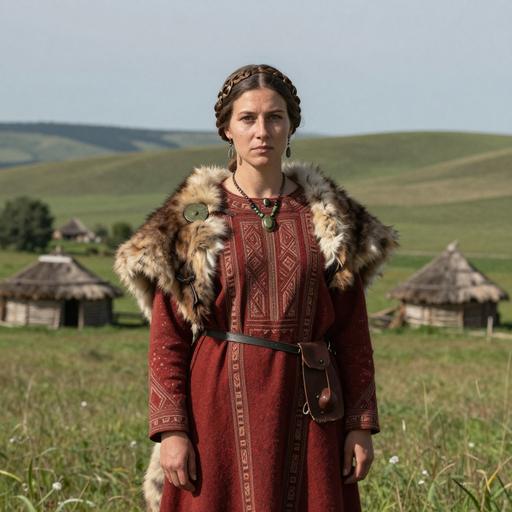
Os retratos são ilustrações geradas com IA. As etiquetas de amostra e os identificadores de acesso identificam os registros de referência.

Retrato Mostrar País Época Data Cultura mtDNA Corresponder
Retrato ilustrativo de Basilicata Late Antiquity Roman individual, Basilicata. Potenza. Venosa, Italy (600-800 CE) gerado com IA
Identificador de amostra: VEN005
Italy Basilicata Venosa Culture 600-800 CE Venosa HV0e Direct
Retrato ilustrativo de Late Avar-o Low East Asia individual, Rákóczifalva-Bagi-földek (Jász-Nagykun-Szolnok Coiunty, Szolnok), Hungary (650-900 CE) gerado com IA
Identificador de amostra: RKF162
Hungary Hungary LateAvar 650-900 CE Avar Culture HV0e Direct
Retrato ilustrativo de Late Avar-o Low East Asia individual, Csongrád-Csanád County. Pitvaros-Víztározó, Hungary (661-877 CE) gerado com IA
Identificador de amostra: PV-12
Hungary Hungary LateAvar 661-877 calCE (1269±44 BP, Deb-8032) Avar Culture HV0e Direct
Retrato ilustrativo de Late Avar-o Low East Asia individual, Hajdú-Bihar County. Árkus-Homokbánya, Hungary (700-800 CE) gerado com IA
Identificador de amostra: ARK-17
Hungary Hungary LateAvar 700-800 CE Avar Culture HV0e Direct
Retrato ilustrativo de LBA EIA individual, Jazinka Cave, Croatia (800-600 BCE) gerado com IA
Identificador de amostra: I26742
Croatia Croatia LBA EIA 800-600 BCE Croatian Bronze-Iron Transition HV0e Direct
Retrato ilustrativo de EIA individual, Osor-St. Peter, Croatia (850-750 BCE) gerado com IA
Identificador de amostra: I24883
Croatia Croatia EIA 850-750 BCE Croatian Iron Age HV0e Direct
Retrato ilustrativo de LBA EIA individual, Velim-Kosa, Croatia (1,500-400 BCE) gerado com IA
Identificador de amostra: I24345
Croatia Croatia LBA EIA 1500-400 BCE Croatian Bronze-Iron Transition HV0e Direct
Retrato ilustrativo de MLBA individual, Bezdanjača Cave, Croatia (1,500-800 BCE) gerado com IA
Identificador de amostra: I18724
Croatia Croatia MLBA 1500-800 BCE Croatian Bronze Age HV0e Direct
Retrato ilustrativo de MBA Cetina individual, Cetina Valley, Croatia (2,000-1,600 BCE) gerado com IA
Identificador de amostra: I18745
Croatia Croatia MBA Cetina 1700-1500 BCE Croatian Middle Bronze Age HV0e Direct
Retrato ilustrativo de EBA Maros-o Aegean individual, North Banat District. Kikinda. Mokrin Necropolis, Serbia (2,100-1,800 BCE) gerado com IA
Identificador de amostra: MOK31
Serbia The Maros Culture in Serbia 2100-1800 BCE Maros HV0e Direct
MATERNAL LINHAGEM · DNA ANTIGO

Mapa de testes de linhagems antigos

Siga os clados superiores até este ramo e explora onde se encontraram portadores antigos.

A carregar as observações antigas...

Os marcadores são locais de achados arqueológicos. Uma linha de descontínua representa uma transição geográfica proposta e incerta entre ramos consecutivos, apoiada em várias observações fechadas; não é uma rota de viagem exata, um local de nascimento ou um teste de descendência direta. As amostras do clado parental podem pertencer a outros ramos descendentes. As datas das amostras são distintas das datas de formação dos haplogrupos são mantidas.

Perfil de Referência

Mapa de distribuição de portadores

Distribuição geográfica das amostras de DNA antigo (10), portadores directos ou de subclasses de HV0E

Portador directo
Filtro de Período Temporária
Todos os períodos
Mostrar todas as amostras
Perfil de Referência

Distribuição temporária

Distribuição de portadores por períodos arqueológicos

Perfil de Referência

Distribuição geográfica

Recuentos por país registrado das amostras. Reflejam a seleção de referência disponível, não frequências de população.

Perfil de Referência

Distribuição por país e época

Compare as contagens de amostras registadas por países e períodos arqueológicos. Selecione uma célula com dados para examinar uma amostra.

Dados

Dados e proveniência

Informações sobre fontes e qualidade dos dados

Última actualização 2026-02-16
Pontuação de confiança 50/100
Cobertura Low

Fonte de Dados

A classificação, as datas estimadas e o contexto geográfico refletem os dados de referência registrados e podem mudar ao revisar os testes. A cobertura de amostras é desigual; os locais registrados e as associações arqueológicas não estabelecem a origem pessoal nem a identidade cultural.