A preparar o relatório

A carregar as informações e as referências disponíveis

Consultando el registro arqueológico...

Recopilando registros antiguos

Saltar para o conteúdo principal
Arroyo Seco II: Pampas Foragers
Cultura de destaque

Arroyo Seco II: Pampas Foragers

A glimpse of early Holocene life on the Argentine Pampas through stones and genomes

7010 CE - 5350 BCE
Arroyo Seco II, Buenos Aires province, Argentina
Desplázate para começar
Capítulo I

A História

Comprender la cultura Arroyo Seco II: Pampas Foragers

Archaeological and genetic data from Arroyo Seco II (Argentina) illuminate hunter–gatherer groups active between 7010–5350 BCE. Small-sample ancient DNA (n=5) shows predominant Y haplogroup Q and diverse maternal lineages, offering tentative links between material culture and population history.

Time Period

7010–5350 BCE

Region

Arroyo Seco II, Buenos Aires province, Argentina

Common Y-DNA

Q (4/5)

Common mtDNA

C1b (2), D1 (1), A2 (1), D1g (1)

Capítulo II

Cronologia

Momentos-chave da história desta cultura

7010 BCE

Earliest documented occupation at site

Radiocarbon evidence indicates human activity at Arroyo Seco II beginning around 7010 BCE, marked by hearths and lithic debris.

5350 BCE

Later Holocene occupations

Continued, intermittent use of Arroyo Seco II until approximately 5350 BCE, reflecting long-term use of Pampean landscapes.

Capítulo III

Origins & Emergence

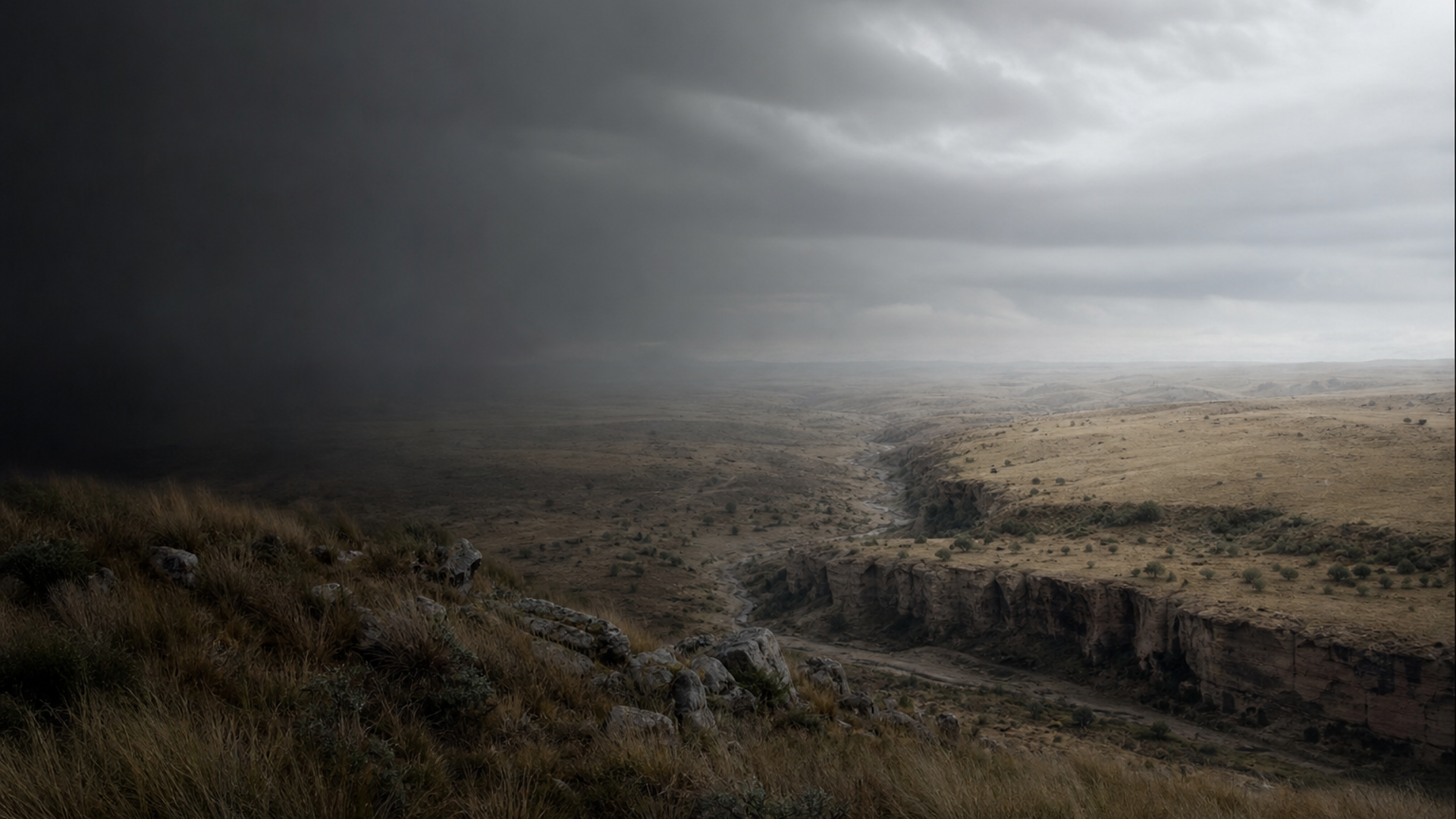
Along the flat horizons of the Argentine Pampas, Arroyo Seco II stands as a quiet archive of early Holocene life. Radiocarbon-dated contexts spanning roughly 7010–5350 BCE indicate repeated, seasonal occupations by mobile foragers. Archaeological data indicates hearths, flaked stone tools and fragmented faunal remains, suggesting a landscape of hunting, processing and transient camps rather than dense sedentary villages.

Geographically, these occupations belong to broader southern South American forager traditions that exploited open grasslands after the Late Pleistocene environmental shifts. Limited evidence suggests technological continuity in low-profile lithic toolkits adapted to a mixed diet of small and medium mammals and plants. The picture that emerges is one of small groups moving across the Pampas, occupying river margins and drainages such as Arroyo Seco II to exploit seasonal resources.

Because excavations at Arroyo Seco II produce a modest number of well-dated contexts, interpretations must remain cautious. The archaeological signal is consistent with dispersed, adaptable hunter–gatherers shaping a lifeway tuned to postglacial landscapes, but finer details of social organization and long-distance interaction remain incompletely resolved.

  • Occupations dated c. 7010–5350 BCE at Arroyo Seco II
  • Evidence: hearths, flaked stone tools, faunal remains
  • Mobile, seasonal foraging in open Pampas landscapes
Capítulo IV

Daily Life & Society

Life at Arroyo Seco II can be imagined as a rhythm of movement and small-scale social gatherings. People likely organized into small bands that moved between hunting grounds, raw-material sources, and ephemeral camps. Archaeological finds point toward task-specific loci: knapping areas where flakes scatter like flint confetti, hearths that concentrated food processing, and discrete spots yielding bone fragments and burned residues.

Seasonality would have structured activities—periods of concentrated hunting or mass-processing when herds passed through, and leaner times focused on root and plant gathering. Material culture appears utilitarian and efficient, with tools designed for cutting, scraping and projectile manufacture. Social practices such as sharing meat, exchanging raw materials, and episodic gatherings for information and mate exchange are plausible but remain indirect in the record.

Burial behavior and symbolic expression at Arroyo Seco II are not yet well documented in ways that allow broad claims. The human stories here are best read as dynamic and pragmatic: small communities adapting to shifting resources, using intimate ecological knowledge to survive and flourish across centuries.

  • Small, mobile bands exploiting seasonal resources
  • Task-specific activity areas: knapping, hearths, processing
Capítulo V

Genetic Profile

Arroyo Seco II contributes a small but valuable ancient DNA series (n=5) spanning the early to mid-Holocene. Four of the five male-line samples carry Y-chromosome haplogroup Q, a lineage widespread among Indigenous peoples of the Americas and consistent with deep Pleistocene–Holocene population histories across South and North America. On the maternal side, mitochondrial diversity includes C1b (2 individuals), D1 (1), A2 (1) and D1g (1), reflecting the broad palette of founding Native American maternal lineages.

These genetic signatures align with archaeological expectations for early South American foragers: continuity of founding American lineages rather than incoming Eurasian input. However, sample size is small (<10), so population-level inferences must be treated as preliminary. The predominance of Y haplogroup Q here (4/5) suggests paternal continuity within the local groups sampled, while multiple mtDNA haplogroups point to maternal diversity—patterns that could reflect marriage networks, patrilocal residence, or simply stochastic sampling.

When placed within regional datasets, Arroyo Seco II genomes help anchor a Pampas-specific genetic snapshot during the Holocene. Combined genetic and isotopic studies may further reveal diet, mobility and kinship, but current conclusions remain cautious pending larger samples and broader contextual data.

  • Y-DNA dominated by haplogroup Q (4 of 5 samples)
  • mtDNA shows C1b, D1, A2, and D1g — indicative of founding American lineages
Capítulo VI

Legacy & Modern Connections

The genetic and archaeological traces left at Arroyo Seco II reverberate into the present as part of the deep history of Indigenous peoples in the southern cone. Maternal and paternal lineages found at the site belong to clades that persist, in various forms, among modern Indigenous groups across South America, underscoring long-term continuity in the region.

At the same time, the story is not a simple line of descent: migration, local demographic shifts and cultural transformations have reshaped populations over millennia. Given the small ancient sample size from Arroyo Seco II, any direct claim connecting these individuals to specific contemporary communities must be made with caution and in consultation with Indigenous stakeholders. Nonetheless, the site provides a cinematic window—stone, bone and genome—into how early Holocene people lived on the Pampas and contributed to the genetic mosaic of South America.

  • Ancient lineages correspond to founding Native American clades still present regionally
  • Small sample size requires cautious interpretation and community engagement
Com IA

Assistente de IA

Haz preguntas sobre la cultura Arroyo Seco II: Pampas Foragers

Assistente de IA por DNAGENICS

Desbloquear esta função
Pregunta sobre la cultura Arroyo Seco II: Pampas Foragers. El asistente con IA puede explicar hallazgos genéticos, contexto histórico, pruebas arqueológicas y conexiones modernas, con sus límites de interpretación.
Exemplo de análise com IA

La cultura Arroyo Seco II: Pampas Foragers representa un capítulo de la historia humana...

A análise genética permite estudar semelhanças com populações anteriores e possíveis adaptações. As amostras de DNA antigo fornecem informações para investigar padrões migratórios e relações entre populações, com limites que dependem do estudo e do contexto arqueológico.

Esta é uma antevisão da análise com IA. Aceder ao assistente completo para explorar informações sobre:

  • Composição e similaridade genética
  • Padrões migratórios e origens
  • Vida cotidiana e práticas culturais
  • Contexto genético moderno

Explore mais culturas antigas

Descubra a história de civilizações de diferentes partes do mundo antigo