A preparar o relatório

A carregar as informações e as referências disponíveis

Consultando el registro arqueológico...

Recopilando registros antiguos

Saltar para o conteúdo principal
Axes at Dawn: Sweden's Battle Axe People
Cultura de destaque

Axes at Dawn: Sweden's Battle Axe People

Late 3rd‑millennium BCE communities in Sweden revealed by graves at Bergsgraven and Olljso

2859 CE - 2467 BCE
Sweden (Bergsgraven, Olljso)
Desplázate para começar
Capítulo I

A História

Comprender la cultura Axes at Dawn: Sweden's Battle Axe People

Genetic and archaeological traces from three Sweden_BAC burials (c. 2859–2467 BCE) illuminate the local expressions of the Battle Axe tradition in Sweden. Limited samples point to steppe-associated Y haplogroup R and diverse maternal lineages, but conclusions remain preliminary.

Time Period

c. 2859–2467 BCE

Region

Sweden (Bergsgraven, Olljso)

Common Y-DNA

R (limited n=1)

Common mtDNA

U, H1c, N (each n=1)

Capítulo II

Cronologia

Momentos-chave da história desta cultura

2500 BCE

Battle Axe burials in Sweden

Burials dated to c. 2500 BCE at sites like Bergsgraven and Olljso reflect Battle Axe rites combining local traditions with wider Corded Ware influences.

Capítulo III

Origins & Emergence

The Sweden_BAC assemblage belongs to the regional expression of the Battle Axe tradition — the Scandinavian branch of Corded Ware‑related phenomena — that appears in the late 3rd millennium BCE. Archaeological data indicates funerary practices and grave goods that echo transregional Corded Ware styles: single inhumations often accompanied by distinctive battle axes, cord-impressed pottery, and placement in local cemeteries. The two sampled sites, Bergsgraven and Olljso, preserve a sparse but evocative record dated to roughly 2859–2467 BCE.

Material culture suggests cultural connections stretching from the North Sea and Baltic coasts to inland Scandinavia, but the archaeological picture is variegated: some communities adopt new weapon-types and pottery forms while retaining long-standing local traditions of hunting, wood‑working, and coastal resource use. Limited evidence suggests these changes reflect a mixture of social adoption and migration rather than a single, sweeping population replacement.

Caveats: with only three genetic samples, interpretations of large‑scale movements are provisional. Archaeology situates these burials within a broader mosaic of late Neolithic and early Bronze Age transitions in Sweden, where exchange networks, local adaptation, and incoming social models combined to reshape material life on a human scale.

  • Regional variant of the Battle Axe / Corded Ware phenomenon
  • Sites: Bergsgraven and Olljso (Sweden); dated c. 2859–2467 BCE
  • Evidence for both local continuity and new material influences
Capítulo IV

Daily Life & Society

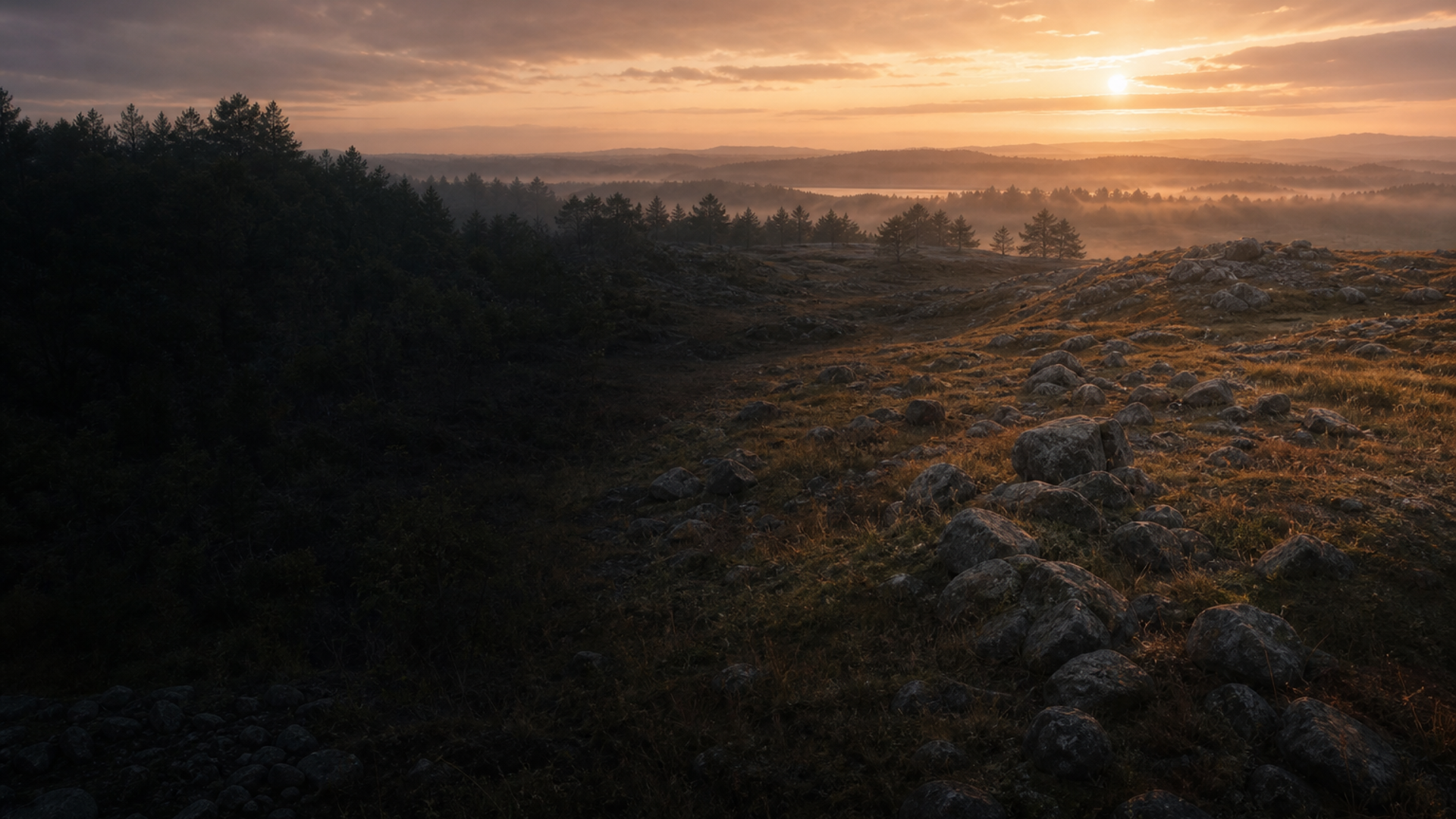
The world these individuals inhabited was a patchwork of pine forests, cultivated clearings, and productive shorelines. Archaeological remains indicate mixed economies: pastoralism (sheep, cattle), small-scale cereal agriculture, and hunting and fishing remained important for subsistence. Battle axes — visible in graves — likely signaled status, martial roles, or membership in new social categories, while decorated pottery and bone tools reflect skilled craft production.

Settlements associated with Battle Axe contexts in Sweden were often small and mobile, favoring ridge-top farms, seasonal camps, and riverine sites that linked inland and coastal resources. Burials themselves are a crucial window: the orientation of bodies, accompanying grave goods, and choice of cemetery space speak to evolving identities and funerary rites. Stone settings and pit graves preserved organic traces in some contexts, but preservation varies across sites, making reconstruction of daily practice uneven.

Social life likely combined kin-based groups with emergent networks of exchange and alliance. Ornamentation of tools and weapons, along with traded raw materials, suggests long-distance ties that brought new ideas and possibly people into the Swedish landscape.

  • Mixed economy: pastoralism, cereals, hunting, and fishing
  • Battle axes in graves indicate shifting social roles and status
Capítulo V

Genetic Profile

Genetic data from the Sweden_BAC set is tantalizing but limited: three individuals dated between 2859 and 2467 BCE from Bergsgraven and Olljso. Y‑chromosome results include haplogroup R (1 individual). Maternal lineages are diverse across the three samples: U (1), H1c (1), and N (1). This pattern shows both affinities seen elsewhere in Corded Ware and Battle Axe contexts and considerable maternal diversity within a tiny dataset.

Steppe‑related ancestry is a hallmark of many Corded Ware‑associated individuals across northern and central Europe; haplogroup R is often associated with those movements, but the subclade and autosomal composition are not specified here. Archaeological DNA studies frequently find mixtures of steppe-derived ancestry with local Neolithic farmer and hunter‑gatherer ancestries in Scandinavia. Given the N=3 sample size, these Sweden_BAC results should be treated as preliminary: they hint at male‑line continuity with broader steppe‑linked patterns and a varied maternal pool, but do not establish population‑level frequencies.

Future sampling with larger numbers, genome‑wide data, and careful contextual integration is required to resolve questions of migration, sex‑biased admixture, and regional demographic change. For now, the genetic snapshot complements archaeology by showing a complex human tapestry at the edge of northern Europe.

  • Small sample (n=3): conclusions are preliminary and tentative
  • Observed haplogroups: Y R (1); mtDNA U, H1c, N (each n=1)
Capítulo VI

Legacy & Modern Connections

The echoes of Sweden_BAC reach into both material culture and genetics. Battle Axe motifs and burial customs contributed to northern Europe's late Neolithic to early Bronze Age transformations, seeding technological and social innovations that would be inherited by later communities. Genetically, broader Corded Ware and Battle Axe phenomena helped introduce steppe‑derived ancestry into Scandinavia, a component that persists in varying degrees among modern northern European populations.

However, durable regional continuity and later Bronze Age movements mean that modern genetic landscapes are palimpsests: present‑day Swe­deners carry layered ancestries formed over millennia. Because the Sweden_BAC dataset is tiny, direct claims of descent from these specific individuals to any living population would be premature. What remains clear is that combining archaeological context with even limited ancient DNA creates a cinematic, humanized narrative — graves at Bergsgraven and Olljso become voices in a longer story of movement, contact, and cultural creativity in prehistoric Sweden.

  • Cultural influences helped shape later Scandinavian Bronze Age developments
  • Genetic signals point to steppe-related input but modern links are complex and layered
Com IA

Assistente de IA

Haz preguntas sobre la cultura Axes at Dawn: Sweden's Battle Axe People

Assistente de IA por DNAGENICS

Desbloquear esta função
Pregunta sobre la cultura Axes at Dawn: Sweden's Battle Axe People. El asistente con IA puede explicar hallazgos genéticos, contexto histórico, pruebas arqueológicas y conexiones modernas, con sus límites de interpretación.
Exemplo de análise com IA

La cultura Axes at Dawn: Sweden's Battle Axe People representa un capítulo de la historia humana...

A análise genética permite estudar semelhanças com populações anteriores e possíveis adaptações. As amostras de DNA antigo fornecem informações para investigar padrões migratórios e relações entre populações, com limites que dependem do estudo e do contexto arqueológico.

Esta é uma antevisão da análise com IA. Aceder ao assistente completo para explorar informações sobre:

  • Composição e similaridade genética
  • Padrões migratórios e origens
  • Vida cotidiana e práticas culturais
  • Contexto genético moderno

Explore mais culturas antigas

Descubra a história de civilizações de diferentes partes do mundo antigo