A preparar o relatório

A carregar as informações e as referências disponíveis

Consultando el registro arqueológico...

Recopilando registros antiguos

Saltar para o conteúdo principal
Beniamin — Hellenistic Armenia
Cultura de destaque

Beniamin — Hellenistic Armenia

A single Hellenistic-period burial from Shirak Province that links archaeology and DNA

156 CE - 1 BCE
Shirak Province, Armenia
1 Amostras antigas
Desplázate para começar
Capítulo I

A História

Comprender la cultura Beniamin — Hellenistic Armenia

A solitary burial from Beniamin (Shirak Province, Armenia) dated 156–1 BCE. Archaeological context offers a rare glimpse into Hellenistic Armenia; DNA data are limited to one individual, so genetic conclusions remain preliminary and suggest continuity with local highland lineages.

Time Period

156–1 BCE

Region

Shirak Province, Armenia

Common Y-DNA

Undetermined (single sample)

Common mtDNA

Undetermined (single sample)

Capítulo II

Cronologia

Momentos-chave da história desta cultura

189 BCE

Artaxiad ascendancy in Armenia

The Artaxiad dynasty consolidates power in the Armenian highlands, shaping a political backdrop to Hellenistic-era life.

156 BCE

Beniamin burial dated

Archaeological context places the sampled burial at Beniamin within 156–1 BCE, providing the temporal anchor for genetic analysis.

Capítulo III

Origins & Emergence

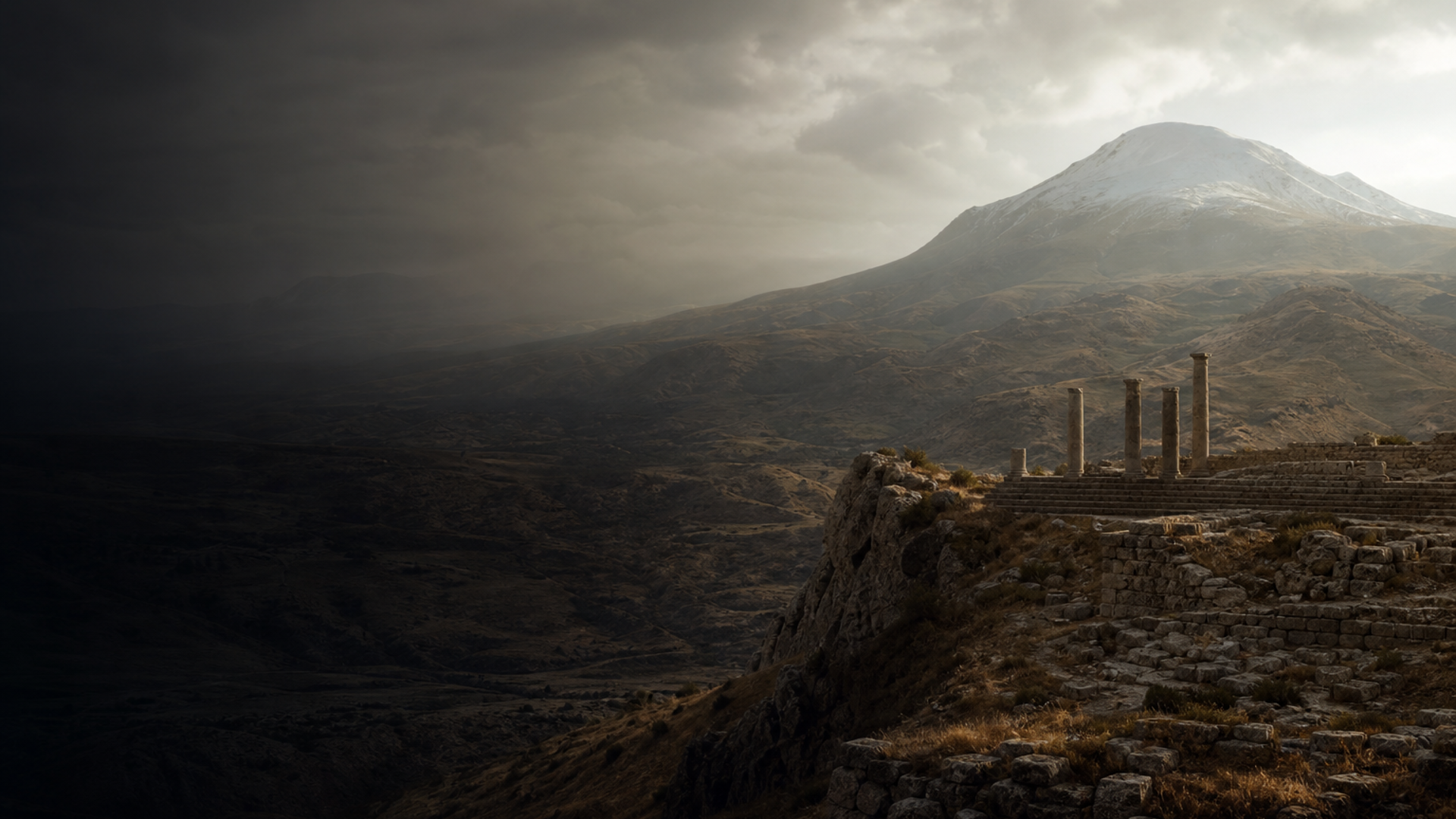
The burial recovered at Beniamin in Shirak Province sits within the continental sweep of the Armenian Highlands during the Hellenistic age — an era when imperial ambitions and local sovereignties braided together. Archaeological data indicate the funerary context dates to 156–1 BCE, placing this individual in the aftermath of the Artaxiad resurgence and amid continuing contact with Seleucid and neighbouring realms.

This landscape was a palimpsest of older Bronze- and Iron-Age traditions layered with Hellenistic motifs introduced through trade, military movement, and elite exchange. Material traces in the region frequently show a mix of local craftsmanship and imported styles, suggesting negotiation between conservative local identities and cosmopolitan influences. Limited evidence from Beniamin itself emphasizes stratigraphic dating and associated finds rather than broad settlement sequences, so we must be cautious extrapolating population dynamics from a single burial.

In cinematic terms: this person occupied a liminal world — geographically anchored in the highlands, yet within a Mediterranean orbit of ideas and objects. Archaeological interpretation therefore frames Beniamin as part of a geographically continuous highland culture that experienced episodic Hellenistic overlay rather than wholesale replacement.

  • Context dated by archaeological association to 156–1 BCE
  • Region shows continuity with Bronze/Iron Age traditions alongside Hellenistic influences
  • Single-site data require cautious, local-scale interpretation
Capítulo IV

Daily Life & Society

Archaeological inference about daily life around Beniamin must be careful given the limited dataset. Nonetheless, material culture across the Shirak region in the Hellenistic era implies agrarian livelihoods in upland valleys, pastoral transhumance on surrounding slopes, and village networks connected by trade routes that funneled goods, ideas, and people.

Settlement archaeology in nearby sites records storage architecture, ceramics with both local and imported forms, and metallurgical objects that speak to craft specialization. Social life likely balanced kin-based village organization with emerging elite expressions — public displays, imported goods, or burial distinctions — that reflected Hellenistic social fashions without erasing local customs. Funerary practice at Beniamin, while singular, evokes this tension: individual burial treatments can carry signals of identity, status, and external connection, but one grave cannot map the full spectrum of community life.

Limited burial evidence cautions against broad social reconstruction; instead, Beniamin should be read as a vivid, small-window narrative of how one life sat within a culturally layered landscape.

  • Economy likely mix of agriculture and pastoralism in upland valleys
  • Material culture shows local traditions with selective Hellenistic influences
Capítulo V

Genetic Profile

The genetic record for Armenia_Beniamin_Hellenistic consists of a single sampled individual. Archaeogenetic analysis of one genome can yield precise information for that person — mitochondrial lineage, possible Y-chromosome assignment (if male), and genome-wide ancestry — but such a sample cannot represent population-wide diversity. Because only one sample is available, any population-level claims are preliminary and should be framed as hypotheses.

For this individual, published outputs (where available) do not report a common Y- or mtDNA haplogroup in the dataset metadata; therefore haplogroup assignments remain undetermined in the public summary. More informative is the contextual interpretation: broader ancient DNA studies from the Armenian Highlands and neighbouring regions show substantial continuity from Bronze and Iron Age highland populations, coupled in many cases with gene flow from Anatolia, Iran-related groups, and episodic influence from Steppe-derived ancestries. In Hellenistic times, additional contacts with Mediterranean and Anatolian populations — through trade, military, and administrative movements — could have introduced further genetic diversity, but the extent and direction of such gene flow at Beniamin cannot be resolved from a single genome.

In short: the genetic data from Beniamin are scientifically valuable but limited. They best serve as a data point within a growing regional dataset, highlighting the need for more samples to test models of continuity and admixture in Hellenistic Armenia.

  • Genetic conclusions based on a single individual are preliminary
  • Regional ancient DNA suggests highland continuity with episodic external gene flow
Capítulo VI

Legacy & Modern Connections

Archaeologically and genetically, the Beniamin individual adds a poignant single-note to the symphony of Armenian history. The Armenian Highlands are characterized in many studies by long-term genetic continuity, which offers one explanation for the strong sense of linguistic and cultural persistence in the region. Yet Hellenistic-era contacts — political, military, and commercial — likely threaded new elements into local gene pools and social fabrics.

Because the dataset here is so small, we must avoid overstating direct links to modern Armenians. Instead, the Beniamin sample contributes to cumulative evidence: when combined with larger datasets, single genomes help refine timelines of continuity and admixture and can illuminate local responses to broader Hellenistic processes. Future sampling from Shirak Province and neighbouring valleys will be essential to transform this solitary voice into a chorus that maps change, resilience, and connection across two millennia.

  • Contributes a data point toward understanding long-term continuity in the Armenian Highlands
  • Highlights need for broader sampling to connect ancient individuals to modern populations
Capítulo VII

Catálogo de amostras

1 amostras de DNA antigo associadas à cultura Beniamin — Hellenistic Armenia fornecem dados de referência sobre as populações desse período.

1 / 1 amostras
Retrato Mostrar País Época Data Cultura Sexo DNA-Y ADNmt
Retrato reconstruído de Beniamin Antiquity individual, Armenia
Beniamin Antiquity individual, Armenia
Armenia Armenia_Beniamin_Hellenistic 156-1 calBCE (2075±15 BP, UCIAMS-237555) Hellenic Civilization M R-BY184752 -
Com IA

Assistente de IA

Haz preguntas sobre la cultura Beniamin — Hellenistic Armenia

Assistente de IA por DNAGENICS

Desbloquear esta função
Pregunta sobre la cultura Beniamin — Hellenistic Armenia. El asistente con IA puede explicar hallazgos genéticos, contexto histórico, pruebas arqueológicas y conexiones modernas, con sus límites de interpretación.
Exemplo de análise com IA

La cultura Beniamin — Hellenistic Armenia representa un capítulo de la historia humana...

A análise genética permite estudar semelhanças com populações anteriores e possíveis adaptações. As amostras de DNA antigo fornecem informações para investigar padrões migratórios e relações entre populações, com limites que dependem do estudo e do contexto arqueológico.

Esta é uma antevisão da análise com IA. Aceder ao assistente completo para explorar informações sobre:

  • Composição e similaridade genética
  • Padrões migratórios e origens
  • Vida cotidiana e práticas culturais
  • Contexto genético moderno

Explore mais culturas antigas

Descubra a história de civilizações de diferentes partes do mundo antigo