A preparar o relatório

A carregar as informações e as referências disponíveis

Consultando el registro arqueológico...

Recopilando registros antiguos

Saltar para o conteúdo principal
Central Sweden — Pre‑Viking Echoes
Cultura de destaque

Central Sweden — Pre‑Viking Echoes

Fragmentary voices from Vendel‑era graves linking archaeology and ancient DNA

242 CE - 620 CE
Central Sweden (Uppland & Ekerö)
Desplázate para começar
Capítulo I

A História

Comprender la cultura Central Sweden — Pre‑Viking Echoes

Archaeological remains from Vendel, Fullero, Lovö and Alsike (242–620 CE) reveal a Pre‑Viking central Sweden with rich burial rites. Four ancient genomes hint at mixed northern European and eastern links; conclusions are preliminary given the small sample size.

Time Period

242–620 CE

Region

Central Sweden (Uppland & Ekerö)

Common Y-DNA

R (2), N (1)

Common mtDNA

U (1), I (1), H (1)

Capítulo II

Cronologia

Momentos-chave da história desta cultura

550 CE

Artistic and martial florescence in Vendel-era graves

Approximate peak of Vendel‑style elite burials in Uppland, marked by ornate helmets and boat burial practices that signal intensified social display and networks.

Capítulo III

Origins & Emergence

The period from the mid‑3rd to the early 7th century CE in central Sweden sits at the threshold between late Iron Age traditions and the cultural gestures that foreshadow the Viking Age. Archaeological data from Uppland and nearby islands—most notably the richly furnished barrows at Vendel (Vendel parish, Uppsala) and graves recorded at Fullero, Lovö and Alsike—show continuity of North Sea and Baltic maritime economies, seasonal movements, and intensified social display through boat burials and weaponry.

Material culture links these communities with the broader Vendel phenomenon (ca. 550–790 CE), characterized by ornate helmets, shield fittings and mounted warrior iconography. Limited evidence suggests local elites were asserting status through imported goods and specialized metalwork, while growing long‑distance connections brought new styles and possibly people into the region.

From a genetic perspective, the small set of four samples indicates a population rooted in northern European ancestry but not genetically homogeneous. That mosaic fits a scenario of regional continuity with episodic gene flow—trade, alliance, or migration—across the Baltic and inland corridors. Given the small sample count, these patterns remain provisional and invite targeted sampling from additional Vendel and contemporaneous cemeteries.

  • Origins tied to late Iron Age/Vendel cultural milieu (approx. 3rd–7th c. CE)
  • Key sites: Vendel (Uppsala), Fullero (Uppsala län), Lovö (Ekerö), Alsike (Knivsta)
  • Evidence suggests local continuity with episodic external contacts
Capítulo IV

Daily Life & Society

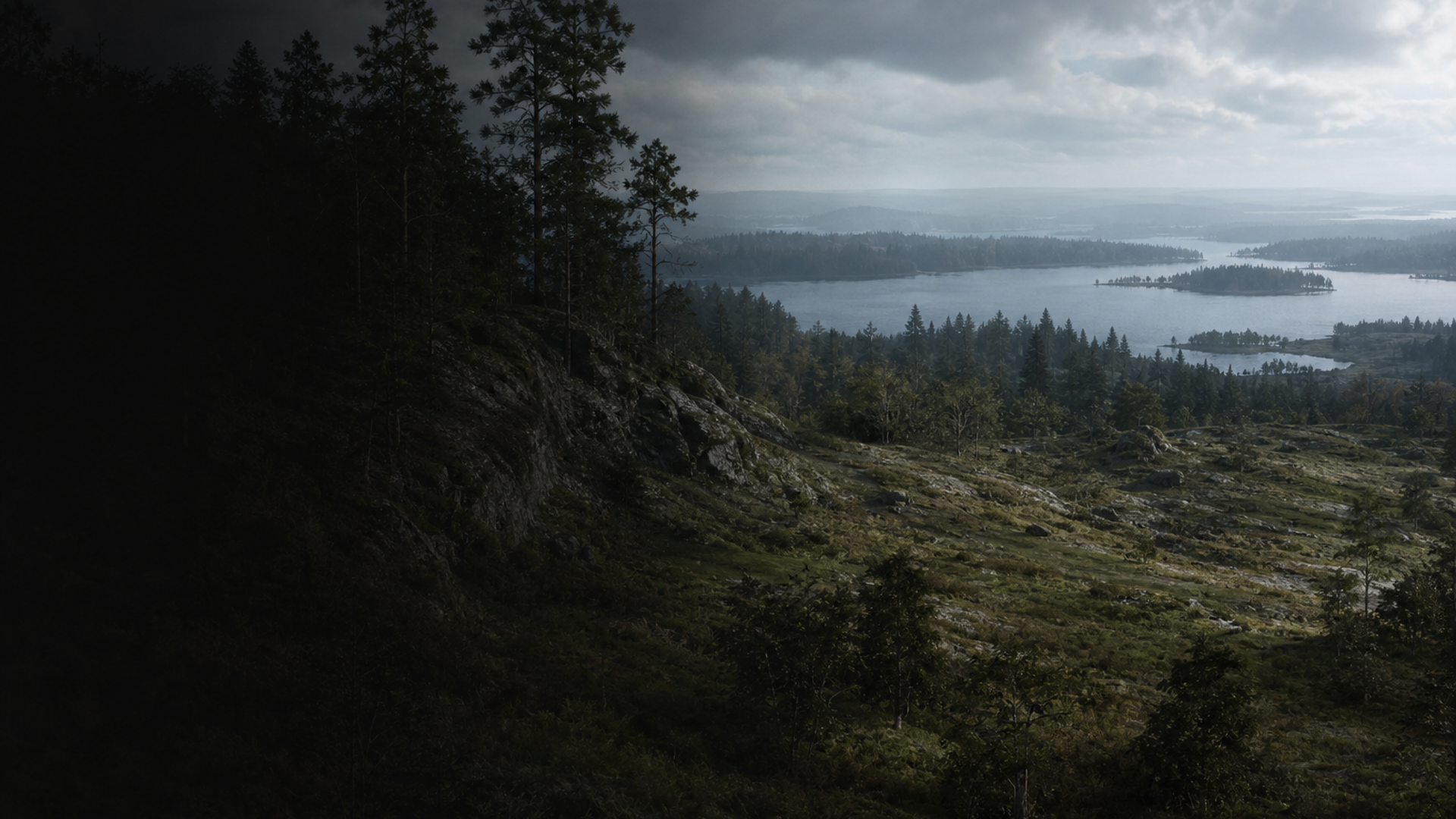
The lives behind the graves were shaped by waterways: the Mälaren basin and the Baltic Sea provided avenues for fishing, trade, and seasonal travel. In the cinematic landscapes of marshes and oak groves, settlements clustered near arable soils and navigable channels. Archaeology records wooden houses, iron tools, and craft debris—signs of mixed farming, ironworking, and specialized artisanship.

Grave goods from Vendel and nearby burials emphasize martial display and prestige: decorated helmets, intricate harness fittings, and high‑status goods indicate hierarchical households with warrior identities and ritualized funerary practices. Women’s graves often contain jewelry and spindle whorls, signaling roles in textile production and long‑distance exchange of luxury textiles. Local exchange networks likely connected inland communities with coastal traders, importing raw materials and ideas.

Seasonal rhythms—spring planting, summer fishing, autumn harvests—would have structured labor and ceremonies. Archaeobotanical remains and animal bone assemblages from comparable regional sites show mixed cereal cultivation, cattle, and pig husbandry, while craft traces reveal skilled smithing and woodwork. These daily practices formed the substrate upon which elite display and mobility were built.

  • Economy centered on mixed farming, fishing, and specialized crafts
  • Elite display in burials: helmets, horse gear, and imported items
Capítulo V

Genetic Profile

Genetic data from four individuals dated between 242 and 620 CE provide a slender but illuminating window. Two males carry Y‑chromosome haplogroup R (broadly common across much of prehistoric and historic Europe), while one male carries haplogroup N, a lineage today often associated with northeastern Eurasian and some Uralic‑speaking populations. Maternal lineages detected include mtDNA haplogroups U, I and H in three of the samples; one mitochondrial lineage was not robustly typed in the available dataset.

These results suggest a primary northern European genetic background with at least one individual showing markers linked to east‑to‑northeast gene flow. That pattern is consistent with archaeological indications of Baltic and inland contacts—movement need not imply wholesale population replacement but can reflect mobility of individuals, marriage networks, and trade partners.

Caveats are important: with only four genomes, statistical power is low. Population‑level inferences (e.g., frequency of haplogroups across the region) are preliminary. Future sampling across additional Vendel‑era cemeteries and comparative analysis with contemporaneous samples from the eastern Baltic and Fennoscandia will be required to clarify whether the haplogroup N instance represents a singular migrant, a small persistent eastern component, or broader demographic processes.

  • Two Y profiles are haplogroup R; one is haplogroup N, hinting at eastern links
  • Maternal haplogroups include U, I, H; one mtDNA sample was not fully resolved
  • Small sample size (<10) makes conclusions provisional
Capítulo VI

Legacy & Modern Connections

The material and genetic echoes of these Pre‑Viking people reach into the later Scandinavian world. Artifact styles and burial customs visible at Vendel help form the cultural backdrop to early medieval Scandinavia and the emerging Viking Age. Genetically, the mix of common northern European haplogroups with occasional eastern markers mirrors broader patterns seen across the Baltic rim in later periods.

For modern populations in Uppland and central Sweden, ancestry is complex and layered. Ancient DNA from this small sample set suggests continuity in core northern European ancestries while also registering the channels of mobility across the Baltic. However, it would be misleading to equate these four genomes with the full diversity of the past: they are fragments that, when combined with further archaeological and genetic evidence, will enrich our understanding of how local traditions and long‑distance ties produced the world that preceded the Viking expansions.

  • Vendel material culture prefigures Viking Age elite display
  • Ancient DNA hints at regional continuity with episodic external gene flow
Com IA

Assistente de IA

Haz preguntas sobre la cultura Central Sweden — Pre‑Viking Echoes

Assistente de IA por DNAGENICS

Desbloquear esta função
Pregunta sobre la cultura Central Sweden — Pre‑Viking Echoes. El asistente con IA puede explicar hallazgos genéticos, contexto histórico, pruebas arqueológicas y conexiones modernas, con sus límites de interpretación.
Exemplo de análise com IA

La cultura Central Sweden — Pre‑Viking Echoes representa un capítulo de la historia humana...

A análise genética permite estudar semelhanças com populações anteriores e possíveis adaptações. As amostras de DNA antigo fornecem informações para investigar padrões migratórios e relações entre populações, com limites que dependem do estudo e do contexto arqueológico.

Esta é uma antevisão da análise com IA. Aceder ao assistente completo para explorar informações sobre:

  • Composição e similaridade genética
  • Padrões migratórios e origens
  • Vida cotidiana e práticas culturais
  • Contexto genético moderno

Explore mais culturas antigas

Descubra a história de civilizações de diferentes partes do mundo antigo