A preparar o relatório

A carregar as informações e as referências disponíveis

Consultando el registro arqueológico...

Recopilando registros antiguos

Saltar para o conteúdo principal
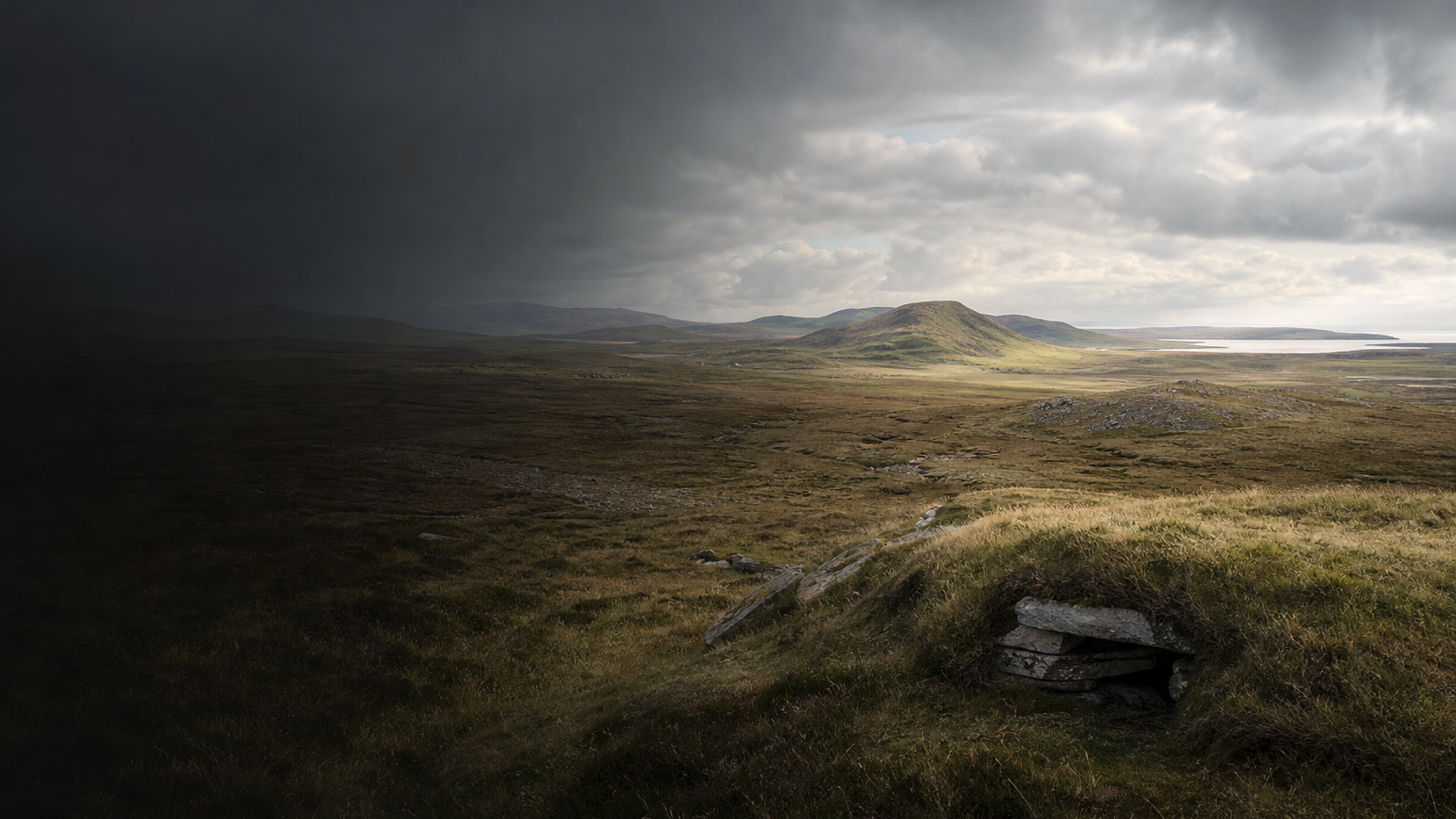
Cists & Kin: Scotland, Early Bronze Age
Cultura de destaque

Cists & Kin: Scotland, Early Bronze Age

Burials and genomes from Orkney to Fife reveal kin networks and shifting ancestries

2400 CE - 1447 BCE
Scotland, United Kingdom (Orkney, Fife, Lothians)
Desplázate para começar
Capítulo I

A História

Comprender la cultura Cists & Kin: Scotland, Early Bronze Age

Archaeological and genetic evidence from 13 Early Bronze Age Scottish burials (2400–1447 BCE) links cist funerary practices across Orkney, Fife and the Lothians with a dominant male R lineage and diverse maternal haplogroups, reflecting mobility, local continuity, and contact during the Bronze Age.

Time Period

2400–1447 BCE

Region

Scotland, United Kingdom (Orkney, Fife, Lothians)

Common Y-DNA

R (predominant — 8/13)

Common mtDNA

H, T, U, K (H most frequent)

Capítulo II

Cronologia

Momentos-chave da história desta cultura

2500 BCE

Early Bronze Age transformations

Around 2500 BCE new burial forms, metallurgy and shifts in ancestry patterns emerge across Scotland, visible in cist burials and genetic signals.

Capítulo III

Origins & Emergence

The Scotland_C_EBA assemblage sits within the dramatic cultural shift that reshaped north‑western Europe after 2500 BCE. Archaeological data indicates a spread of burial forms such as slab cists and stone-lined graves, accompanied by new metalwork and altered settlement patterns. Sites in this dataset — Lop Ness (Stenchme) in Orkney, Covesea Cave 2 on the Moray coast, and Dryburn Bridge inland — preserve the physical traces of this transformation.

Genetically, 13 dated individuals (2400–1447 BCE) reveal a strong signal of Y‑chromosome haplogroup R among males, a pattern that echoes wider Bronze Age Britain and suggests male-mediated expansions or continuity of Steppe‑associated paternal lines. Maternal lineages are more varied (H, T, U, K), pointing to diverse female ancestries or long-standing local communities absorbing newcomers.

Limited evidence cautions against singular narratives: local traditions persisted alongside incoming practices, and taphonomic bias—where stone cists preserve skeletal remains better than other burial forms—affects what survives. Archaeological context, from the coastal caves of Covesea to the roadside cists of Dunfermline (cist3) and Thankerton (cist 1), must be read together with DNA to reconstruct shifting lifeways and networks of kin and exchange across Early Bronze Age Scotland.

  • Transition period: c.2400–1447 BCE marks new burial types and metallurgy
  • Sites include Lop Ness (Stenchme), Covesea Cave 2, Dryburn Bridge, Dunfermline cist3
  • Male-line R dominance fits wider Bronze Age British patterns, but regional nuance exists
Capítulo IV

Daily Life & Society

Archaeological traces from settlements and funerary contexts suggest a world of small farming communities, coastal foragers, and itinerant metalworkers. Material culture — copper and bronze objects, stone tools, and pottery — appears alongside stone cists and curated burial deposits at places like Doune (Perth and Kinross), Merrilees Close (Leith, Edinburgh), Innerwick (Thurston Mains), and Eweford Cottages.

Cist burials often contain single individuals laid supine or crouched, sometimes accompanied by personal items; these funerary choices evoke attention to lineage and memorialization. Isotopic work in comparable regions documents diets mixing terrestrial cereals and marine resources, so coastal sites such as Covesea likely reflect greater seafood intake than inland cists at Thankerton or Dryburn Bridge.

Social organization was probably kin-based but flexible: evidence of long-distance exchange in metal and stone implies mobility and networks connecting Orkney to the mainland. Craft specialization (metalworking, possibly textile production) and seasonal movements between coastal and inland resources would have structured daily rhythms. Archaeological data indicates a mosaic of lifeways, not a single uniform society.

  • Mixed economy: farming, coastal foraging, and craft production
  • Cist burials emphasize individual remembrance and kin connections
Capítulo V

Genetic Profile

Thirteen individuals dated to 2400–1447 BCE provide a focused but still preliminary genetic window into Early Bronze Age Scotland. Eight of the male samples carry Y‑chromosome haplogroup R, making it the dominant paternal lineage in this set. This predominance is consistent with broader Bronze Age Britain where R lineages—often associated with Steppe‑derived ancestry—became widespread. However, assigning deeper subclade identities or precise migration paths requires larger sample sizes and higher-resolution sequencing.

Mitochondrial DNA shows diversity: H (4), including H1a (1), T (3), U (2), and K (2). The mixture of maternal haplogroups indicates that female lineages were heterogeneous, which may reflect local continuity of maternal ancestry, marriage networks, or incorporation of women from different regions. Autosomal studies from contemporary British contexts reveal substantial Steppe-related ancestry fused with local Neolithic components; the Scotland_C_EBA Y and mtDNA pattern aligns with that broad picture but cannot alone determine proportions of ancestry or exact source populations.

Because samples are geographically clustered (Orkney, Fife, Lothians, South Lanarkshire), observed patterns could reflect regional demographics rather than island‑wide trends. Further sampling across Scotland and genome-wide analyses will clarify kinship within cists, sex-biased mobility, and links to continental networks.

  • Y-DNA: R predominant (8 of 13), suggesting male-line continuity or incoming male groups
  • mtDNA: diverse maternal pool (H, T, U, K) indicating varied female ancestries
Capítulo VI

Legacy & Modern Connections

The genetic traces from Early Bronze Age Scottish cists resonate into the present: many modern British populations retain high frequencies of Y haplogroup R and mitochondrial haplogroup H. Archaeological landscapes—stone cists, burial mounds, and metalwork hoards—remain prominent cultural landmarks that frame regional identities.

Yet continuity is complex. Genetic continuity at some loci coexists with later admixture and cultural change across millennia. The Scotland_C_EBA data illuminate one chapter in a long story of population interaction: episodes of mobility, local survival, and the weaving of kin networks that would be reshaped in later Bronze and Iron Age centuries. For museum and public audiences, these remains offer a cinematic but scientifically grounded link to ancient lives—people anchored to place yet connected by sea routes, trade, and marriage.

Continued sampling and collaboration between archaeology and genomics will refine how these Bronze Age communities contributed to the genetic tapestry of modern Scotland.

  • Modern echoes: R and H lineages persist in Britain but reflect later admixture
  • Archaeogenetics ties local memorial practices to long-term population dynamics
Com IA

Assistente de IA

Haz preguntas sobre la cultura Cists & Kin: Scotland, Early Bronze Age

Assistente de IA por DNAGENICS

Desbloquear esta função
Pregunta sobre la cultura Cists & Kin: Scotland, Early Bronze Age. El asistente con IA puede explicar hallazgos genéticos, contexto histórico, pruebas arqueológicas y conexiones modernas, con sus límites de interpretación.
Exemplo de análise com IA

La cultura Cists & Kin: Scotland, Early Bronze Age representa un capítulo de la historia humana...

A análise genética permite estudar semelhanças com populações anteriores e possíveis adaptações. As amostras de DNA antigo fornecem informações para investigar padrões migratórios e relações entre populações, com limites que dependem do estudo e do contexto arqueológico.

Esta é uma antevisão da análise com IA. Aceder ao assistente completo para explorar informações sobre:

  • Composição e similaridade genética
  • Padrões migratórios e origens
  • Vida cotidiana e práticas culturais
  • Contexto genético moderno

Explore mais culturas antigas

Descubra a história de civilizações de diferentes partes do mundo antigo