A preparar o relatório

A carregar as informações e as referências disponíveis

Consultando el registro arqueológico...

Recopilando registros antiguos

Saltar para o conteúdo principal
Derenburg LBK: Saxony's Early Farmers
Cultura de destaque

Derenburg LBK: Saxony's Early Farmers

5400–4600 BCE Neolithic community in Saxony-Anhalt revealed through archaeology and ancient genomes

5400 CE - 4600 BCE
Saxony-Anhalt, Central Germany
Desplázate para começar
Capítulo I

A História

Comprender la cultura Derenburg LBK: Saxony's Early Farmers

Archaeological and genetic evidence from 33 individuals at Derenburg-Meerenstieg II (Saxony-Anhalt) illuminates LBK farmers in central Germany (5400–4600 BCE). Y haplogroups H2 and G and diverse mtDNA (HV+, W5, T2b, N, J1c) point to Anatolian-derived farming ancestry with local interaction.

Time Period

5400–4600 BCE

Region

Saxony-Anhalt, Central Germany

Common Y-DNA

H2 (8), G (4), C (1), I (1), T (1)

Common mtDNA

HV+ (4), W5 (3), T2b (3), N (3), J1c (3)

Capítulo II

Cronologia

Momentos-chave da história desta cultura

5400 BCE

Initial LBK settlement in Saxony-Anhalt

Archaeological evidence indicates the first LBK farmsteads and longhouses appear in the Mittelelbe-Saaleregion around 5400 BCE.

Capítulo III

Origins & Emergence

The Derenburg-Meerenstieg II assemblage sits at a dramatic hinge in European prehistory: the spread of the Linear Pottery Culture (Linearbandkeramik, LBK) into the Mittelelbe-Saaleregion. Beginning around 5400 BCE, communities of farmers arrived into the fertile river floodplains of what is today Saxony-Anhalt. Archaeological data indicates longhouses, standardised ceramics decorated with linear motifs, and farming economies based on emmer, einkorn and domesticated animals.

Material culture and settlement patterns evoke a migration of ideas and people from the southeast — Anatolia and the Balkans — into central Europe. Yet the picture is not one of simple replacement. Limited evidence suggests interaction with local Mesolithic forager groups: stray lithics, mixed burial practices, and isotopic signals in some individuals hint at dietary diversity and mobility. Derenburg's earthworks and domestic remains show planning and social coordination consistent with LBK communities across the plains of Central Europe.

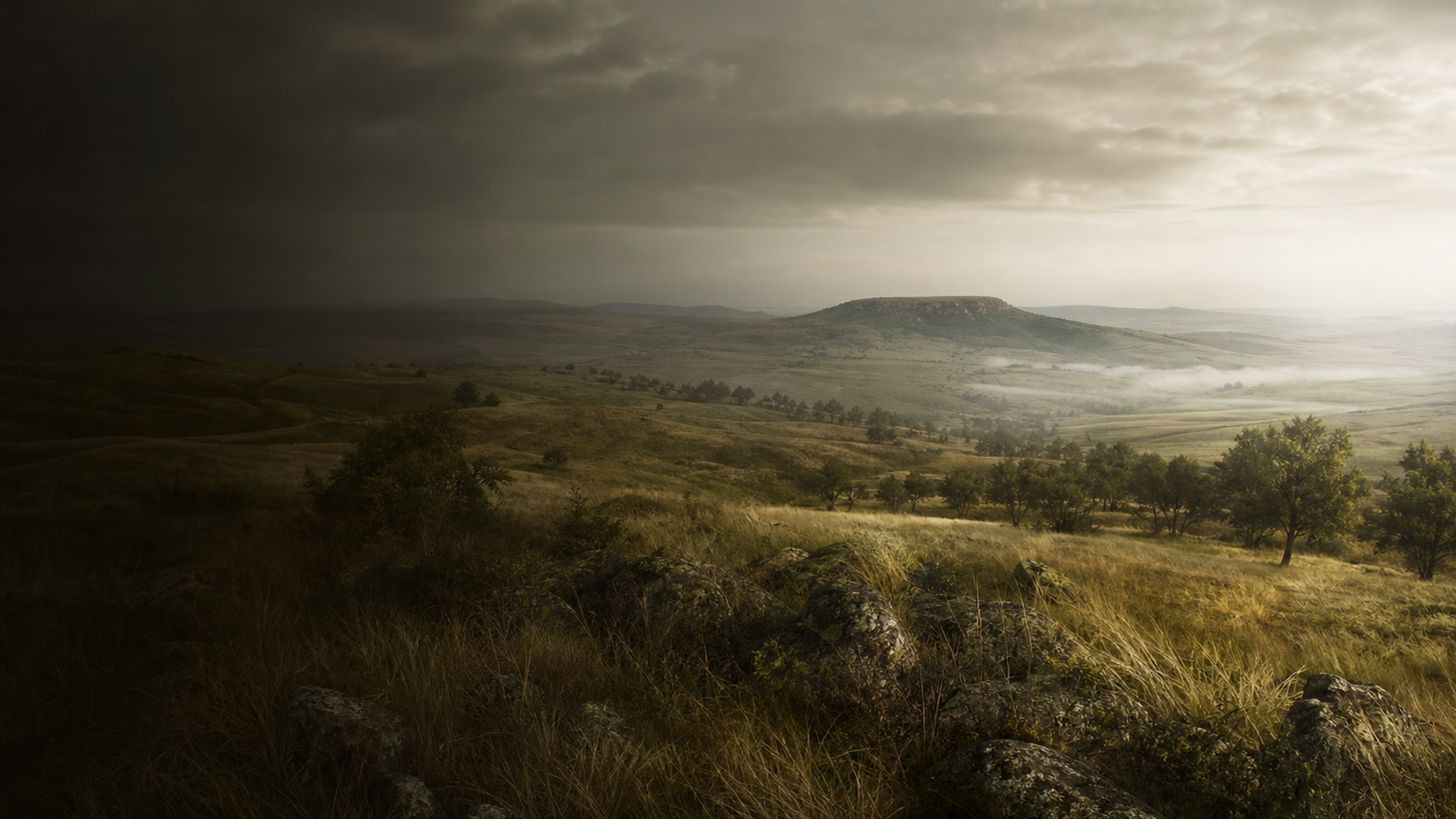
Visually, the early Neolithic landscape here would have been cinematic: fields opening from cleared forest, rows of timber longhouses beside slow rivers, and pottery sherds glinting in loam. Archaeology indicates that by 4600 BCE many of these settlement patterns evolved or dispersed, leaving a genetic and material imprint that modern science can now explore through ancient DNA.

  • Settlement in floodplains of Mittelelbe-Saaleregion (5400–4600 BCE)
  • Material culture: LBK longhouses and linear-decorated pottery
  • Archaeological signs of farmer–forager interaction
Capítulo IV

Daily Life & Society

Archaeological remains at Derenburg-Meerenstieg II provide a textured portrait of everyday life among Saxony's early farmers. Longhouses—rectangular timber structures—served as multifunctional cores for households, with space for sleeping, food processing, and small-scale craft. The economy focused on cereal agriculture (emmer and einkorn), pulses, and domesticates such as cattle, sheep and pigs. Animal bone assemblages indicate both meat and secondary product use (milk, traction).

Pottery vessels, often with linear incisions characteristic of LBK, were used for storage and cooking; their standardised shapes suggest shared production knowledge and social networks. Grain processing artifacts—querns and grindstones—point to routine food preparation and communal labor. Hearths and pit features imply seasonal activities and food storage strategies adapted to central European climates.

Socially, burials and spatial layout hint at kin-based households and emergent hierarchical practices, but evidence remains nuanced: some graves are accompanied by modest grave goods, while others are simple. Archaeological data indicates mobility along river corridors, enabling exchange of goods and genes. The lived world was one of cultivated fields, timber architecture, and daily negotiation between human needs and a changing environment.

  • Economy based on cereals (emmer, einkorn) and domestic animals
  • Longhouses and standardised LBK pottery indicate shared lifeways and craft traditions
Capítulo V

Genetic Profile

Thirty-three genomes from the Derenburg-Meerenstieg II horizon provide a robust window into the biological histories of Saxony's LBK farmers. Overall, genetic patterns align with the wider LBK signal: predominant Anatolian-Neolithic farmer ancestry combined with varying degrees of local European hunter-gatherer contribution. This admixture story is visible in both uniparental markers and genome-wide data.

Y-chromosome diversity in this sample includes a notable prevalence of H2 (8 individuals) and G (4 individuals). Both haplogroups have been observed in Neolithic farming contexts across Europe and likely reflect male lineages introduced during the initial spread of farming. Lower-frequency Y types—C, I and T—appear singly and may represent either residual hunter-gatherer lineages, incoming lineages from neighbouring groups, or later gene flow. Mitochondrial DNA is equally diverse: HV+ (4), W5 (3), T2b (3), N (3) and J1c (3) among other lineages. These mtDNA types fit the pattern of Near Eastern-derived maternal ancestry mixed with lineages seen in European foragers.

Because the dataset is regional (33 samples), conclusions are relatively well-supported for Derenburg but should not be over-generalised to all LBK communities. Archaeological data indicates sustained contact and gene flow at river corridors; genetically, this appears as modest hunter-gatherer admixture layered onto a primarily Anatolian-farmer foundation. Where sample coverage is finer, isotopic and genetic contrasts sometimes reveal individuals with different diets or mobility histories, underscoring social complexity in early farming communities.

  • Major Y haplogroups: H2 (8) and G (4), with minor C, I, T
  • mtDNA diversity (HV+, W5, T2b, N, J1c) reflects Near Eastern farmer maternal input and local admixture
Capítulo VI

Legacy & Modern Connections

The Derenburg LBK community contributed to the deep scaffolding of European genetic and cultural landscapes. Archaeological continuity in house plans and pottery styles links these early farmers to later Neolithic traditions across Central Europe. Genetically, the Anatolian-derived farmer component evident at Derenburg became a major strand in the ancestry of many modern Europeans, later reshaped by subsequent migrations (e.g., Bronze Age steppe influx).

While modern populations do not descend solely from LBK groups, genetic echoes—specific uniparental markers and portions of genome-wide ancestry—persist in the region. Archaeological traces and ancient DNA together highlight how ideas, crops and people moved along rivers and across plains, creating new lifeways that transformed Europe's woodlands into farmland. Caution is warranted: genetic continuity is patchy and region-specific, and later demographic events have altered the signal. Nonetheless, the cinematic image of early farmers tending fields in Saxony-Anhalt remains a touchstone for understanding Europe's deep past.

  • Contributed Anatolian-farmer ancestry to later European gene pools
  • Material culture influenced subsequent Central European Neolithic traditions
Com IA

Assistente de IA

Haz preguntas sobre la cultura Derenburg LBK: Saxony's Early Farmers

Assistente de IA por DNAGENICS

Desbloquear esta função
Pregunta sobre la cultura Derenburg LBK: Saxony's Early Farmers. El asistente con IA puede explicar hallazgos genéticos, contexto histórico, pruebas arqueológicas y conexiones modernas, con sus límites de interpretación.
Exemplo de análise com IA

La cultura Derenburg LBK: Saxony's Early Farmers representa un capítulo de la historia humana...

A análise genética permite estudar semelhanças com populações anteriores e possíveis adaptações. As amostras de DNA antigo fornecem informações para investigar padrões migratórios e relações entre populações, com limites que dependem do estudo e do contexto arqueológico.

Esta é uma antevisão da análise com IA. Aceder ao assistente completo para explorar informações sobre:

  • Composição e similaridade genética
  • Padrões migratórios e origens
  • Vida cotidiana e práticas culturais
  • Contexto genético moderno

Explore mais culturas antigas

Descubra a história de civilizações de diferentes partes do mundo antigo