A preparar o relatório

A carregar as informações e as referências disponíveis

Consultando el registro arqueológico...

Recopilando registros antiguos

Saltar para o conteúdo principal
Goyet Q376-19: Upper Paleolithic Maternal Line
Cultura de destaque

Goyet Q376-19: Upper Paleolithic Maternal Line

Single U2-bearing individual from Troisième caverne, Goyet — a frozen strand of deep European prehistory.

25771 CE - 25348 BCE
Goyet cave (Troisième caverne), Belgium
1 Amostras antigas
Desplázate para começar
Capítulo I

A História

Comprender la cultura Goyet Q376-19: Upper Paleolithic Maternal Line

A single Upper Paleolithic individual from the Troisième caverne of Goyet cave, Belgium (25,771–25,348 BCE) carrying mitochondrial haplogroup U2. Archaeological and genetic evidence offers a tentative glimpse into Gravettian-era lifeways and deep maternal ancestry in Ice Age Europe.

Time Period

25771–25348 BCE

Region

Goyet cave (Troisième caverne), Belgium

Common Y-DNA

Unknown (no Y data)

Common mtDNA

U2 (1 sample)

Capítulo II

Cronologia

Momentos-chave da história desta cultura

25560 BCE

Goyet Q376-19 dated to ~25.6k BCE

Radiocarbon-dated individual from Troisième caverne of Goyet cave, assigned mtDNA haplogroup U2; provides a single Upper Paleolithic genetic snapshot for Belgium.

Capítulo III

Origins & Emergence

The specimen labeled Belgium_UP_GoyetQ376_19 comes from the Troisième caverne (third chamber) of Goyet cave in Belgium and dates between 25,771 and 25,348 BCE. Archaeological data indicates that this interval falls within the Upper Paleolithic horizon often associated with Gravettian-technocomplex occupations in Western Europe. The cave itself preserves a dense stratigraphic record — lithic assemblages, faunal remains, and human bones — that testify to repeated use of the site in cold, steppe-like environments as the climate approached the Last Glacial Maximum.

Limited evidence suggests that the individual lived within a mobile hunter-gatherer network exploiting large plains mammals and local resources. The presence of personal ornaments and modified bone tools in nearby Goyet layers suggests social signaling and craft traditions. Because only a single genetic sample is available from this locus and date, population-scale inferences remain provisional. Nevertheless, the convergence of careful stratigraphy, radiocarbon dating, and biomolecular recovery makes this individual a high-value data point for reconstructing the deep peopling of northwestern Europe.

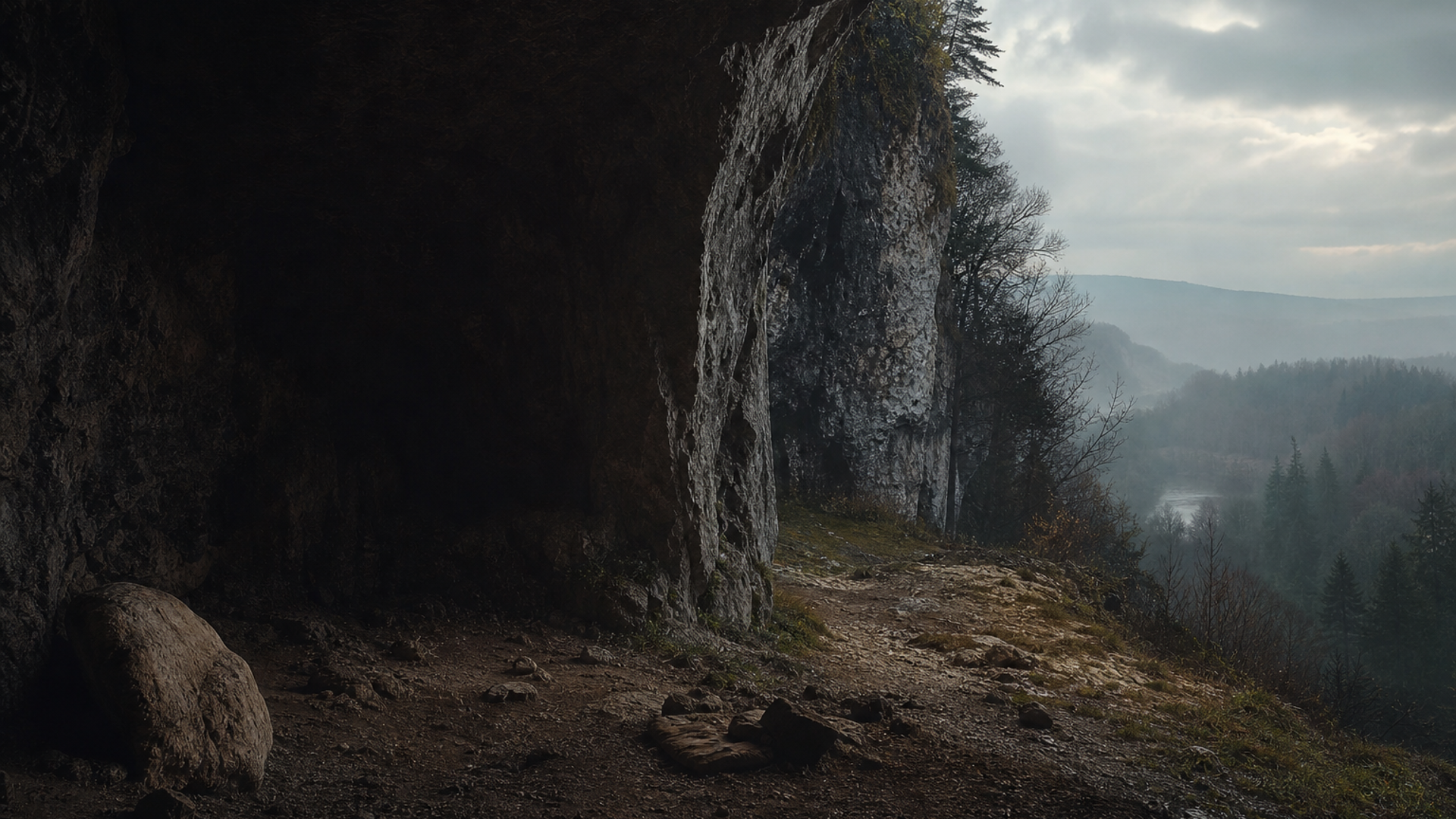
Cinematic images of wind-driven loess and fires at cave mouths may evoke this person's world, but scientifically we must balance evocative reconstruction with the reality of sparse data and stratigraphic complexity.

  • From Troisième caverne, Goyet cave, Belgium (25,771–25,348 BCE)
  • Associated with Gravettian-era archaeological layers
  • Single sample — conclusions are preliminary
Capítulo IV

Daily Life & Society

Archaeological evidence from Goyet paints a portrait of life at the edge of habitability. Stone tool assemblages and bone implements recovered in nearby horizons indicate skilled flint knapping, projectile production, and the crafting of personal adornments. Faunal remains from the site suggest reliance on large Cold-Adapted game—likely reindeer and horse—supplemented by smaller mammals and seasonally available plants and mollusks where accessible.

Shelter strategies probably combined rock-shelter use with temporary structures during forays across the landscape. Hearths and burned bones in the cave sequence point to controlled fire for cooking and warmth. Ornaments and modified bones hint at complex social practices: identity markers, trade or exchange of raw materials, and ritual behaviors are plausible given comparable Upper Paleolithic contexts elsewhere in Europe.

Movement across broad territories, seasonal aggregation of groups, and specialized craft production likely structured social life. Yet, the single Goyet Q376-19 individual cannot by itself reveal the full social tapestry; archaeological context offers the richer story, while the genetic data provides a single thread that must be woven cautiously into the broader narrative.

  • Hunting-focused, cold-steppe adaptation with seasonal mobility
  • Evidence for tool-making, bone working, and personal ornaments
Capítulo V

Genetic Profile

The genetic data for Belgium_UP_GoyetQ376_19 is limited but informative: mitochondrial DNA assigns this individual to haplogroup U2. Mitochondrial U-lineages (including U2, U4, U5 and others) are characteristic components of Upper Paleolithic maternal variation across Eurasia. The presence of U2 in a ~25.6k BCE individual from Belgium aligns with a broader pattern in which U-haplogroups were widespread among Ice Age hunter-gatherers.

No reliable Y-chromosome (paternal) assignments are available for this sample, so male-line inferences cannot be made. With a sample count of one, any population-level claims must be explicitly tentative: this single U2-bearing genome points to maternal ancestry that connects to a deep West Eurasian gene pool, but it cannot define the diversity or structure of local groups around Goyet.

Geneticists integrate such single-sample data with other Upper Paleolithic genomes to map patterns of relatedness, population turnover, and long-distance connections. Challenges such as DNA degradation, contamination risk, and small sample sizes mean researchers emphasize conservative interpretations. When combined with archaeological context, however, even single genomes can illuminate migration corridors, demographic bottlenecks near the Last Glacial Maximum, and the maternal threads that link ancient Europeans to later populations across the continent and beyond.

  • mtDNA haplogroup U2 identified in the individual
  • No Y-DNA data; single sample—interpretations are preliminary
Capítulo VI

Legacy & Modern Connections

The Goyet Q376-19 individual contributes a single but evocative data point to the story of European prehistory. Maternal lineage U2 persists at low frequencies in parts of modern Europe and in regions of South Asia, suggesting ancient, diffuse maternal connections spanning west and south Eurasia. However, millennia of migrations — Neolithic farmer expansions and later Bronze Age movements — have reshaped the genetic landscape, so direct continuity from any one Upper Paleolithic individual to specific modern populations should not be assumed.

Culturally, the deep time of Goyet reminds us that Belgium was part of a vast Ice Age world inhabited by mobile, adaptable humans whose survival strategies, technologies, and symbolic lives laid foundations for later European cultural trajectories. As more genomes from comparable contexts are recovered, that tapestry will sharpen; for now, Goyet Q376-19 is a solitary, luminous thread in an unfolding picture of human resilience and connection across millennia.

  • U2 survives at low frequency today—suggesting ancient Eurasian maternal links
  • Reflects deep hunter-gatherer roots that contribute to modern European ancestry, but direct continuity is complex
Capítulo VII

Catálogo de amostras

1 amostras de DNA antigo associadas à cultura Goyet Q376-19: Upper Paleolithic Maternal Line fornecem dados de referência sobre as populações desse período.

1 / 1 amostras
Retrato Mostrar País Época Data Cultura Sexo DNA-Y ADNmt
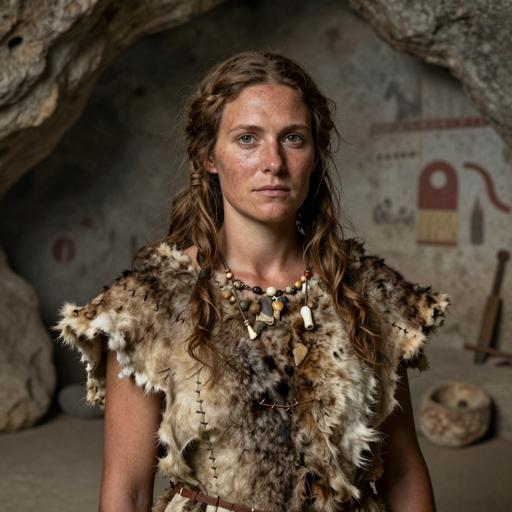
Retrato reconstruído de European Paleolithic individual, Belgium
European Paleolithic individual, Belgium
Belgium Belgium_UP_GoyetQ376-19 25771 BCE European Paleolithic F - U2
Com IA

Assistente de IA

Haz preguntas sobre la cultura Goyet Q376-19: Upper Paleolithic Maternal Line

Assistente de IA por DNAGENICS

Desbloquear esta função
Pregunta sobre la cultura Goyet Q376-19: Upper Paleolithic Maternal Line. El asistente con IA puede explicar hallazgos genéticos, contexto histórico, pruebas arqueológicas y conexiones modernas, con sus límites de interpretación.
Exemplo de análise com IA

La cultura Goyet Q376-19: Upper Paleolithic Maternal Line representa un capítulo de la historia humana...

A análise genética permite estudar semelhanças com populações anteriores e possíveis adaptações. As amostras de DNA antigo fornecem informações para investigar padrões migratórios e relações entre populações, com limites que dependem do estudo e do contexto arqueológico.

Esta é uma antevisão da análise com IA. Aceder ao assistente completo para explorar informações sobre:

  • Composição e similaridade genética
  • Padrões migratórios e origens
  • Vida cotidiana e práticas culturais
  • Contexto genético moderno

Explore mais culturas antigas

Descubra a história de civilizações de diferentes partes do mundo antigo