A preparar o relatório

A carregar as informações e as referências disponíveis

Consultando el registro arqueológico...

Recopilando registros antiguos

Saltar para o conteúdo principal
Laguna Toro Foragers (ca. 2400 BP)
Cultura de destaque

Laguna Toro Foragers (ca. 2400 BP)

A single genome at a lakeshore campsite hints at Late Holocene lifeways in the Pampas

740 CE - 2002400 BCE
Laguna Toro, SW of Buenos Aires, Argentina
1 Amostras antigas
Desplázate para começar
Capítulo I

A História

Comprender la cultura Laguna Toro Foragers (ca. 2400 BP)

Archaeological and genetic evidence from Laguna Toro (southwest Buenos Aires) dates to 740–200 BCE. One sampled individual carries mtDNA haplogroup A. Limited data suggest local Late Holocene foraging lifeways; genetic conclusions remain preliminary until more samples are analyzed.

Time Period

740–200 BCE (ca. 2400 BP)

Region

Laguna Toro, SW of Buenos Aires, Argentina

Common Y-DNA

Unknown (no Y-DNA reported)

Common mtDNA

A (1 sample)

Capítulo II

Cronologia

Momentos-chave da história desta cultura

500 BCE

Laguna Toro occupation (approx.)

Archaeological and radiocarbon evidence places human activity at Laguna Toro in the Late Holocene (ca. 740–200 BCE); one sampled individual dates to this interval.

Capítulo III

Origins & Emergence

The Laguna Toro assemblage belongs to a wider Late Holocene landscape of the southern Pampas, a flat, often marshy region dotted with lakes and lagoons west-southwest of modern Buenos Aires. Radiocarbon-calibrated dates for material associated with the human burial and nearby features place occupation between roughly 740 and 200 BCE (ca. 2400 years before present). Archaeological data indicate repeated, probably seasonal use of lakeshore environments where aquatic resources, small game and plants could be exploited.

Cinematic in its silence, the site preserves traces of ephemeral camps rather than dense, permanent settlements. Limited evidence suggests mobile foraging strategies adapted to wetlands and open grasslands. The single genetic sample from Laguna Toro anchors one human life to this landscape: it provides a snapshot rather than a full portrait. Because only one genome is available, origins and population dynamics must be stated cautiously. Broader regional patterns—continuity with earlier southern cone hunter-gatherers or admixture events—remain hypotheses to be tested with more archaeological contexts and additional ancient DNA.

  • Laguna Toro dates to ca. 740–200 BCE (Late Holocene)
  • Site located on a lakeshore southwest of Buenos Aires in the Pampas
  • Evidence suggests seasonal, mobile foraging rather than sedentary village life
Capítulo IV

Daily Life & Society

Archaeological indicators from Lagoons and small lake sites across the Pampas commonly show hearth traces, worked stone, and food debris consistent with mobile forager camps. At Laguna Toro, the depositional setting implies a life paced by water seasons: fishing, fowling, and exploiting reedland plants alongside terrestrial hunting. Organic preservation at such lakeshore localities is often uneven, so interpretations rely on fragmented lithics, shell concentrations, and occasional bone fragments.

Social groups were likely small and flexible, with networks of exchange linking lakes and upland hunting grounds. Craft specializations would have been limited but sophisticated—stone tool reduction, hide working and cordage are probable activities inferred from comparable sites in the region. Funerary treatment (if present in the single sampled context) can offer clues about social identity, but with only one individual from Laguna Toro we cannot generalize about rites, status differences, or kinship structures. Archaeological data indicates mobility, intimate knowledge of wetland ecologies, and adaptive strategies tuned to a dynamic Late Holocene environment.

  • Seasonal use of lakeshore resources (fish, birds, reeds)
  • Small, mobile social groups with exchange across the Pampas
Capítulo V

Genetic Profile

The ancient individual from Laguna Toro carries mitochondrial haplogroup A, a lineage widely distributed among Native American populations and commonly observed in ancient and modern South American samples. mtDNA haplogroup A signals maternal continuity with broader Native American maternal ancestries that trace back to initial peopling of the Americas. However, because Y-chromosome data are not reported for this sample and nuclear genome coverage is limited or absent, conclusions about population structure, sex-biased mobility, or admixture are preliminary.

Genetic data from a single individual can suggest affinities—shared maternal ancestry with other southern cone or Pampean groups—but cannot resolve demographic processes such as migration waves, local continuity, or gene flow from neighboring regions. Archaeological patterns of mobility could align with genetic homogeneity at mitochondrial loci, yet only multi-individual genomic datasets can test for subtle admixture, relatedness among buried individuals, or shifts through time. In short: the mtDNA A result is an important, evocative data point, but it must be integrated cautiously with future samples and comparative ancient DNA from the Pampas and surrounding Andean and Patagonian regions.

  • mtDNA haplogroup A present in the single sampled individual
  • No reported Y-DNA; nuclear data insufficient to assess admixture or kinship
Capítulo VI

Legacy & Modern Connections

The Laguna Toro individual provides a human voice from a lakeshore life two millennia ago, linking present-day Argentina to deep regional histories. mtDNA haplogroup A ties this person to maternal lineages that persist among indigenous communities across South America, suggesting long-term maternal continuities in the region. Archaeological landscapes in the Pampas continued to support mobile lifeways into the colonial era and shaped patterns of resource use that survive in cultural memory and place names.

Because the dataset is a single genome, any claimed direct ancestry to modern groups must be tentative. Future sampling could reveal whether Laguna Toro represents a local population continuity, a transient group, or one node in broader networks of Late Holocene mobility. Ongoing collaboration between archaeologists, geneticists, and descendant communities will be essential to responsibly interpret these ancient connections.

  • mtDNA links to widespread Native American maternal lineages
  • Single-sample evidence: promising but insufficient for definitive modern ancestry claims
Capítulo VII

Catálogo de amostras

1 amostras de DNA antigo associadas à cultura Laguna Toro Foragers (ca. 2400 BP) fornecem dados de referência sobre as populações desse período.

1 / 1 amostras
Retrato Mostrar País Época Data Cultura Sexo DNA-Y ADNmt
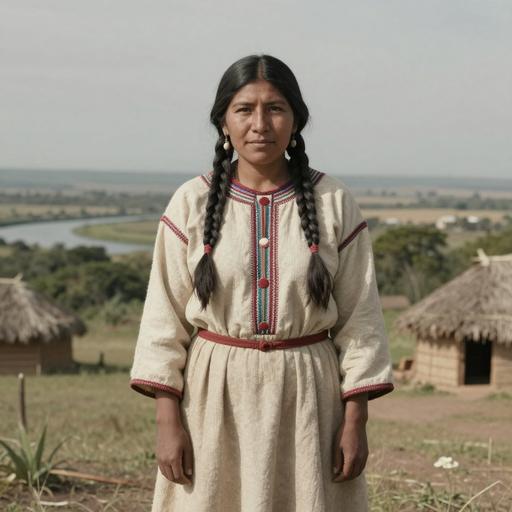
Retrato reconstruído de Buenos Aires individual, Argentina
Buenos Aires individual, Argentina
Argentina Argentina_LagunaToro_2400BP 736-194 calBCE (2369±52 BP, UGAMS-16601) Indigenous Cultures of South America F - A2-a
Com IA

Assistente de IA

Haz preguntas sobre la cultura Laguna Toro Foragers (ca. 2400 BP)

Assistente de IA por DNAGENICS

Desbloquear esta função
Pregunta sobre la cultura Laguna Toro Foragers (ca. 2400 BP). El asistente con IA puede explicar hallazgos genéticos, contexto histórico, pruebas arqueológicas y conexiones modernas, con sus límites de interpretación.
Exemplo de análise com IA

La cultura Laguna Toro Foragers (ca. 2400 BP) representa un capítulo de la historia humana...

A análise genética permite estudar semelhanças com populações anteriores e possíveis adaptações. As amostras de DNA antigo fornecem informações para investigar padrões migratórios e relações entre populações, com limites que dependem do estudo e do contexto arqueológico.

Esta é uma antevisão da análise com IA. Aceder ao assistente completo para explorar informações sobre:

  • Composição e similaridade genética
  • Padrões migratórios e origens
  • Vida cotidiana e práticas culturais
  • Contexto genético moderno

Explore mais culturas antigas

Descubra a história de civilizações de diferentes partes do mundo antigo