A preparar o relatório

A carregar as informações e as referências disponíveis

Consultando el registro arqueológico...

Recopilando registros antiguos

Saltar para o conteúdo principal
Late Norse Greenland: Norse in the Ice
Cultura de destaque

Late Norse Greenland: Norse in the Ice

Archaeology and DNA illuminate Norse settlers of Greenland's Eastern and Western settlements.

893 CE - 1277 CE
Greenland (Eastern & Western Settlements)
Desplázate para começar
Capítulo I

A História

Comprender la cultura Late Norse Greenland: Norse in the Ice

Late Norse Greenland (893–1277 CE): an archaeological and genetic snapshot from 8 medieval Norse samples from Eastern and Western Settlements. Genetic signatures point to northern European maternal lineages and limited Y-lineage diversity; results remain preliminary.

Time Period

893–1277 CE

Region

Greenland (Eastern & Western Settlements)

Common Y-DNA

I1a (1), R (1)

Common mtDNA

H54 (2), U (2), K (1), H (1), W (1)

Capítulo II

Cronologia

Momentos-chave da história desta cultura

986 CE

Founding of Eastern Settlement

Erik the Red and other Norse settlers establish farms in southwestern Greenland, founding what becomes the Eastern Settlement (circa 985–990 CE).

1000 CE

North Atlantic Exploration

Norse voyages from Greenland and Iceland reach Labrador and Vinland, reflecting broad North Atlantic connections around 1000 CE.

1277 CE

Latest sample dates in this dataset

The most recent radiocarbon or contextual dates in this genetic dataset fall near 1277 CE; interpretations are limited by sample size.

Capítulo III

Origins & Emergence

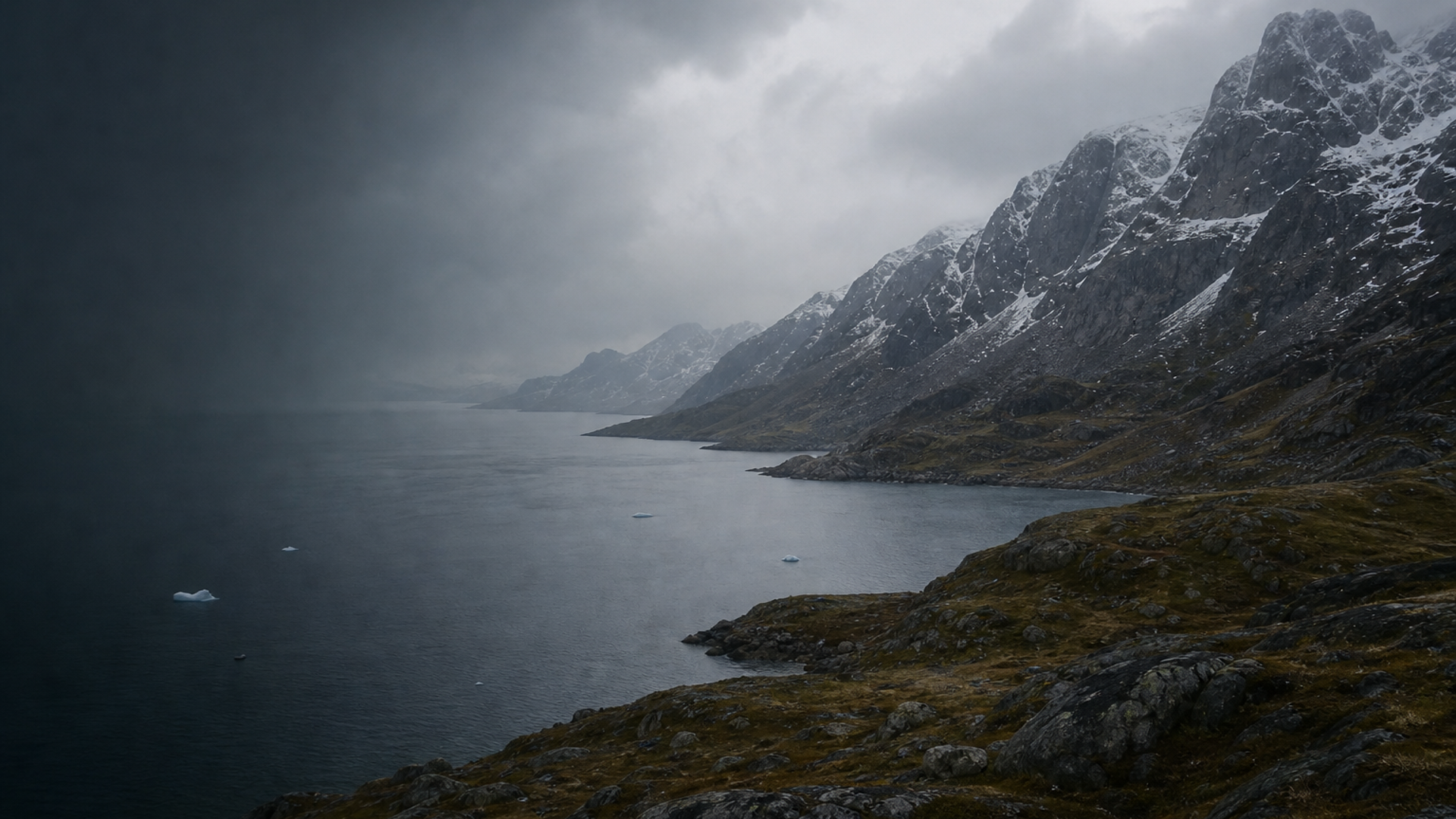
Standing at the edge of the Atlantic, the Norse settlements of Greenland were born in a moment of maritime daring. Archaeological layers at the Eastern and Western Settlements — including well-known farm complexes such as Brattahlíð (Eastern Settlement) and scattered churches like Hvalsey — record a colonizing pulse that began in the late 10th century. Radiocarbon chronologies and sagas place foundation events around 985–990 CE, when Norse farmers and sailors, originating largely from Iceland and western Scandinavia, established permanent farms, cleared marginal soils, and integrated into an Arctic maritime economy.

Material culture — longhouses, turf walls, iron tools, and imported Norse objects — links Greenland to North Atlantic trade networks and the walrus-ivory commerce that connected the icy northwest to European markets. Archaeological data indicates adaptation to a cold, variable climate: mixed husbandry (sheep, goats, some cattle), marine resources, and storehouses for winter. The cultural emergence must be read as both a continuation of Viking-Age expansion and a novel experiment in Arctic farming.

Genetic data from a small set of samples (n=8) sampled at Eastern Settlement. 149 and Western Settlement (V051, V007) support Scandinavian origins but are limited in number. Limited evidence suggests these settlers carried predominantly northern European maternal lineages and Y-lineages associated with northern Europe, consistent with archaeological inference — though the picture is preliminary.

  • Colonization circa 985–990 CE from Iceland/Scandinavia
  • Sites include Eastern Settlement.149; Western Settlement V051, V007
  • Adaptation to Arctic farming and maritime trade
Capítulo IV

Daily Life & Society

Life in Late Norse Greenland was carved from turf, timber, bone, and seal oil — a dramatic choreography of survival and ritual. Excavated longhouses contained evidence of domestic zones, central hearths, and animal stalls where sheep and goats sheltered through long winters. Archaeobotanical and zooarchaeological assemblages show a mixed diet: terrestrial meat and dairy, supplemented heavily by seals, fish, and seabirds as agricultural yields fluctuated.

Church foundations and graveyards testify to Christianity’s firm hold; stone churches such as Hvalsey served as both spiritual centers and anchors of community identity. Artifacts of everyday life — iron blades, whetstones, spindle whorls, and Scandinavian-style combs — underscore continuity with Norse material culture. Trade debris, including walrus ivory and occasional continental imports, reveal connections to markets beyond the ice.

Yet the archaeological record also records stress: erosion of soils, abandonment of marginal fields, and shifting settlement patterns through the 13th century. These material traces suggest communities negotiating changing climate and economic pressures.

Archaeological data indicates social life was organized around kin-based farms, church networks, and long-distance connections, but many details of household composition and mobility remain unresolved.

  • Mixed husbandry and heavy reliance on marine resources
  • Churches (e.g., Hvalsey) and longhouses anchor community life
Capítulo V

Genetic Profile

The DNA snapshot available for Late Norse Greenland is small but evocative. Eight medieval samples from Eastern and Western Settlements yield Y-DNA counts showing I1a (1) and R (1) and mitochondrial diversity dominated by H54 (2), U (2), K (1), H (1), and W (1). These haplogroup observations align broadly with a northern European signature: I1a is a lineage frequent in Scandinavia, while H and U maternal clades are common across Europe and are well-represented in medieval Norse and Icelandic contexts.

However, with only eight samples the genetic picture is preliminary. Low sample size (<10) constrains population-level inference: apparent low Y diversity could reflect small sampling, sex-biased burial preservation, or true limited male lineages. The presence of K and W mtDNA lineages may point to layered ancestry, including Neolithic and Bronze Age European maternal input known in Atlantic populations.

Importantly, these data show no clear presence in this dataset of Arctic-specific mitochondrial lineages typical of later Inuit groups, but given small numbers and site-specific sampling this absence cannot be taken as definitive proof of genetic separation.

Archaeology and genetics together suggest a settler population drawn from northern Europe, maintaining cultural continuity with Norse homelands while adapting to Greenland’s environment. Further sampling and genome-wide analyses are needed to test models of admixture, demographic change, and continuity with modern populations.

  • mtDNA dominated by northern European clades (H54, U, K, W)
  • Small sample size (n=8) — conclusions are tentative and preliminary
Capítulo VI

Legacy & Modern Connections

The Norse presence in Greenland left a haunting archaeological landscape of ruined farms and churches and a genetic footprint that is still being resolved. Archaeological legacy — building remains, imported objects, and altered landscapes — documents a century-scale experiment in Arctic colonial life. Genetically, the limited medieval samples show ties to northern Europe, consistent with historical and archaeological narratives of migration from Iceland and Scandinavia.

Modern genetic studies indicate complex relationships across the North Atlantic: while Iceland preserves strong Norse signals, the genetic contribution of medieval Norse Greenland to contemporary Greenlandic populations appears limited based on broader datasets, reflecting later Inuit migrations and demographic shifts. The Norse story in Greenland is therefore one of cultural brilliance and fragility: impressive adaptation and eventual disappearance from the archaeological record.

Ongoing ancient DNA sampling, targeted excavation at Eastern and Western Settlement sites, and interdisciplinary study will refine how much of that Norse presence persisted biologically and culturally into later periods.

  • Archaeological remains mark a dramatic but ultimately ephemeral Norse experiment
  • Genetic ties point to northern Europe; modern Greenlandic continuity appears limited
Com IA

Assistente de IA

Haz preguntas sobre la cultura Late Norse Greenland: Norse in the Ice

Assistente de IA por DNAGENICS

Desbloquear esta função
Pregunta sobre la cultura Late Norse Greenland: Norse in the Ice. El asistente con IA puede explicar hallazgos genéticos, contexto histórico, pruebas arqueológicas y conexiones modernas, con sus límites de interpretación.
Exemplo de análise com IA

La cultura Late Norse Greenland: Norse in the Ice representa un capítulo de la historia humana...

A análise genética permite estudar semelhanças com populações anteriores e possíveis adaptações. As amostras de DNA antigo fornecem informações para investigar padrões migratórios e relações entre populações, com limites que dependem do estudo e do contexto arqueológico.

Esta é uma antevisão da análise com IA. Aceder ao assistente completo para explorar informações sobre:

  • Composição e similaridade genética
  • Padrões migratórios e origens
  • Vida cotidiana e práticas culturais
  • Contexto genético moderno

Explore mais culturas antigas

Descubra a história de civilizações de diferentes partes do mundo antigo