A preparar o relatório

A carregar as informações e as referências disponíveis

Consultando el registro arqueológico...

Recopilando registros antiguos

Saltar para o conteúdo principal
Lech Valley Bell Beakers
Cultura de destaque

Lech Valley Bell Beakers

Bell Beaker communities near Augsburg (2800–1800 BCE): archaeology in dialogue with ancient DNA

2800 CE - 1800 BCE
Lech Valley, Bavaria (Germany)
Desplázate para começar
Capítulo I

A História

Comprender la cultura Lech Valley Bell Beakers

Archaeology and DNA from 21 individuals along the Lech River (Augsburg, Königsbrunn, Haunstetten) illuminate Bell Beaker lifeways between 2800–1800 BCE, showing mix of Steppe-associated male lineages and diverse maternal continuity within a dynamic riverine frontier.

Time Period

2800–1800 BCE

Region

Lech Valley, Bavaria (Germany)

Common Y-DNA

R (6), G (3)

Common mtDNA

U (6), J (5), K (3), H46 (2), H (2)

Capítulo II

Cronologia

Momentos-chave da história desta cultura

2500 BCE

Bell Beaker presence documented in Lech Valley

Bell Beaker pottery and graves appear in Augsburg and Haunstetten, marking local integration of Bell Beaker practices amid Neolithic traditions.

Capítulo III

Origins & Emergence

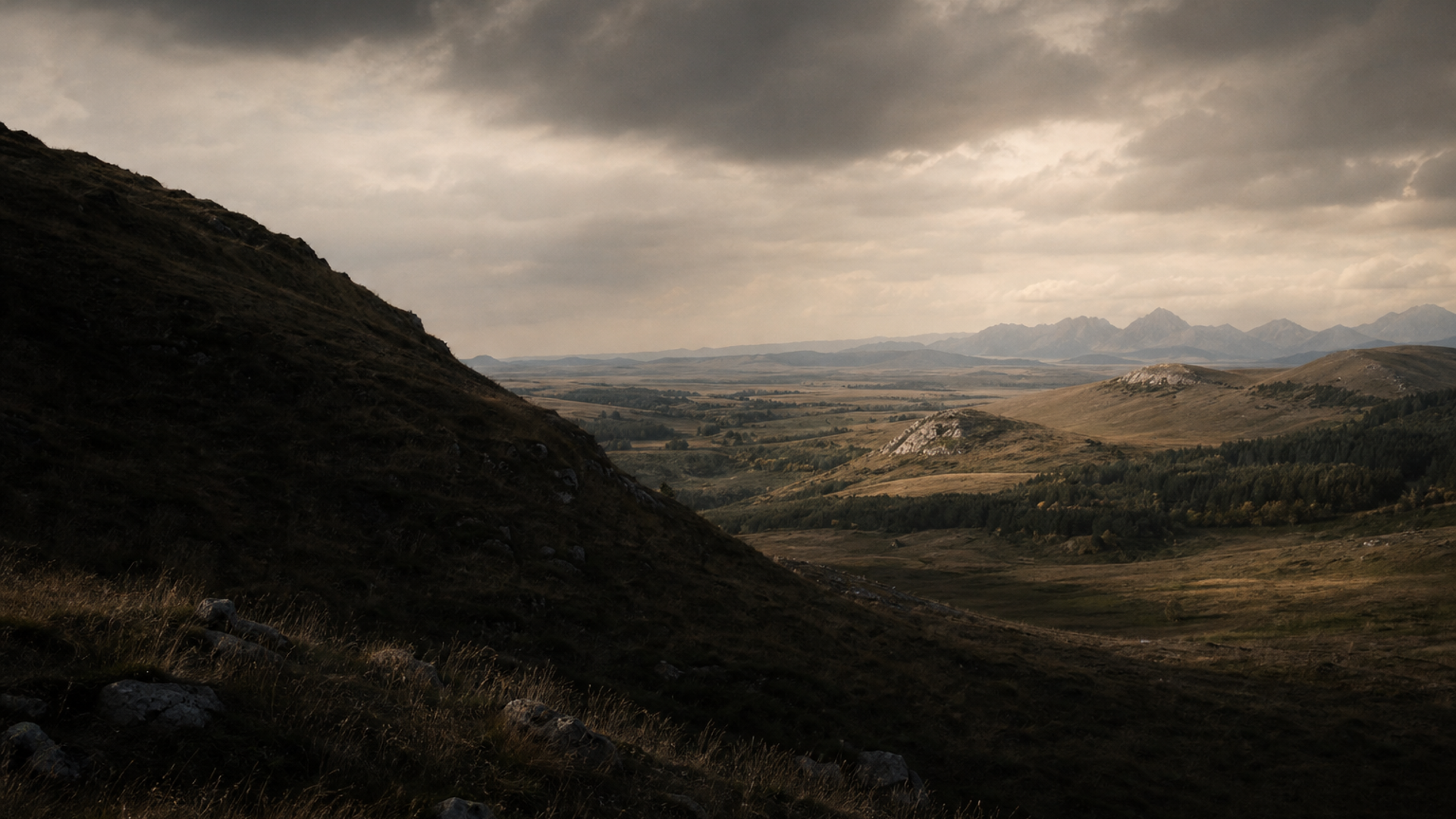
Along the fertile floodplain of the Lech River, between the rising towns of Augsburg and small hamlets such as Königsbrunn and Wehringen, a distinct Bell Beaker presence emerges around 2800 BCE. Archaeological data indicates characteristic bell-shaped pottery, individual grave goods, and occasional metal objects appearing in local funerary contexts at sites like Augsburg — Hugo-Eckener-Straße and Haunstetten (Unterer Talweg). The material culture suggests lively connections across Central Europe: stylistic traits of vessels and copper items point to long-distance exchange networks, while settlement traces imply mixed farming economies adapted to riverine landscapes.

Limited evidence suggests this presence was not a single colonizing wave but a series of interactions and movements. Radiocarbon dates from graves and associated contexts cluster broadly between c. 2800 and 2200 BCE, with continuity into later phases up to c. 1800 BCE at some localities. Archaeological data indicates local adaptation of Bell Beaker practices — funerary rites and pottery styles were integrated into pre-existing Neolithic traditions rather than uniformly replacing them.

Key uncertainties remain: site preservation varies across Augsburg and Haunstetten, and taphonomic processes have removed much of the domestic record. As with many regional Bell Beaker expressions, the Lech Valley story reads as a mosaic of adoption, mobility, and local continuity rather than a single, neat migration.

  • Bell Beaker material visible at multiple Lech Valley cemeteries and settlements
  • Combination of local Neolithic traditions and Bell Beaker styles
  • Radiocarbon cluster: mainly 2800–2200 BCE with longer local persistence
Capítulo IV

Daily Life & Society

The river plain and terrace landscapes of the Lech offered mixed opportunities: fields for cereals, meadows for grazing, and river channels for fish and transport. Archaeological finds — pottery sherds, flint tools, and occasional copper fragments — suggest communities engaged in small-scale mixed agriculture, pastoralism, and craft exchange. Settlements are often ephemeral in the current record; much of what we infer comes from burial assemblages where personal items reveal aspects of identity, status, and connections.

Graves at Haunstetten and Augsburg frequently contain bell-beaker pottery, sometimes accompanied by pins, stone tools, or metal objects. These items speak to personal display and networks of exchange. Workshops for flint and metalworking are not strongly represented at every site, but imported copper and finished objects indicate participation in broader trade routes that connected the Lech Valley to alpine and lowland resources.

Social organization likely combined kin-based households with emerging long-distance alliances. The archaeological record indicates varied burial treatments and grave goods, suggesting social differentiation but not uniform hierarchies. Seasonal mobility — moving herds or following resource cycles — may have complemented settled farming, a pattern consistent with many river-valley communities of the later third millennium BCE.

  • Mixed farming, pastoralism, and riverine resource use dominated
  • Burials with bell beakers and personal items indicate social networks
Capítulo V

Genetic Profile

The genetic dataset for Germany_Lech_BellBeaker comprises 21 individuals from Augsburg, Königsbrunn-Ampack, Haunstetten and Wehringen, providing a moderate-resolution window into population dynamics between 2800–1800 BCE. Y-chromosome results show a prevalence of R-lineages (6 individuals) alongside G-lineages (3 individuals). In the broader Bell Beaker horizon across Europe, R-associated Y-DNA (often R1b subtypes in other regions) has been linked to male-biased movements from Steppe-influenced populations; the presence of R here is consistent with that pattern. G-lineages are typically associated with earlier Neolithic farming groups and may reflect local paternal continuity or admixture.

Mitochondrial diversity in the Lech Valley set is notable: U (6), J (5), K (3), and H/H46 types (4 combined) indicate substantial maternal heterogeneity. This pattern — diverse maternal haplogroups alongside a more concentrated set of paternal lineages — supports a model of admixture in which incoming male-associated lineages mixed with local female populations, producing continuity in maternal ancestry while introducing new paternal lineages and genome-wide Steppe-related ancestry components. Archaeological context and genome-wide data together indicate a mixture of Steppe-derived ancestry and persistent Neolithic farmer ancestry in varying proportions.

Interpretation caveats: with a sample size of 21, patterns are informative but regionally limited. Spatial clustering of sites and preservation biases mean additional sampling could refine or alter the balance observed here.

  • Y-DNA shows R dominance with a notable presence of G (R 6; G 3)
  • mtDNA is diverse (U, J, K, H/H46), suggesting maternal continuity and admixture
Capítulo VI

Legacy & Modern Connections

The Lech Valley Bell Beakers contributed threads to the larger tapestry of Central European prehistory. Genetically, their mixture of Steppe-associated male lineages with diverse local maternal lineages exemplifies processes that helped shape the genetic landscape of later Bronze Age and historic Central Europe. Archaeologically, the spread of Bell Beaker pottery, new metalworking techniques, and mobile exchange networks left material and technological footprints that influenced subsequent Bronze Age communities in southern Germany.

Caution is essential when linking ancient groups to modern populations: these communities are part of long chains of migration, admixture, and cultural change. The Lech Valley data suggest assimilation and interaction rather than wholesale replacement—local women and landscapes remained central to the formation of later populations. For modern genetic ancestry platforms, these samples illuminate one regional chapter in a complex ancestral mosaic rather than a direct line to present-day identities.

  • Contributed Steppe-associated ancestry blended with local maternal lineages
  • Material and technological practices influenced later Bronze Age developments
Com IA

Assistente de IA

Haz preguntas sobre la cultura Lech Valley Bell Beakers

Assistente de IA por DNAGENICS

Desbloquear esta função
Pregunta sobre la cultura Lech Valley Bell Beakers. El asistente con IA puede explicar hallazgos genéticos, contexto histórico, pruebas arqueológicas y conexiones modernas, con sus límites de interpretación.
Exemplo de análise com IA

La cultura Lech Valley Bell Beakers representa un capítulo de la historia humana...

A análise genética permite estudar semelhanças com populações anteriores e possíveis adaptações. As amostras de DNA antigo fornecem informações para investigar padrões migratórios e relações entre populações, com limites que dependem do estudo e do contexto arqueológico.

Esta é uma antevisão da análise com IA. Aceder ao assistente completo para explorar informações sobre:

  • Composição e similaridade genética
  • Padrões migratórios e origens
  • Vida cotidiana e práticas culturais
  • Contexto genético moderno

Explore mais culturas antigas

Descubra a história de civilizações de diferentes partes do mundo antigo