A preparar o relatório

A carregar as informações e as referências disponíveis

Consultando el registro arqueológico...

Recopilando registros antiguos

Saltar para o conteúdo principal
Modern Namibia: A Living Ancestry
Cultura de destaque

Modern Namibia: A Living Ancestry

A concise, scientific snapshot linking recent archaeological context and DNA from modern Namibian samples.

2000 CE
Namibia
Desplázate para começar
Capítulo I

A História

Comprender la cultura Modern Namibia: A Living Ancestry

Seven modern Namibian samples (2000 CE) provide a preliminary window into contemporary Namibian ancestry. Archaeological landscapes—rock art, pastoral sites, colonial ports—frame genetic signals shaped by millennia of local continuity and recent admixture. Conclusions remain tentative due to limited samples.

Time Period

2000 CE (Modern Namibia)

Region

Namibia

Common Y-DNA

Not reported — limited sample set

Common mtDNA

Not reported — limited sample set

Capítulo II

Cronologia

Momentos-chave da história desta cultura

2000 CE

Modern samples dated to 2000 CE

Seven modern Namibian genomes sampled and dated to the year 2000 provide preliminary ancestry data; interpretations are tentative due to sample size.

Capítulo III

Origins & Emergence

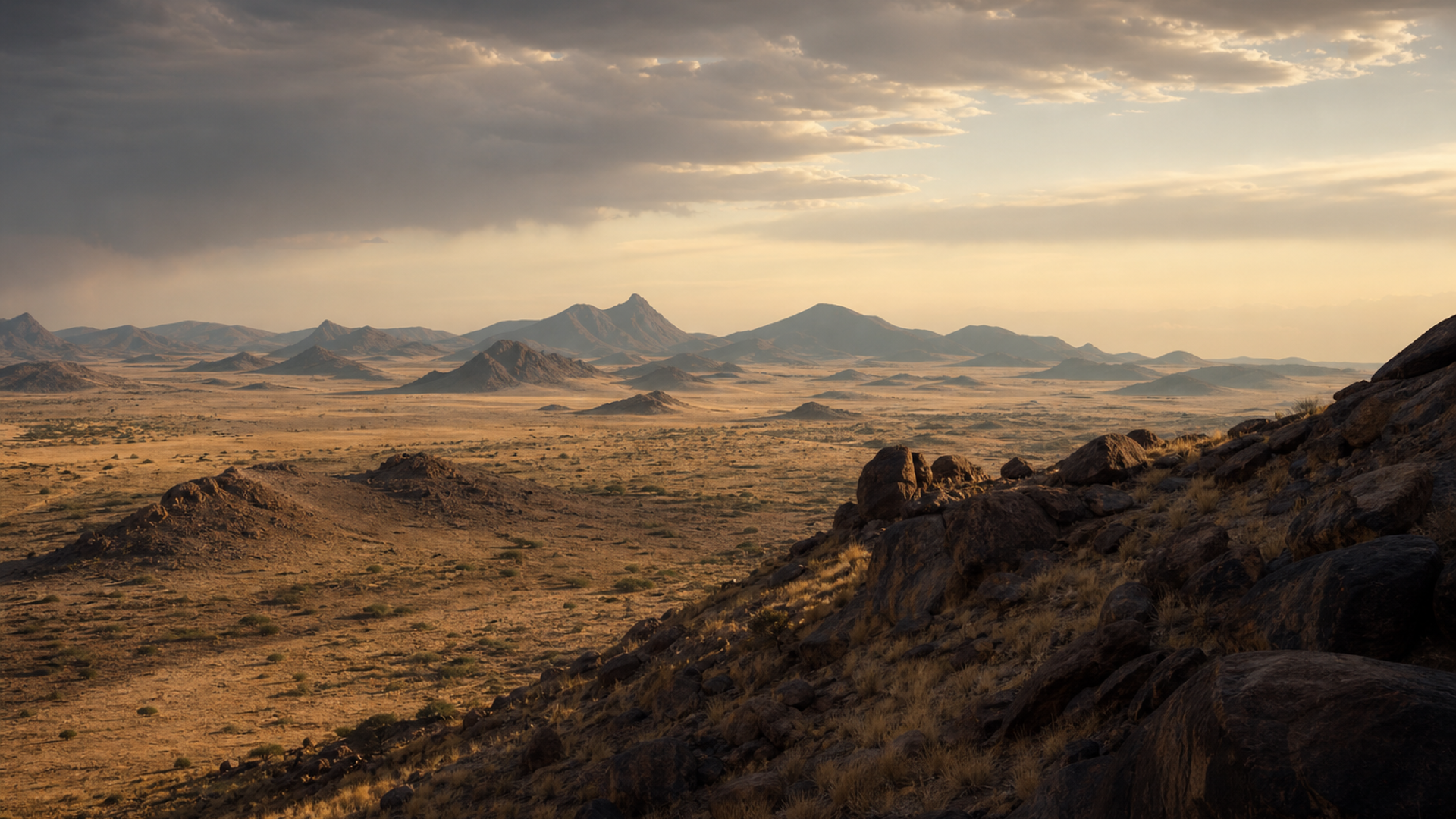
The seven samples in this dataset are all dated to 2000 CE, placing them squarely in the modern era of Namibian history. Archaeological context in Namibia is deep and multilayered: rock art panels in Twyfelfontein and Brandberg recall millennia of hunter‑gatherer presence, while later pastoralist and Bantu-speaking expansions reshaped settlement and material culture. Colonial contact from the late 19th century onward introduced new demographic streams and economic centers along the coast and rivers.

For these modern samples, "origins" should be read as a palimpsest — recent individuals whose ancestry was formed by ancient continuities (indigenous forager and pastoral lineages), expansions (Bantu-speaking agriculturalists), and historical movements (European, Asian, and other African contacts). Archaeological data indicates long-term occupation of Namibia’s diverse ecologies, but material culture alone cannot resolve the fine-scale ancestry components visible in DNA.

Limited evidence suggests that modern Namibian genomes frequently carry multiple time-depth layers. However, because this dataset includes only seven samples, any narrative about emergence and population formation must be preliminary: archaeological landscapes provide the stage, but genetics are required to read the script — and more samples are needed to do so reliably.

  • Modern samples (2000 CE) reflect deep archaeological layering in Namibia
  • Landscape includes rock art sites (Twyfelfontein, Brandberg) and pastoral archaeology
  • Small sample size makes broad origin claims preliminary
Capítulo IV

Daily Life & Society

Contemporary daily life in Namibia draws on diverse lifeways visible in the archaeological record. Pastoralism and agro-pastoral economies leave traces in settlement patterns, architecture, and portable material culture; hunter‑gatherer traditions are reflected in persistent hunting and foraging knowledge and in the rich tradition of rock art. Urban centers such as Windhoek and coastal towns arose through colonial-era trade and continue to concentrate economic and cultural interactions.

Archaeological data indicates continuity in craft, ornament, and landscape use alongside innovations introduced through trade and colonialism. Ethnographic observations and modern material culture help interpret how subsistence, kinship, and mobility shape genetic structure: mobile pastoralist groups tend to show different patterns of local kinship and gene flow than sedentary urban populations. For the seven modern samples here, contextual information (occupation, language, self-identified ethnicity) is critical but may be incomplete; therefore, connecting daily life to DNA must be done cautiously.

This living tapestry is cinematic: deserts and coasts bearing ancient engravings, communities that maintain ancestral knowledge, and ports that carried new peoples and genes into the region. Each strand influences the genetic signatures we observe today, but robust inferences require broader, geographically and socially representative sampling.

  • Modern lifeways reflect pastoral, forager, and urban influences
  • Material culture continuity coexists with historical innovations
  • Contextual metadata (occupation, language) is essential for interpreting DNA
Capítulo V

Genetic Profile

This dataset contains seven samples dated to 2000 CE. No specific Y‑DNA or mtDNA haplogroups were reported in the input metadata for these individuals, and the small sample count (<10) makes any genetic generalization preliminary. Archaeogenetic research across southern Africa has shown that present-day Namibian populations can carry multiple ancestry components including deep indigenous lineages (often reflected in Khoisan-associated maternal haplogroups such as L0d/L0k in broader studies), Bantu-associated lineages (including Y-haplogroups like E1b1a in regional contexts), and varying degrees of Eurasian admixture linked to historical trade and colonial contacts. It is important to emphasize that these broader patterns should not be directly extrapolated to this seven-sample set without explicit haplogroup calls.

Archaeological evidence offers hypotheses to test genetically: for example, continuity in rock art regions might correlate with retention of long-standing local maternal lineages; pastoralist spread could be associated with particular Y-chromosome distributions. Where metadata is available (place of origin, language family, self-identified group), it can inform models of recent admixture and sex‑biased gene flow. Given the limited number of samples, the responsible interpretation is cautious: draft hypotheses can be formed, but robust population-level conclusions await larger, geographically stratified datasets.

  • Seven modern samples — sample size too small for firm population claims
  • No specific Y-DNA or mtDNA haplogroups reported in these samples
  • Broader regional studies show indigenous, Bantu, and historical admixture signals
Capítulo VI

Legacy & Modern Connections

The living legacy of Namibia is both visible and genetic. Archaeological landscapes—ancient engravings, pastoral camps, colonial ports—remain reference points for identity and historical memory. Genetic data from modern individuals can illuminate personal and communal ancestry, reveal recent admixture events, and help trace movements that archaeology documents imperfectly.

For these seven 2000 CE samples, any connection to broader Namibian legacies must be framed as provisional. Limited sampling means that while individual ancestries may meaningfully reflect family histories, they are not a substitute for population-scale studies. Nonetheless, even small datasets are valuable: they provide pilot data that can guide future sampling strategies, help prioritize underrepresented regions, and suggest analytical paths that integrate archaeological context with genomic evidence. Through careful collaboration between archaeologists, geneticists, and communities, modern DNA can animate the archaeological record and enrich contemporary understandings of heritage.

  • Modern DNA can illuminate family and community ancestries within archaeological contexts
  • Small sample sizes are useful for pilot insights but require follow-up studies
Com IA

Assistente de IA

Haz preguntas sobre la cultura Modern Namibia: A Living Ancestry

Assistente de IA por DNAGENICS

Desbloquear esta função
Pregunta sobre la cultura Modern Namibia: A Living Ancestry. El asistente con IA puede explicar hallazgos genéticos, contexto histórico, pruebas arqueológicas y conexiones modernas, con sus límites de interpretación.
Exemplo de análise com IA

La cultura Modern Namibia: A Living Ancestry representa un capítulo de la historia humana...

A análise genética permite estudar semelhanças com populações anteriores e possíveis adaptações. As amostras de DNA antigo fornecem informações para investigar padrões migratórios e relações entre populações, com limites que dependem do estudo e do contexto arqueológico.

Esta é uma antevisão da análise com IA. Aceder ao assistente completo para explorar informações sobre:

  • Composição e similaridade genética
  • Padrões migratórios e origens
  • Vida cotidiana e práticas culturais
  • Contexto genético moderno

Explore mais culturas antigas

Descubra a história de civilizações de diferentes partes do mundo antigo