A preparar o relatório

A carregar as informações e as referências disponíveis

Consultando el registro arqueológico...

Recopilando registros antiguos

Saltar para o conteúdo principal
Modern Norway: Living Threads
Cultura de destaque

Modern Norway: Living Threads

Contemporary Norwegian identities seen through urban archaeology and DNA

2000 CE
Norway (including Bergen)
Desplázate para começar
Capítulo I

A História

Comprender la cultura Modern Norway: Living Threads

A concise, scientifically grounded portrait of 12 modern Norwegian samples (2000 CE), linking urban archaeological context in Bergen and Norway to genetic patterns and population history. Limited dataset — interpret with caution.

Time Period

2000 CE (modern)

Region

Norway (including Bergen)

Common Y-DNA

Not specified (modern Norway often I1, R1b, R1a)

Common mtDNA

Not specified (modern Norway often H, U, T lineages)

Capítulo II

Cronologia

Momentos-chave da história desta cultura

2000 CE

Modern sampling and contextual collection

Twelve modern Norwegian samples were recorded in 2000 CE, with provenance information including Bergen; used to connect lived archaeological context to genetic ancestry.

Capítulo III

Origins & Emergence

At the turn of the 21st century this dataset captures living threads of Norwegian population history rather than an archaeological culture in the traditional sense. The samples date to 2000 CE and derive from Norway, with explicit locality information including Bergen. Archaeological evidence for modern urban life comes from recent excavations of building layers, burials recovered beneath urban redevelopment contexts, and coastal cemetery work that reveal continuity and change in settlement patterns.

Interpreting origins for modern samples requires linking material culture traces, historical records, and genetic signals. Archaeological data indicates long-standing coastal occupation in western Norway and medieval urban growth in Bergen from the 11th century onward. The narrative of origin is thus layered: deep prehistoric ancestry, Viking Age mobility, medieval urbanization, and recent global movement all contribute. Limited evidence in this small sample set means conclusions about large-scale demographic events are tentative. Nonetheless, when archaeological stratigraphy and historical documentation align with genetic patterns, they build a more textured picture of continuity and admixture across centuries.

Key contextual points: these are contemporary samples captured within an archaeological and archival framework; the emphasis is on connecting lived environment and lineage rather than reconstructing prehistoric population replacement. Given the small and geographically clustered sample size, broader population-level claims should be treated as provisional.

  • Samples dated to 2000 CE; locations include Bergen and other Norwegian sites
  • Archaeological context ties modern urban layers and cemetery finds to recent history
  • Interpretations must account for layered ancestry from prehistoric to recent migration
Capítulo IV

Daily Life & Society

Modern Norwegian daily life in archaeological and documentary records reads as a palimpsest of maritime economy, urban crafts, and rural connections. Excavations in Bergen reveal commercial quarters, household assemblages, and reused building material that reflect continuous occupation and adaptation. Ethnographic and archival sources complement this picture, documenting trade networks, local crafts, and the rhythms of coastal communities that shaped diets, mobility, and social ties.

For samples collected in 2000 CE, material traces—ceramics, metalwork, household waste—anchor genetic profiles to particular lifeways. Archaeological data indicates that urban populations experienced greater influxes of people and goods, while rural communities often retained more localized practices. In a genetic context this can mean that individuals from the same modern nation-state may carry signals of both long-term local ancestry and recent admixture from wider European and global contacts.

Limited sample numbers and the focus on modern contexts mean that daily-life reconstructions rely heavily on historical and archaeological synthesis. Still, the convergence of artifacts, settlement patterns, and genetic data provides a vivid portrait of how individuals lived, moved, and intermarried in contemporary Norway.

  • Urban archaeological layers in Bergen document commercial and household activity
  • Material culture and archives help link genetic samples to lived environments
Capítulo V

Genetic Profile

The genetic component of this dataset consists of 12 modern Norwegian samples dated to 2000 CE. This is a modest sample size for population inference; while informative for individual ancestry and regional affinities, it is insufficient to capture the full genetic diversity of Norway. Archaeogenetic interpretation therefore emphasizes patterns compatible with archaeological and historical evidence rather than definitive population-level statements.
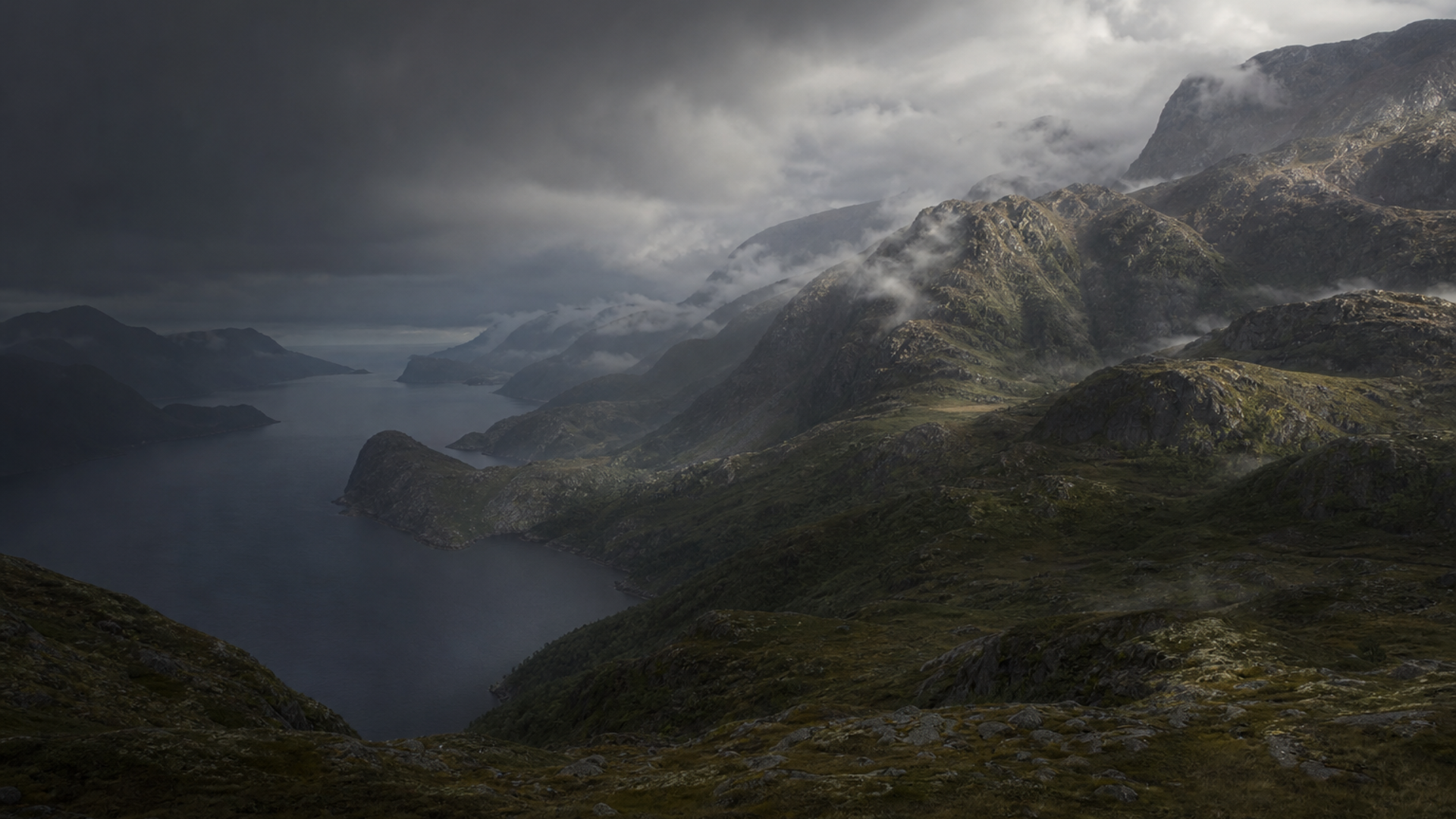
Modern Norwegian populations typically show continuity with northern and northwestern European gene pools shaped by Mesolithic and Neolithic ancestry, later mobility during the Viking Age, and continued gene flow in the medieval and modern periods. In broader studies, Y-DNA haplogroups such as I1, R1a, and R1b are commonly reported in Scandinavia, and mtDNA haplogroups H, U, and T appear frequently; however, the present dataset does not specify haplogroup frequencies. Where archaeological context is available—urban versus rural provenance—the genetic signals can be read alongside signs of mobility in the material record. For example, urban samples often display slightly higher heterogeneity consistent with historic trade and migration.

Because fewer than two dozen samples were analyzed, any trends should be described as preliminary. Further sampling across regions, time slices, and social contexts is necessary to robustly link genetic patterns to specific archaeological processes in modern Norway.

  • Dataset: 12 modern samples (2000 CE); small sample size warrants caution
  • Genetic signals should be interpreted with archaeological and historical context
Capítulo VI

Legacy & Modern Connections

Modern Norwegian identity emerges from a long interplay of local continuity and external connections. Archaeological layers in coastal towns and churchyard sequences document centuries of human presence, while genetic data records inherited lineages shaped by prehistoric settlement, Viking Age movement, medieval urbanization, and recent globalization. For contemporary users of ancestry platforms, these samples provide touchstones that link personal stories to a landscape of fjords, trade harbors, and parish communities.

The legacy of these lines is not a single narrative but a mosaic: descendants may carry markers of deep northern European ancestry alongside signals of more recent admixture. Given the limited and geographically clustered nature of the samples, the strongest legacy statement is methodological: combining archaeology, history, and genetics yields a richer, more nuanced understanding of modern Norwegian origins than any one line of evidence alone.

  • Modern genetic identity reflects layered histories from prehistoric to recent times
  • Combining archaeology and DNA offers the most nuanced view of contemporary ancestry
Com IA

Assistente de IA

Haz preguntas sobre la cultura Modern Norway: Living Threads

Assistente de IA por DNAGENICS

Desbloquear esta função
Pregunta sobre la cultura Modern Norway: Living Threads. El asistente con IA puede explicar hallazgos genéticos, contexto histórico, pruebas arqueológicas y conexiones modernas, con sus límites de interpretación.
Exemplo de análise com IA

La cultura Modern Norway: Living Threads representa un capítulo de la historia humana...

A análise genética permite estudar semelhanças com populações anteriores e possíveis adaptações. As amostras de DNA antigo fornecem informações para investigar padrões migratórios e relações entre populações, com limites que dependem do estudo e do contexto arqueológico.

Esta é uma antevisão da análise com IA. Aceder ao assistente completo para explorar informações sobre:

  • Composição e similaridade genética
  • Padrões migratórios e origens
  • Vida cotidiana e práticas culturais
  • Contexto genético moderno

Explore mais culturas antigas

Descubra a história de civilizações de diferentes partes do mundo antigo




