A preparar o relatório

A carregar as informações e as referências disponíveis

Consultando el registro arqueológico...

Recopilando registros antiguos

Saltar para o conteúdo principal
Ob River Late Neolithic — Kuznetsk‑Altai
Cultura de destaque

Ob River Late Neolithic — Kuznetsk‑Altai

Four genomes from Altai river valleys illuminate Late Neolithic lifeways and deep Siberian lineages

5642 CE - 3099 BCE
Kuznetsk‑Altai (Altai Krai), Russia
Desplázate para começar
Capítulo I

A História

Comprender la cultura Ob River Late Neolithic — Kuznetsk‑Altai

Four Late Neolithic individuals (5642–3099 BCE) from Itkul, Kostenkova‑Izbushka and Ust'-Isha in Altai Krai connect Ob River cultures to Y haplogroups C and Q and diverse mtDNA (A, R, U). Limited samples make conclusions preliminary but evocative.

Time Period

5642–3099 BCE

Region

Kuznetsk‑Altai (Altai Krai), Russia

Common Y-DNA

C (3), Q (1)

Common mtDNA

A+, R, A, U

Capítulo II

Cronologia

Momentos-chave da história desta cultura

5642 BCE

Earliest sample in dataset

Earliest individual dated to ca. 5642 BCE from the Itkul (Bolshoy‑Mys) locality in Altai Krai.

Capítulo III

Origins & Emergence

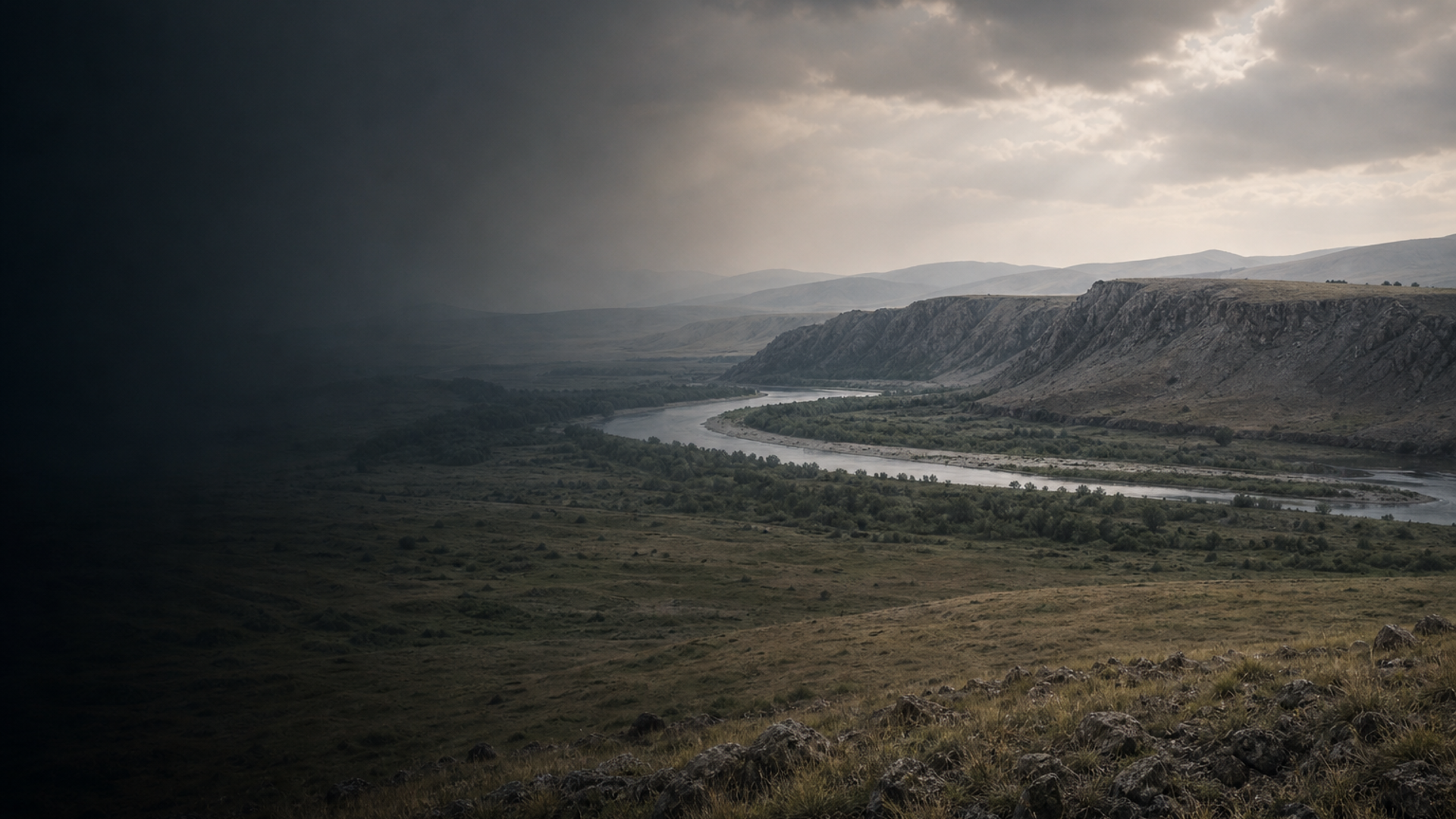
Beneath a skyline of windswept river terraces and birch‑scattered foothills, the Late Neolithic people of the Kuznetsk‑Altai region occupied a landscape shaped by the Ob River and its tributaries. Archaeological data indicates occupation in riverine lowlands and valley slopes during the mid to late Neolithic; the four sampled individuals span ca. 5642–3099 BCE and were recovered from Itkul (Bolshoy‑Mys), Kostenkova‑Izbushka and Ust'-Isha in Altai Krai.

Material signatures attributed to the Late Neolithic Ob River cultural horizon include scattered settlement traces, burial contexts and artifact assemblages reported in regional surveys, but direct association between specific artifacts and these four genomes is limited. Limited evidence suggests that population continuity in the valley corridors may have been punctuated by mobility and interaction with neighbouring upland groups.

From a genetic perspective, these individuals carry paternal lineages dominated by haplogroup C and Q—lineages with deep roots in northern and eastern Eurasia—while maternal lineages include A, R and U branches. This combination paints a picture of people rooted in Siberian ancestry yet participating in broader networks of exchange and mobility along river arteries.

Because the dataset comprises only four genomes, interpretations about origins and population dynamics are provisional: archaeological context and additional ancient DNA will be essential to test hypotheses about migration, continuity and cultural transmission in the Kuznetsk‑Altai.

  • Samples from Itkul, Kostenkova‑Izbushka and Ust'-Isha (Altai Krai)
  • Dates range 5642–3099 BCE, Late Neolithic Ob River horizon
  • Preliminary evidence of deep Siberian paternal lineages (C, Q)
Capítulo IV

Daily Life & Society

Archaeological traces in the Kuznetsk‑Altai valley suggest lives lived in seasonal rhythms: fishing and hunting along the Ob and its tributaries, gathering of wild resources in forest‑steppe ecotones, and the crafting of bone, stone and organic tools where preservation allows. At sites such as Ust'-Isha and Itkul, burial contexts and settlement remnants provide the clearest windows into social practice, though preservation and excavation coverage vary.

Limited evidence indicates that communities were mobile at least seasonally, exploiting riverine routes for travel and exchange. Ceramic fragments and lithic scatters (where reported) imply local production and adaptive strategies tailored to a northern landscape of rich freshwater resources and cold seasons. Funerary deposits—sometimes located on raised terraces above floodplains—suggest attention to place and memory, with grave goods reflecting personal identity and perhaps social ties.

Social organization can only be sketched from these fragments: small kin groups or extended family units moving across predictable circuits, connected by trade or marriage to neighbouring groups. The small number of ancient genomes means we cannot yet reconstruct fine‑grained social structure; instead we combine material traces and genetic signals to form a cautious, evocative portrait of everyday resilience along the Ob.

  • Riverine subsistence and seasonal mobility inferred from site contexts
  • Burial contexts hint at place‑based memory and small social groups
Capítulo V

Genetic Profile

The four individuals attributed to Russia_Ob_LN_KuznetskAltai present a compact but meaningful genetic snapshot. Uniparental markers are dominated by Y‑DNA haplogroup C (three individuals) and Q (one individual), while mitochondrial haplogroups include A+, R, A and U. These markers are characteristic of broad northern and eastern Eurasian ancestries: haplogroup C is frequent in Siberia and parts of East Asia, haplogroup Q is widespread in Siberia and also gives rise to lineages seen in the Americas, and mtDNA A and U lineages have deep regional histories across Eurasia.

Archaeological and genetic data combined suggest a population with strong deep Siberian affinities. However, because only four samples are available, these uniparental signatures must be treated cautiously: they represent individual lineages rather than the full population diversity. Genome‑wide data (if available) would provide greater resolution about admixture events, effective population size and affinities to neighbouring Neolithic groups.

Limited evidence suggests potential continuity with later Altai and broader Siberian populations, but alternative scenarios — such as small‑scale migrations, patrilocal residence patterns or founder effects — could also explain the skew toward C and Q Y‑lineages. Future sampling and genome‑wide analyses will be required to distinguish between continuity, gene flow and social structure influences on the observed genetic pattern.

  • Y‑DNA: predominance of C (3) and presence of Q (1), suggesting deep Siberian paternal lines
  • mtDNA diversity (A+, R, A, U) indicates mixed maternal ancestries; small sample size limits population inference
Capítulo VI

Legacy & Modern Connections

The Kuznetsk‑Altai Late Neolithic genomes form a modest yet evocative bridge between ancient riverine lifeways and later populations in Siberia. Genetic markers observed here — paternal C and Q, maternal A, R and U — resonate with lineages found among later Siberian groups and, through long‑distance connections, with populations beyond the region. Archaeological continuity in settlement locations and funerary practices hints at cultural persistence, but direct lines of descent cannot be claimed on the basis of four genomes alone.

These individuals are valuable for calibrating models of population history in southern Siberia: they anchor a time depth for certain Siberian haplogroups in the Ob River valleys and help shape questions about how river corridors facilitated movement and gene flow. For modern communities and researchers, the legacy is twofold — a tangible genetic inheritance detectable in broad patterns, and an archival reminder that many stories of the past remain incomplete until more data arrives. Ongoing fieldwork and ancient DNA sampling will gradually transform preliminary impressions into robust narratives about the peoples of the Kuznetsk‑Altai.

  • Marks deep Siberian lineages that may contribute to later regional gene pools
  • Current connections to modern populations are suggestive but require larger samples
Com IA

Assistente de IA

Haz preguntas sobre la cultura Ob River Late Neolithic — Kuznetsk‑Altai

Assistente de IA por DNAGENICS

Desbloquear esta função
Pregunta sobre la cultura Ob River Late Neolithic — Kuznetsk‑Altai. El asistente con IA puede explicar hallazgos genéticos, contexto histórico, pruebas arqueológicas y conexiones modernas, con sus límites de interpretación.
Exemplo de análise com IA

La cultura Ob River Late Neolithic — Kuznetsk‑Altai representa un capítulo de la historia humana...

A análise genética permite estudar semelhanças com populações anteriores e possíveis adaptações. As amostras de DNA antigo fornecem informações para investigar padrões migratórios e relações entre populações, com limites que dependem do estudo e do contexto arqueológico.

Esta é uma antevisão da análise com IA. Aceder ao assistente completo para explorar informações sobre:

  • Composição e similaridade genética
  • Padrões migratórios e origens
  • Vida cotidiana e práticas culturais
  • Contexto genético moderno

Explore mais culturas antigas

Descubra a história de civilizações de diferentes partes do mundo antigo