A preparar o relatório

A carregar as informações e as referências disponíveis

Consultando el registro arqueológico...

Recopilando registros antiguos

Saltar para o conteúdo principal
Punta Santa Ana Foragers (c.7,300 BP)
Cultura de destaque

Punta Santa Ana Foragers (c.7,300 BP)

A coastal Patagonian life glimpsed through a single ancient individual and ancient DNA

5634 CE - 50517300 BCE
Punta Santa Ana, Patagonia, Chile
Desplázate para começar
Capítulo I

A História

Comprender la cultura Punta Santa Ana Foragers (c.7,300 BP)

Archaeological and genetic evidence from Punta Santa Ana, Patagonia (5634–5051 BCE) offers a rare window into mid-Holocene coastal foragers in southern Chile. Limited DNA from one sample hints at deep Native American ancestry; conclusions remain preliminary.

Time Period

5634–5051 BCE (c.7,300 BP)

Region

Punta Santa Ana, Patagonia, Chile

Common Y-DNA

Unknown / not reported (single sample)

Common mtDNA

Unknown / not reported (single sample)

Capítulo II

Cronologia

Momentos-chave da história desta cultura

5634 BCE

Punta Santa Ana occupation (early sampled individual)

An ancient individual dated to the site's mid-Holocene occupation provides a molecular and archaeological snapshot of coastal foragers in Patagonia.

Capítulo III

Origins & Emergence

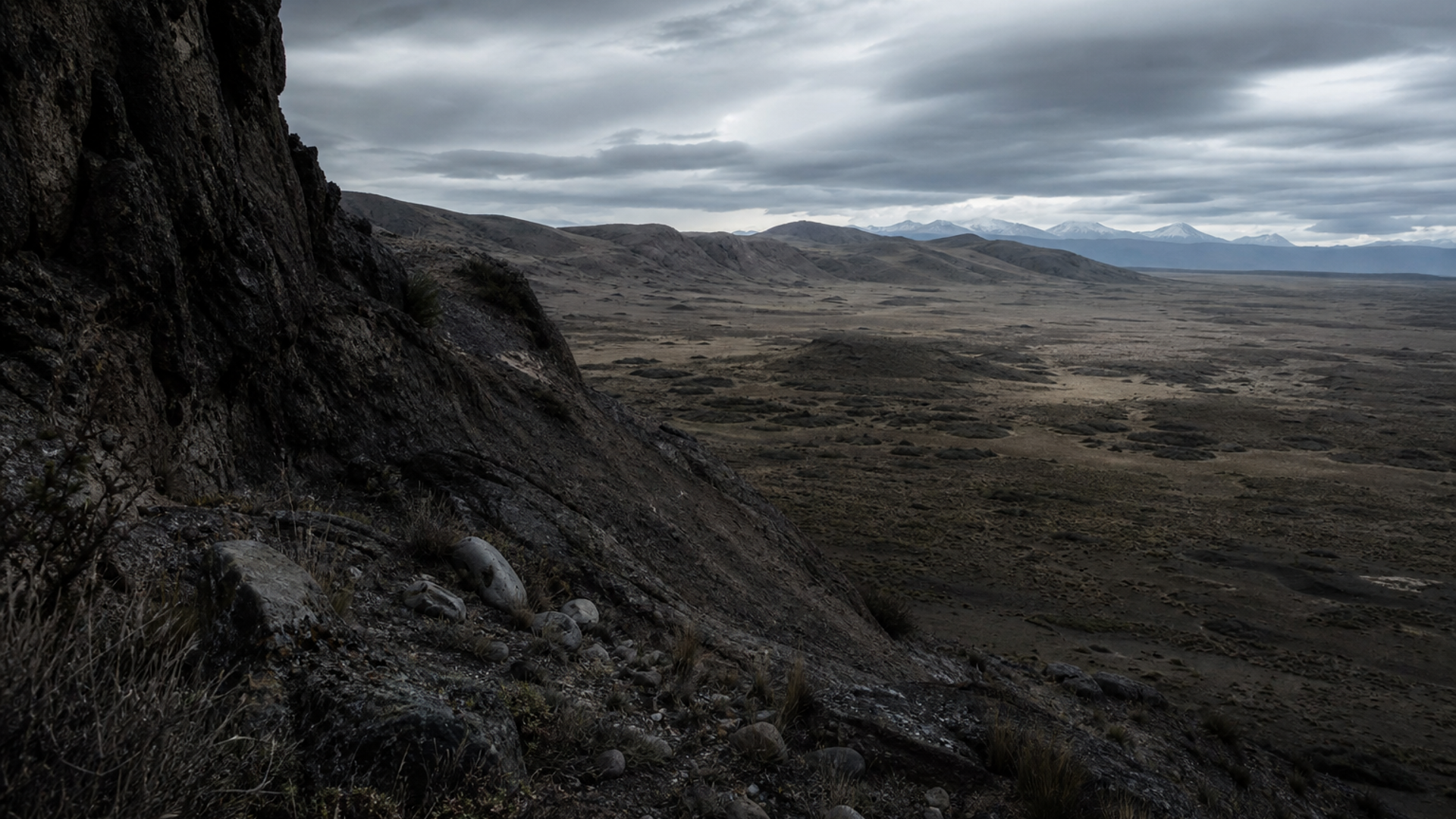
Perched on the cold, wind-swept shores of southern Chile, Punta Santa Ana preserves the fragile traces of people who lived there around 5634–5051 BCE. Archaeological data indicates shell-rich deposits and stone tool scatters at the Punta Santa Ana site, consistent with a pattern of coastal foraging that took advantage of rich intertidal and nearshore resources. The site sits within a broader mid-Holocene landscape of shifting sea levels, kelp forests, and migrating marine mammals — a cinematic backdrop against which small bands of highly mobile people adapted.

Limited evidence suggests that these communities were part of long-standing coastal traditions in Patagonia rather than transient visitors. The material record at Punta Santa Ana, while sparse, shows continuity with other southern Chilean coastal sites in tool form and subsistence focus. However, the archaeological picture is fragmentary: site preservation varies, and many open-air contexts are subject to erosion. As a result, interpretations of social complexity, seasonality, and population size remain cautious and provisional.

Genetically, a single ancient individual from Punta Santa Ana provides a rare molecular timestamp for this coastal adaptation. While that individual cannot represent the full diversity of the region, their presence anchors a narrative of human persistence in the southern cone during the mid-Holocene and invites comparison with other early Patagonian and southern South American remains.

  • Site date range: 5634–5051 BCE (c.7,300 BP)
  • Coastal forager economy implied by shell and lithic remains
  • Evidence is limited — interpretations remain provisional
Capítulo IV

Daily Life & Society

Imagine dawn over a rocky shoreline: smoke from small hearths mingles with sea spray, and the first light catches on scavenged kelp and flaked stone tools. Archaeological indicators at Punta Santa Ana — shell concentrations, butchered fish and possibly bird bones, along with chipped stone implements — paint a picture of intimate knowledge of the sea and its rhythms. Seasonal rounds likely combined intertidal gathering, shore fishing, and opportunistic hunting of sea mammals and seabirds.

Social life for such communities was probably organized in small, flexible bands with strong knowledge of local tides, currents, and weather. Material culture tends to emphasize portable technology rather than monumental architecture, pointing to mobility and adaptation. Spatial patterns at the site suggest repeated short-term occupations rather than large permanent settlements, consistent with ethnographic analogs of southern coastal hunter-gatherers.

Archaeological data indicates skillful use of local resources and resilient lifeways in a challenging environment. Yet many details remain unknown: we lack clear evidence for exchange networks, ritual practice, or long-term demographic trends at Punta Santa Ana. Continued excavation and collaboration with descendant communities are essential to deepen understanding.

  • Subsistence focused on shellfish, fish, and seabirds
  • Small, mobile bands with portable toolkits
Capítulo V

Genetic Profile

The genetic story for Punta Santa Ana is framed by one ancient sample dated within 5634–5051 BCE. As a single datapoint, it must be read cautiously: sample count below ten means conclusions are preliminary. The available DNA contributes a crucial temporal anchor for coastal populations in southern Chile, but it cannot capture population-level diversity or patterns of movement on its own.

Where broader ancient DNA studies in South America show consistent signals of deep Native American ancestry derived from early migrations related to Beringian and first American lineages, the Punta Santa Ana individual likely falls within that overarching genetic landscape. Archaeological data indicates long-term coastal occupation in Patagonia, and genetic continuity with later southern populations remains a plausible hypothesis, but current evidence from this site neither confirms nor refutes direct continuity.

Genetic analyses of ancient remains can inform ancestry, kinship, and even diet when combined with isotopic studies. For Punta Santa Ana, future additional samples and genome-wide data would help test whether coastal Patagonian groups formed distinct genetic clusters, participated in regional gene flow, or show affinities to inland groups. Until then, statements must emphasize uncertainty and the need for more samples, respectful sampling practices, and collaboration with local communities.

  • Single sample — interpretations are preliminary
  • Likely reflects deep Native American ancestry patterns, but unconfirmed
Capítulo VI

Legacy & Modern Connections

The human presence at Punta Santa Ana is part of a long, layered story of occupation along the southern Pacific margin. Archaeological continuity across Patagonia suggests cultural persistence of coastal lifeways that have resonance for Indigenous peoples of southern Chile today. However, direct genealogical links between one ancient individual and modern communities cannot be assumed without broader genetic and collaborative evidence.

Ancient DNA from sites like Punta Santa Ana helps illuminate deep-time population dynamics and can support community-driven research into heritage and history. It also highlights the responsibility of scientists to engage ethically: results should be communicated with caution, sensitivity, and in partnership with descendant groups. Ultimately, the site's value lies not only in fragments of bone and shell, but in how those fragments, combined with genetics, enrich contemporary understandings of place, continuity, and change in Patagonia.

  • Suggests long-term coastal traditions in southern Chile
  • Genetic links to modern groups remain tentative and require collaboration
Com IA

Assistente de IA

Haz preguntas sobre la cultura Punta Santa Ana Foragers (c.7,300 BP)

Assistente de IA por DNAGENICS

Desbloquear esta função
Pregunta sobre la cultura Punta Santa Ana Foragers (c.7,300 BP). El asistente con IA puede explicar hallazgos genéticos, contexto histórico, pruebas arqueológicas y conexiones modernas, con sus límites de interpretación.
Exemplo de análise com IA

La cultura Punta Santa Ana Foragers (c.7,300 BP) representa un capítulo de la historia humana...

A análise genética permite estudar semelhanças com populações anteriores e possíveis adaptações. As amostras de DNA antigo fornecem informações para investigar padrões migratórios e relações entre populações, com limites que dependem do estudo e do contexto arqueológico.

Esta é uma antevisão da análise com IA. Aceder ao assistente completo para explorar informações sobre:

  • Composição e similaridade genética
  • Padrões migratórios e origens
  • Vida cotidiana e práticas culturais
  • Contexto genético moderno

Explore mais culturas antigas

Descubra a história de civilizações de diferentes partes do mundo antigo