A preparar o relatório

A carregar as informações e as referências disponíveis

Consultando el registro arqueológico...

Recopilando registros antiguos

Saltar para o conteúdo principal
Riverlands of the Murray: NSW Pre‑European
Cultura de destaque

Riverlands of the Murray: NSW Pre‑European

Late Holocene lifeways along the Murray and Willandra—archaeology and maternal DNA converge

400 CE - 1788 CE
New South Wales, Australia
Desplázate para começar
Capítulo I

A História

Comprender la cultura Riverlands of the Murray: NSW Pre‑European

Archaeological evidence from Barham Forest/Koondrook‑Perricoota and the Willandra Lakes Region (400–1788 CE) reveals riverine adaptations and deep Indigenous continuity. Two ancient mtDNA samples (haplogroup S) suggest maternal links to broader Aboriginal Australian lineages, but conclusions are preliminary.

Time Period

400 CE – 1788 CE

Region

New South Wales, Australia

Common Y-DNA

Not reported / no data

Common mtDNA

S (2)

Capítulo II

Cronologia

Momentos-chave da história desta cultura

50000 BCE

Initial peopling of Sahul

Early human arrival in Sahul (the ancient Australia–New Guinea landmass) established the deep time foundation for later regional cultures, including NSW riverine groups.

Capítulo III

Origins & Emergence

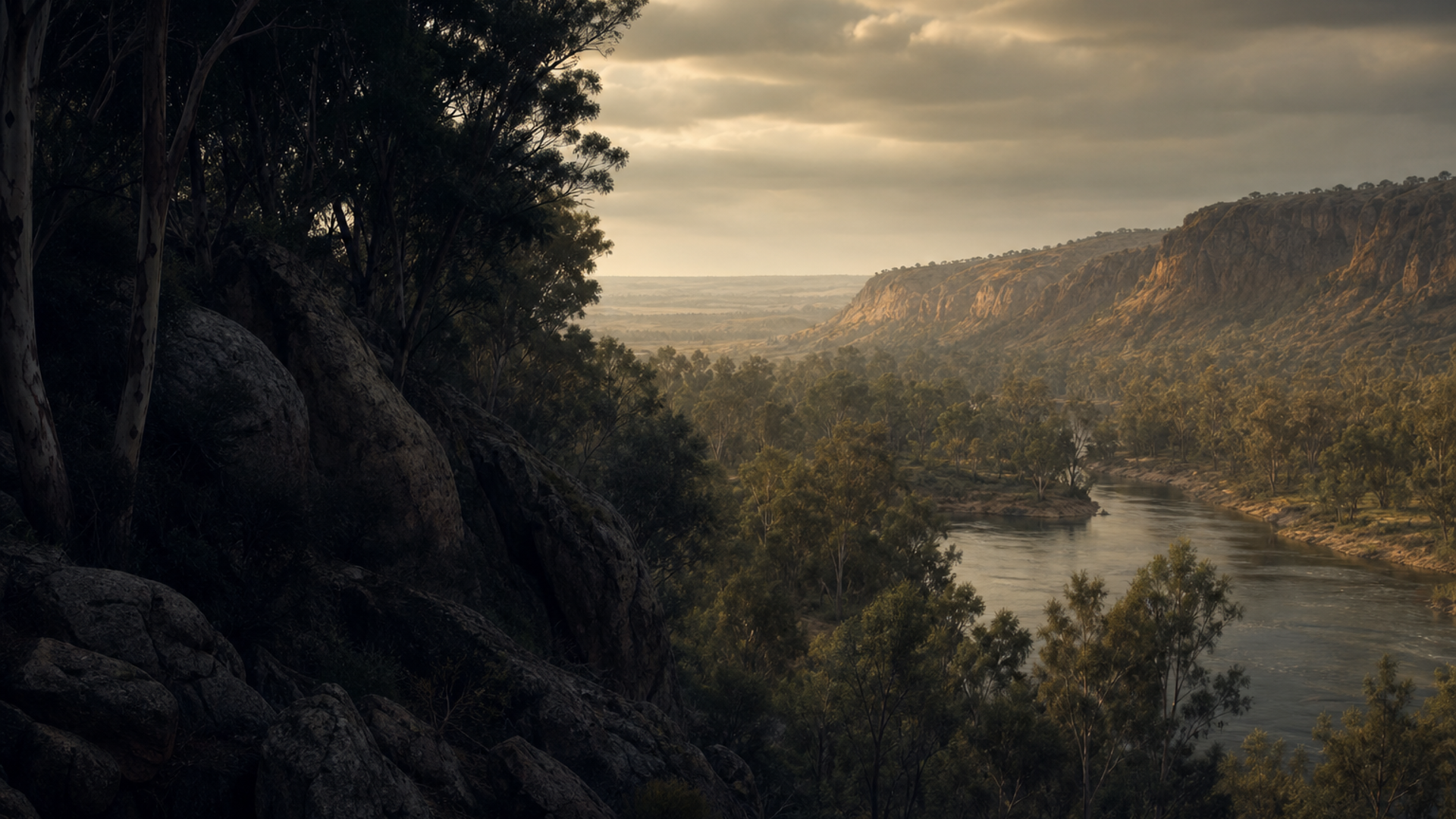
Across the low, braided river plains and ephemeral lakes of south‑western New South Wales, human presence in the Late Holocene reads like a palimpsest of campfires, tool scatters and seasonal pathways. Archaeological data indicates that communities occupying the Barham Forest/Koondrook‑Perricoota corridor (Murray River floodplain) and the Willandra Lakes Region continued long traditions of exploiting wetlands, reedbeds and lunettes well into the centuries before European contact (roughly 400 CE to 1788 CE for the samples considered here).

Environmental shifts—changing lake levels in the Willandra basin and fluctuations in river flow along the Murray—shaped mobility, site placement and resource calendars. Material culture recovered from open camps and hearth sites points to continuity in stone tool manufacture, ochre use and complex landscape knowledge. While deep time in this region extends back tens of thousands of years, the archaeological signature for the 400–1788 CE window is one of resilient adaptation: people woven into riparian ecologies, practicing seasonal rounds that balanced hunting, fishing and plant processing.

Limited evidence suggests local groups maintained enduring place‑based identities, with trade and exchange connecting river corridors to upland zones. Because only two genetic samples accompany these archaeological contexts, any narrative that links specific genetic lineages to detailed cultural practices must remain cautious and provisional.

  • Late Holocene occupation of Murray floodplains and Willandra lakes
  • Adaptations to variable wetland and riverine environments
  • Strong archaeological continuity but limited genetic sampling
Capítulo IV

Daily Life & Society

Daily life in the riverlands of New South Wales was governed by the pulse of water. Fish, freshwater mussels, waterfowl and plants such as riverine tubers and seeds formed predictable seasonal staples, supplemented by terrestrial game from nearby woodlands. Archaeological remains—hearths, shell and bone scatters, and flaked stone assemblages—attest to repeated occupations of sandbars, levees and lunettes where raw materials for tools and firewood were available.

Communities practiced mobility attuned to resource calendars: short residential moves during floods, longer seasonal journeys to trade ochre, stone and plant products. Material signals of social life included ground stone tools, hafted spear points, and ochre fragments used in paint and ceremony. Architectural traces are ephemeral—leaners, windbreaks and hearth structures—but ethnographic and archaeological synthesis suggests tightly knit social networks, with songlines and oral geographies encoding place names, resource rights and ceremonial obligations.

Archaeological data indicates burial and mortuary practices were regionally varied; Willandra contains some of the most compelling ancient burial evidence in Australia, underscoring long‑term landscape attachment. Nevertheless, many aspects of social organization, ritual and identity remain best accessed through continued collaboration with descendant Aboriginal communities.

  • Riverine subsistence: fish, mussels, waterfowl, seasonal plants
  • Seasonal mobility and exchange networks tied to water cycles
Capítulo V

Genetic Profile

Two ancient mitochondrial genomes sampled from sites associated with the Australia_NSW_PreEuropean grouping—one from Barham Forest/Koondrook‑Perricoota and one from the Willandra Lakes Region—both carry mtDNA haplogroup S. Haplogroup S is recognized among Indigenous Australian maternal lineages and contributes to a picture of deep maternal continuity across the continent. Mitochondrial DNA, inherited only through mothers, provides a focused lens on maternal ancestry but does not capture the full complexity of autosomal ancestry or paternal lineages.

No Y‑chromosome haplogroups are reported for these two samples, so the paternal side remains uncharacterized here. Importantly, with a sample count of two, any population‑level inferences are preliminary. Limited evidence suggests these individuals share maternal affinities with broader Aboriginal Australian mtDNA diversity, consistent with archaeological indications of long‑term regional occupation and continuity. Ancient DNA from Willandra and other Australian sites has also shown that Indigenous Australian populations separated early from Eurasian lineages tens of thousands of years ago; the presence of haplogroup S in late Holocene samples aligns with that deep history.

Future work—larger sample sizes, high‑coverage genomes, and respectful collaboration with Indigenous communities—will be essential to test hypotheses about local continuity, migration, and kinship patterns.

  • Both samples (n=2) carry mtDNA haplogroup S
  • No reported Y‑DNA; conclusions are highly preliminary
Capítulo VI

Legacy & Modern Connections

The material and genetic traces from these river corridors gesture toward continuity between past and present: contemporary Aboriginal communities in New South Wales maintain languages, songlines and custodial responsibilities tied to the same landscapes recorded archaeologically. Genetic data here—two mtDNA S results—tentatively echo deep maternal ties across the region, but the small sample size requires humility in interpretation.

Archaeology and genetics together emphasize the antiquity of Indigenous relationships to place and the resilience of cultural practices through environmental change. Ethical research in this context means prioritizing Indigenous leadership, supporting cultural heritage protection, and ensuring that any genetic interpretations are communicated in partnership with descendant communities. Repatriation, joint stewardship of sites, and community‑led research agendas are essential components of responsible scholarship that honors living traditions as the primary legacy of these lands.

  • Genetic and archaeological evidence support deep regional continuity
  • Research must center Indigenous collaboration, stewardship and rights
Com IA

Assistente de IA

Haz preguntas sobre la cultura Riverlands of the Murray: NSW Pre‑European

Assistente de IA por DNAGENICS

Desbloquear esta função
Pregunta sobre la cultura Riverlands of the Murray: NSW Pre‑European. El asistente con IA puede explicar hallazgos genéticos, contexto histórico, pruebas arqueológicas y conexiones modernas, con sus límites de interpretación.
Exemplo de análise com IA

La cultura Riverlands of the Murray: NSW Pre‑European representa un capítulo de la historia humana...

A análise genética permite estudar semelhanças com populações anteriores e possíveis adaptações. As amostras de DNA antigo fornecem informações para investigar padrões migratórios e relações entre populações, com limites que dependem do estudo e do contexto arqueológico.

Esta é uma antevisão da análise com IA. Aceder ao assistente completo para explorar informações sobre:

  • Composição e similaridade genética
  • Padrões migratórios e origens
  • Vida cotidiana e práticas culturais
  • Contexto genético moderno

Explore mais culturas antigas

Descubra a história de civilizações de diferentes partes do mundo antigo