A preparar o relatório

A carregar as informações e as referências disponíveis

Consultando el registro arqueológico...

Recopilando registros antiguos

Saltar para o conteúdo principal
Serednii Stih — Ukraine Eneolithic
Cultura de destaque

Serednii Stih — Ukraine Eneolithic

Five genomes from Kopachiv and Deriivka illuminate a restless steppe between 4446–3528 BCE.

4446 CE - 3528 BCE
Central Ukraine (Kopachiv, Deriivka)
Desplázate para começar
Capítulo I

A História

Comprender la cultura Serednii Stih — Ukraine Eneolithic

Archaeogenetic and archaeological evidence from five Serednii Stih individuals (4446–3528 BCE) in central Ukraine reveals maternal lineages tied to hunter-gatherers and Neolithic farmers. Limited sample size makes conclusions preliminary, but bones and genomes together hint at a mobile, mixed-steppe lifeway.

Time Period

4446–3528 BCE (Eneolithic)

Region

Central Ukraine (Kopachiv, Deriivka)

Common Y-DNA

Not reported / insufficient data (sample size 5)

Common mtDNA

U (3), T (1) — limited samples

Capítulo II

Cronologia

Momentos-chave da história desta cultura

4000 BCE

Serednii Stih occupation in central Ukraine

Settlements and burials at Kopachiv and Deriivka reflect Eneolithic lifeways of mobility, herding, and exchange across the forest‑steppe.

Capítulo III

Origins & Emergence

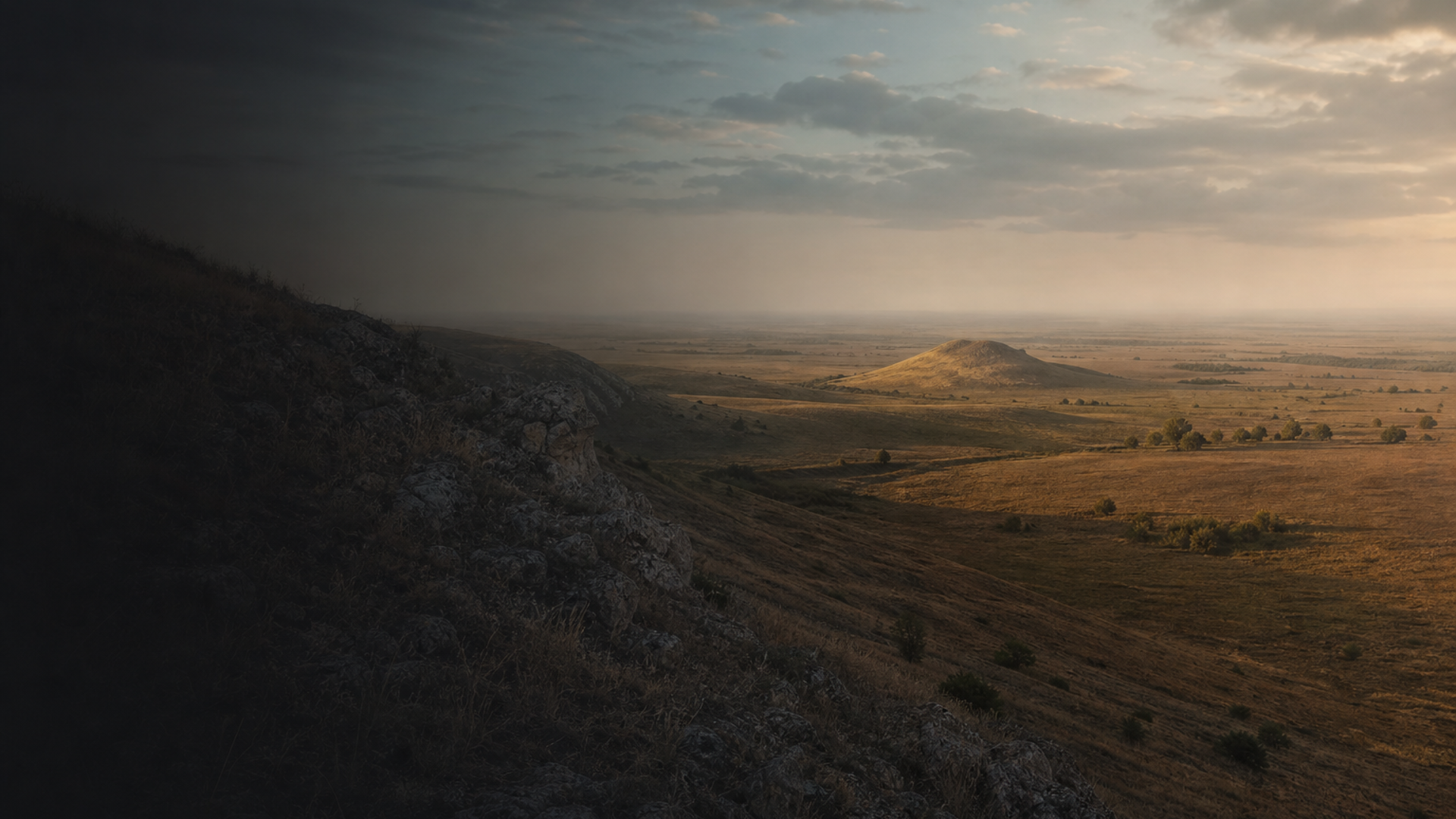
On the broad, wind-swept plains of central Ukraine the Serednii Stih horizon emerges in the archaeological record as a network of settlements and burials that bridged the Neolithic and the later Bronze Age steppe. Radiocarbon dates associated with the five genetic samples span 4446–3528 BCE, placing them squarely in an Eneolithic landscape of shifting subsistence and contact. Sites such as Deriivka (Kirovohrad Oblast) appear in excavation reports as long-studied loci for Serednii Stih material culture, while Kopachiv (Kyiv Oblast) contributes new local contexts for burial and settlement.

Archaeological data indicates a mix of mobile pastoralism, seasonal occupation, and local foraging and cultivation — a mosaic rather than a single economy. Pottery styles, burial orientations, and settlement traces hint at cultural connections across the middle Dnieper and into neighboring forest-steppe zones. Limited evidence suggests interactions with farming communities to the west and south; exchange of goods and ideas likely left both material and genetic signatures. Because only five genomes are available from these sites, interpretations about regional origins remain provisional: they illuminate possibilities rather than resolve broad population histories.

  • Dates: 4446–3528 BCE (Eneolithic horizon)
  • Key sites: Kopachiv (Kyiv Oblast), Deriivka (Kirovohrad Oblast)
  • Archaeology suggests mixed pastoral, foraging, and farming contacts
Capítulo IV

Daily Life & Society

The material world of Serednii Stih people would have been tactile and changeable: leather and woven textiles, coarse pottery, and stone tools tuned to a mixed economy. Archaeological assemblages from the region show hearth-centered domestic spaces, fragments of hand-made and cord-impressed pottery, and traces of seasonal dwellings that imply mobility. Faunal remains at related sites indicate herding of sheep and cattle alongside continued use of wild resources — rivers, wetlands, and woodland game remained important.

Burial practice provides a cinematic glimpse: individual interments, sometimes with modest grave goods, place the dead in a landscape marked by memory and movement. Social organization likely emphasized small kin groups or households with flexible alliances rather than rigid, stratified polities. Craft traditions and exchanged goods point to long-distance contacts across the forest-steppe corridor, and pottery styles suggest dialogues with neighboring Neolithic farmers and contemporaneous steppe groups.

Because the archaeological record can be spotty, and because genetic samples are few, our portrait is necessarily impressionistic: it captures texture and direction but not every detail of Serednii Stih daily life.

  • Economy: mixed pastoralism, hunting, fishing, and some cultivation
  • Social scale: small kin groups with regional exchange networks
Capítulo V

Genetic Profile

Genomic data from five individuals assigned to the Ukraine Eneolithic Serednii Stih horizon provide a rare window into maternal ancestry on the steppe. Mitochondrial haplogroups reported in this small set include U (three individuals) and T (one individual); one sample lacks a confidently assigned mtDNA haplogroup in the available dataset. Haplogroup U is commonly associated with European hunter-gatherer maternal lineages, while haplogroup T has a stronger presence among Neolithic farming populations in parts of Europe and the Near East. Archaeological data indicating contact with farming communities matches a genetic signal of mixed maternal ancestry.

No consistent Y-DNA pattern is available from these five samples in the dataset provided, so male-line inferences are not possible here. Because the sample count is low (<10), conclusions about population structure, sex-biased mobility, and long-term continuity must remain tentative. Still, the combination of hunter-gatherer–affiliated mtDNA and farmer-associated mtDNA points toward local admixture processes: incoming Neolithic/Chalcolithic influences blending with enduring hunter-gatherer ancestries across the middle Dnieper.

Future, larger datasets will be needed to test whether these individuals reflect local heterogeneity, selective burial practices, or broader demographic transitions that later contributed to prominent steppe ancestries.

  • Maternal haplogroups: U (3) — hunter-gatherer–linked; T (1) — farmer-linked
  • Y-DNA: not reported; sample size (5) limits male-line conclusions
Capítulo VI

Legacy & Modern Connections

The Serednii Stih horizon stands as a formative chapter in the long story of the Pontic–Caspian steppe. Genetically and culturally, these Eneolithic communities appear to have participated in the deep weaving of hunter-gatherer and Neolithic farmer threads that later set the stage for Bronze Age transformations. Maternal lineages like haplogroup U persist at low frequency in many modern Europeans, linking some present-day mitochondrial lineages to these ancient people, though direct lines of descent are complex and diffuse.

Archaeological continuities — in mobility, pastoral strategies, and interregional exchange — provided social and economic templates that Bronze Age groups built upon. Any claim that these five genomes map directly to modern populations would be premature; instead, they form early tesserae in a larger genetic mosaic. As more genomes from the region are published, researchers will be better able to trace how Eneolithic interactions contributed to later steppe ancestry patterns and to the genetic landscapes of southeastern Europe and beyond.

  • Contributes to the genetic mosaic that precedes Bronze Age steppe cultures
  • Modern mtDNA echoes (e.g., haplogroup U) suggest long-term maternal continuity, but links are complex
Com IA

Assistente de IA

Haz preguntas sobre la cultura Serednii Stih — Ukraine Eneolithic

Assistente de IA por DNAGENICS

Desbloquear esta função
Pregunta sobre la cultura Serednii Stih — Ukraine Eneolithic. El asistente con IA puede explicar hallazgos genéticos, contexto histórico, pruebas arqueológicas y conexiones modernas, con sus límites de interpretación.
Exemplo de análise com IA

La cultura Serednii Stih — Ukraine Eneolithic representa un capítulo de la historia humana...

A análise genética permite estudar semelhanças com populações anteriores e possíveis adaptações. As amostras de DNA antigo fornecem informações para investigar padrões migratórios e relações entre populações, com limites que dependem do estudo e do contexto arqueológico.

Esta é uma antevisão da análise com IA. Aceder ao assistente completo para explorar informações sobre:

  • Composição e similaridade genética
  • Padrões migratórios e origens
  • Vida cotidiana e práticas culturais
  • Contexto genético moderno

Explore mais culturas antigas

Descubra a história de civilizações de diferentes partes do mundo antigo