A preparar o relatório

A carregar as informações e as referências disponíveis

Consultando el registro arqueológico...

Recopilando registros antiguos

Saltar para o conteúdo principal
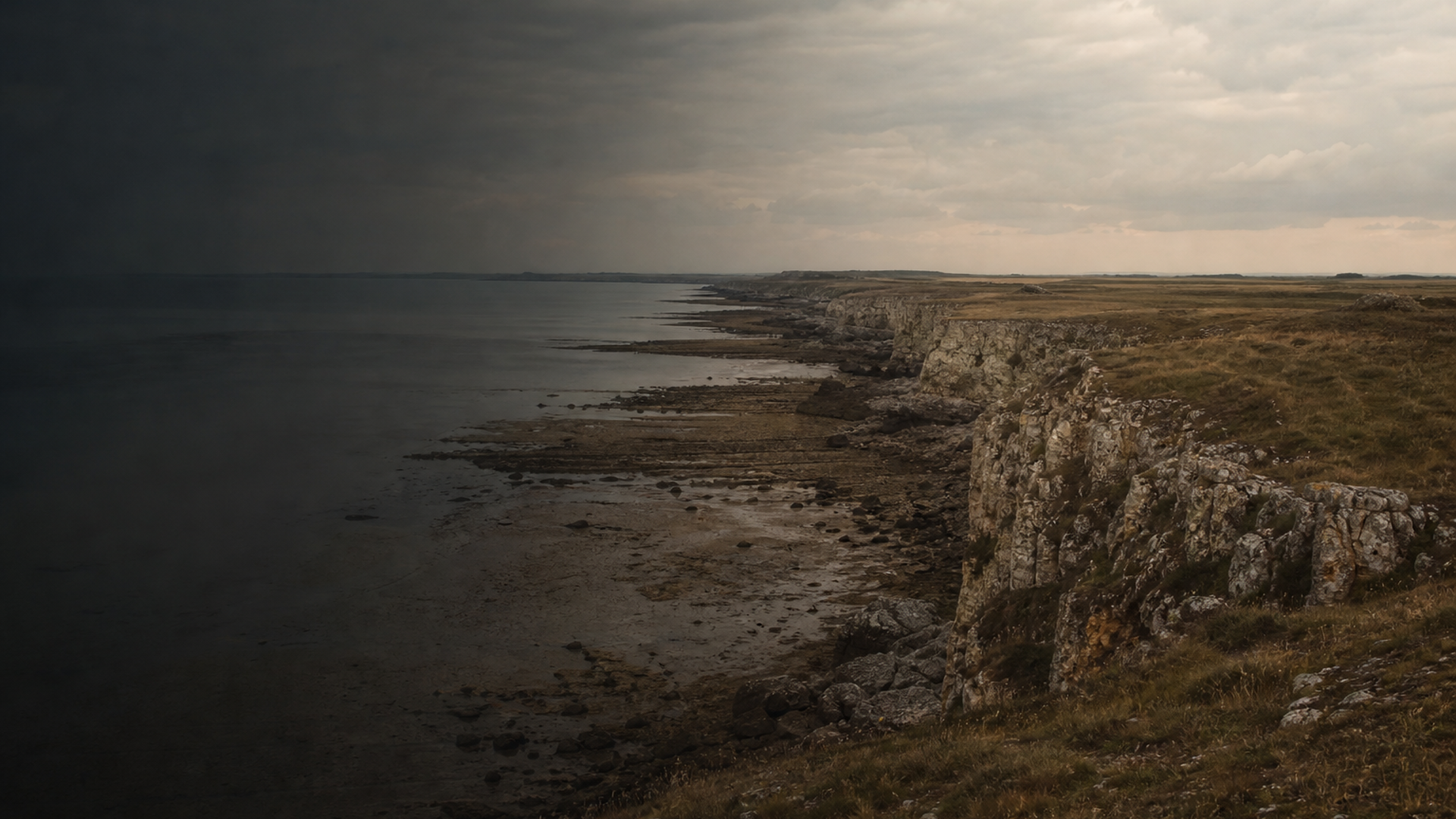
Shoreline Shadows of Nouvelle-Aquitaine
Cultura de destaque

Shoreline Shadows of Nouvelle-Aquitaine

Three Mesolithic lives from Les Perrats illuminate coastal-forager lifeways in SW France

7200 CE - 7000 BCE
Nouvelle-Aquitaine, SW France (Agris, Les Perrats)
Desplázate para começar
Capítulo I

A História

Comprender la cultura Shoreline Shadows of Nouvelle-Aquitaine

Archaeological and ancient-DNA data from 7200–7000 BCE at Les Perrats (Agris, Nouvelle-Aquitaine) reveal a small Mesolithic group with mtDNA U and Y-DNA I, consistent with Western Hunter-Gatherer ancestry. Limited samples make conclusions preliminary but evocative.

Time Period

7200–7000 BCE

Region

Nouvelle-Aquitaine, SW France (Agris, Les Perrats)

Common Y-DNA

I (observed: 1 sample)

Common mtDNA

U (observed: 3 samples)

Capítulo II

Cronologia

Momentos-chave da história desta cultura

7200 BCE

Seasonal occupation at Les Perrats

Archaeological evidence indicates repeated, seasonal use of Les Perrats (Agris) by Mesolithic foragers around 7200 BCE, with microlith production and hearth clusters.

Capítulo III

Origins & Emergence

On the ragged edge of postglacial Europe, between river terraces and patchy oak woods, the people sampled at Les Perrats (Agris, Charente) lived around 7200–7000 BCE. Archaeological data from the site — lithic scatters, worked bone fragments, and spatial distributions of hearths — indicate seasonal occupation tied to riverine and wooded landscapes. The broader region of Nouvelle-Aquitaine bears traces of Mesolithic continuity after the Last Glacial Maximum: populations expanded into reforested lowlands, exploiting an increasingly productive mosaic of habitats.

Limited evidence suggests that groups in this part of SW France maintained mobile lifeways with repeated use of favored locations rather than large, permanent settlements. At Les Perrats, recovery of microliths and small bladelets fits a toolkit optimized for hunting small to medium game and for processing plant resources. Palimpsests of hearths and refuse concentrations indicate returning occupation episodes — the cinematic image is of smoke drifting over river reedbeds as families prepare seasonal resources. Archaeological data indicates continuity with wider Western European Mesolithic traditions, but local adaptations to estuaries and limestone plateaus are apparent.

Because the genetic sample is small, these archaeological patterns are especially important: they provide the cultural frame for interpreting the few genomes available and caution against overgeneralizing from limited DNA evidence.

  • Site: Les Perrats, Agris (Charente), Nouvelle-Aquitaine
  • Date range: 7200–7000 BCE, early Mesolithic
  • Evidence: microliths, hearths, bone working — seasonal riverine occupation
Capítulo IV

Daily Life & Society

Daily life at Les Perrats can be sketched from traces: stone tools shaped into microliths, fragmented bone points, and the charcoal signatures of small hearths. These remains suggest groups organized around foraging zones rather than large villages. People likely moved between riverine fishing spots, wooded hunting grounds, and seasonal plant-gathering locations, creating a rhythm of mobility tuned to fish runs and mast cycles.

Material culture implies tasks divided across activities — tool production, hide working, and food processing — often undertaken in semi-sheltered hearth clusters. Personal adornment is poorly represented at this small site, but regional Mesolithic assemblages include pierced shells and bone beads, hinting at social expression through ornaments. Social groups were probably small, kin-based bands, flexible in membership and alliances, with knowledge transmitted through intimate contact networks. Children learned craft skills by observation; specialists may have existed for tool production in places where high-quality flint was available.

Archaeobotanical and zooarchaeological data are limited at Les Perrats specifically, so reconstructions rely on analogies with nearby Mesolithic sites. This means everyday routines should be viewed as informed hypotheses that fit both the material traces and the seasonal ecology of SW France.

  • Mobility: seasonal rounds between river, forest, and open ground
  • Economy: mixed hunting, fishing, and plant gathering; small kin groups
Capítulo V

Genetic Profile

Three ancient genomes from Les Perrats provide a narrow but valuable genetic window into early Mesolithic inhabitants of Nouvelle-Aquitaine. All three individuals carry mitochondrial haplogroup U — a lineage widely observed among European hunter-gatherers — while the single reported Y-chromosome belongs to haplogroup I, a lineage frequently associated with Mesolithic male lineages in northwestern Europe. These signals align broadly with the Western Hunter-Gatherer (WHG) genetic cluster documented across much of Mesolithic Europe.

Crucially, the small sample size (n = 3) requires caution: patterns visible here are preliminary and cannot capture the full diversity of the region. Limited sampling increases the chance that observed haplogroups reflect local kinship or drift rather than regional norms. Archaeological context helps temper interpretations; the mtDNA U presence supports a common maternal ancestry among forager groups, while haplogroup I on the Y-chromosome is consistent with male-line continuity seen elsewhere in Mesolithic western Europe.

Genetically, these individuals likely predate substantial Neolithic farmer admixture in the area. As later millennia introduce incoming farming groups, the genomic signature seen at Les Perrats would be expected to dilute, so these genomes are valuable baselines for tracking demographic shifts. Future sequencing of more individuals from Nouvelle-Aquitaine is essential to move from evocative snapshots to robust regional models.

  • All three individuals: mtDNA haplogroup U (consistent with European hunter-gatherers)
  • Single male: Y-DNA haplogroup I (matches broader Mesolithic patterns); conclusions are preliminary due to n=3
Capítulo VI

Legacy & Modern Connections

While the direct genealogical lines between Mesolithic foragers and modern populations are complex, the genetic signatures from Les Perrats contribute to a long-term picture: Mesolithic U-lineages and haplogroup I males formed part of the deep ancestry of later European populations. In Nouvelle-Aquitaine, subsequent millennia layered incoming Neolithic farmers and Bronze Age movements onto this Mesolithic substrate, producing the genetic mosaics observed today.

Culturally, echoes of mobile forager strategies persist in regional folklore and landscape use, though such cultural continuity is indirect. Scientifically, these early genomes help anchor models of postglacial recolonization, local continuity, and the timing of admixture events. Given the limited sample count, the legacy here is less a firm lineage and more a reminder: each ancient genome is a cinematic fragment that, when combined with archaeology, illuminates the deep human story along France's river valleys and coasts.

  • Contributes baseline WHG ancestry signal for SW France
  • Highlights need for more samples to trace continuity into Neolithic and later populations
Com IA

Assistente de IA

Haz preguntas sobre la cultura Shoreline Shadows of Nouvelle-Aquitaine

Assistente de IA por DNAGENICS

Desbloquear esta função
Pregunta sobre la cultura Shoreline Shadows of Nouvelle-Aquitaine. El asistente con IA puede explicar hallazgos genéticos, contexto histórico, pruebas arqueológicas y conexiones modernas, con sus límites de interpretación.
Exemplo de análise com IA

La cultura Shoreline Shadows of Nouvelle-Aquitaine representa un capítulo de la historia humana...

A análise genética permite estudar semelhanças com populações anteriores e possíveis adaptações. As amostras de DNA antigo fornecem informações para investigar padrões migratórios e relações entre populações, com limites que dependem do estudo e do contexto arqueológico.

Esta é uma antevisão da análise com IA. Aceder ao assistente completo para explorar informações sobre:

  • Composição e similaridade genética
  • Padrões migratórios e origens
  • Vida cotidiana e práticas culturais
  • Contexto genético moderno

Explore mais culturas antigas

Descubra a história de civilizações de diferentes partes do mundo antigo