A preparar o relatório

A carregar as informações e as referências disponíveis

Consultando el registro arqueológico...

Recopilando registros antiguos

Saltar para o conteúdo principal
Starčevo Neolithic: Danubian Farmers
Cultura de destaque

Starčevo Neolithic: Danubian Farmers

Early Neolithic communities across the Balkans and Carpathian Basin, seen through archaeology and DNA

6223 CE - 2459 BCE
Serbia, Hungary, Croatia, Romania, Albania (±Spain links)
2 Amostras antigas
Desplázate para começar
Capítulo I

A História

Comprender la cultura Starčevo Neolithic: Danubian Farmers

A multidisciplinary portrait of Neolithic farmers (6223–2459 BCE) linked to the Starčevo complex across Serbia, Hungary, Croatia, Romania and Albania. Archaeology and genetic data (32 samples) reveal Anatolian-derived farmer ancestry with regional diversity and tentative local admixture.

Time Period

6223–2459 BCE

Region

Serbia, Hungary, Croatia, Romania, Albania (±Spain links)

Common Y-DNA

G, H, C, I

Common mtDNA

K, J, N, T, U

Capítulo II

Cronologia

Momentos-chave da história desta cultura

6200 BCE

Early farming established in the Danube corridor

Archaeological and genetic evidence mark the arrival and establishment of Starčevo-type farming communities along the Danube and adjacent basins, initiating sustained agriculture in the region.

Capítulo III

Origins & Emergence

The Starčevo-related Neolithic in this dataset unfolds across river valleys and basin edges — from Alsónyék‑Bátaszék and Vörs in Hungary to Donja Strana‑Velesnica (Serbia), Gornja Vrba (Croatia), and Podgorie in Albania. Radiocarbon-calibrated horizons within the range 6223–2459 BCE record the spread of farming lifeways into the Central and Southeastern European landscapes.

Archaeological data indicate these communities adopted domesticated cereals, pulses and caprines, introduced new ceramic vocabularies and created pit‑based household features and small, often ephemeral settlements along tributaries of the Danube and in the Korça Basin. Material signatures linked to the Starčevo horizon — coarse, often impressed pottery, new ground stone toolkits and distinctive settlement traces at sites such as Alsónyék‑Bátaszék and Lánycsók — mark cultural connections that likely trace back toward Anatolian and Aegean Neolithic source populations.

Limited evidence suggests the arrival of these lifeways was episodic and regionally variable: some locations show intensive occupation and long sequences (Alsónyék), while others appear as short-term camps or small farmsteads (Cotatcu, Carcea). The archaeological picture, when combined with genetics, points to migration of agriculturists into these landscapes rather than sole local adoption of farming by foragers, but local interaction and admixture were almost certainly part of the story.

  • Early Neolithic spread across Danube corridors and basin edges (6223–2459 BCE)
  • Key sites: Alsónyék‑Bátaszék (HU), Donja Strana‑Velesnica (SRB), Podgorie (ALB)
  • Material culture indicates Anatolian-derived farming traditions with regional variation
Capítulo IV

Daily Life & Society

Daily life in these Early Neolithic communities would have been shaped by seasonal cycles of sowing, harvesting and herding. Archaeobotanical and zooarchaeological signatures in the wider Starčevo horizon show domesticated wheat, barley, sheep and goats — a lifeway geared toward mixed farming. Houses are often inferred from post‑hole patterns and pit features; life clustered around hearths and storage pits, with craft activities such as flint knapping and ground‑stone tool production visible in the refuse horizons.

Burial evidence is patchy across the sampled sites. Where present, inhumations and isolated burial deposits hint at household‑level social structures rather than large centralized cemeteries. Decorative motifs on pottery and the presence of non‑local raw materials imply exchange networks along waterways. In places like Vörs‑Máriaasszonysziget and Alsónyék, concentrations of pottery and worked bone suggest communal investment in ceramic production and shared ritual practices.

Archaeological traces emphasize variability: some settlements show stable, multi‑generation occupation, while others appear as short-lived seasonal loci. This mosaic of settlement types supports a picture of flexible social organization adapted to local ecologies and resource opportunities.

  • Mixed farming economy: cereals, sheep/goats, local craft production
  • Household-scale settlements with variable permanence and exchange links
Capítulo V

Genetic Profile

The genetic evidence from 32 Neolithic individuals associated with Starčevo‑related contexts provides a window into the demographic trajectories of early farmers in Central and Southeastern Europe. Uniparental markers recovered in this set show a predominance of Y‑chromosome haplogroup G (8 samples), smaller counts of H (3), C (2) and I (1). Maternal lineages include mtDNA haplogroups K (5), J (4), N (3), T (3) and U (3). These markers are broadly consistent with patterns observed in other Early European Farmer (EEF) assemblages: Y‑G and mtDNA K/J are frequently associated with Anatolian‑derived Neolithic migrants.

Autosomal studies of contemporaneous Neolithic populations have repeatedly documented a dominant Anatolian farmer component; the uniparental profile here aligns with that expectation. The presence of haplogroup I, and to a lesser extent H and occasional lineages like C, may reflect local hunter‑gatherer contributions, rare incoming lineages, or stochastic founder effects at the site level. Because some haplogroups in this dataset are represented by only a few samples, interpretations about sex‑biased admixture or precise geographic origins should be treated as provisional.

With 32 samples total, this dataset is moderate in size: it is sufficient to identify broad trends (Anatolian farmer ancestry and farmer‑associated uniparental lineages), but spatially and temporally finer patterns — especially per‑site dynamics — remain preliminary. Future dense sampling and genome‑wide analyses will clarify the timing and intensity of local admixture events suggested here.


  • Dominant Y‑G and mtDNA K/J lineages consistent with Anatolian-derived farmers
  • Presence of H, I, C suggests local admixture or rare lineages; per-site counts are small
Capítulo VI

Legacy & Modern Connections

The Starčevo‑linked farmers left a durable imprint on Europe’s genetic and cultural landscape. Their Anatolian‑derived ancestry became a major component of later European populations through both continuous descent and admixture with resident foragers. Maternal lineages like mtDNA K and J persist at low frequencies in modern European populations and are part of the mosaic heritage shaped during the Neolithic.

Culturally, the spread of farming technologies, ceramic traditions and sedentary settlement patterns established templates that were adapted by subsequent generations. However, the Neolithic legacy was not uniform: regional mixing, population turnover in later millennia, and continuing migrations have layered additional genetic and cultural signals atop the original Starčevo imprint. Ongoing archaeogenetic work — increasing sample densities and integrating isotopic and paleoenvironmental data — will further resolve how these early farmer communities contributed to the ancestry of later European peoples.

  • Contributed significant Anatolian-derived farmer ancestry to later Europeans
  • Material and genetic legacies are regionally variable and subject to ongoing research
Capítulo VII

Catálogo de amostras

2 amostras de DNA antigo associadas à cultura Starčevo Neolithic: Danubian Farmers fornecem dados de referência sobre as populações desse período.

2 / 2 amostras
Retrato Mostrar País Época Data Cultura Sexo DNA-Y ADNmt
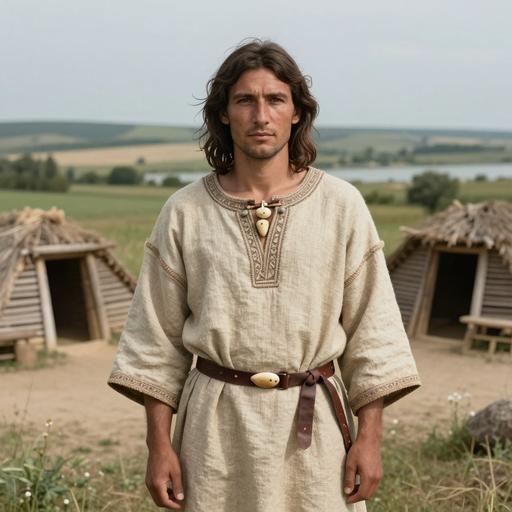
Retrato reconstruído de Neolithic European individual, Hungary
Neolithic European individual, Hungary
Hungary Hungary_EN_Starcevo_2 5713 BCE Neolithic European M G-PF3430 X2d1
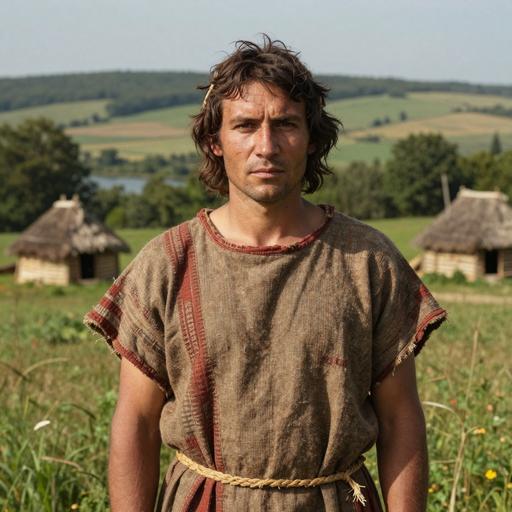
Retrato reconstruído de EN Starcevo-2 individual, Hungary
EN Starcevo-2 individual, Hungary
Hungary Hungary_EN_Starcevo_2 5800-5500 BCE Neolithic European M G-PF3378 W5
Com IA

Assistente de IA

Haz preguntas sobre la cultura Starčevo Neolithic: Danubian Farmers

Assistente de IA por DNAGENICS

Desbloquear esta função
Pregunta sobre la cultura Starčevo Neolithic: Danubian Farmers. El asistente con IA puede explicar hallazgos genéticos, contexto histórico, pruebas arqueológicas y conexiones modernas, con sus límites de interpretación.
Exemplo de análise com IA

La cultura Starčevo Neolithic: Danubian Farmers representa un capítulo de la historia humana...

A análise genética permite estudar semelhanças com populações anteriores e possíveis adaptações. As amostras de DNA antigo fornecem informações para investigar padrões migratórios e relações entre populações, com limites que dependem do estudo e do contexto arqueológico.

Esta é uma antevisão da análise com IA. Aceder ao assistente completo para explorar informações sobre:

  • Composição e similaridade genética
  • Padrões migratórios e origens
  • Vida cotidiana e práticas culturais
  • Contexto genético moderno

Explore mais culturas antigas

Descubra a história de civilizações de diferentes partes do mundo antigo