A preparar o relatório

A carregar as informações e as referências disponíveis

Consultando el registro arqueológico...

Recopilando registros antiguos

Saltar para o conteúdo principal
Upper Yellow River: Qinghai Neolithic Echoes
Cultura de destaque

Upper Yellow River: Qinghai Neolithic Echoes

Genetic traces from Lajia and Jinchankou illuminate Late Neolithic lives on the Upper Yellow River.

2866 CE - 1850 BCE
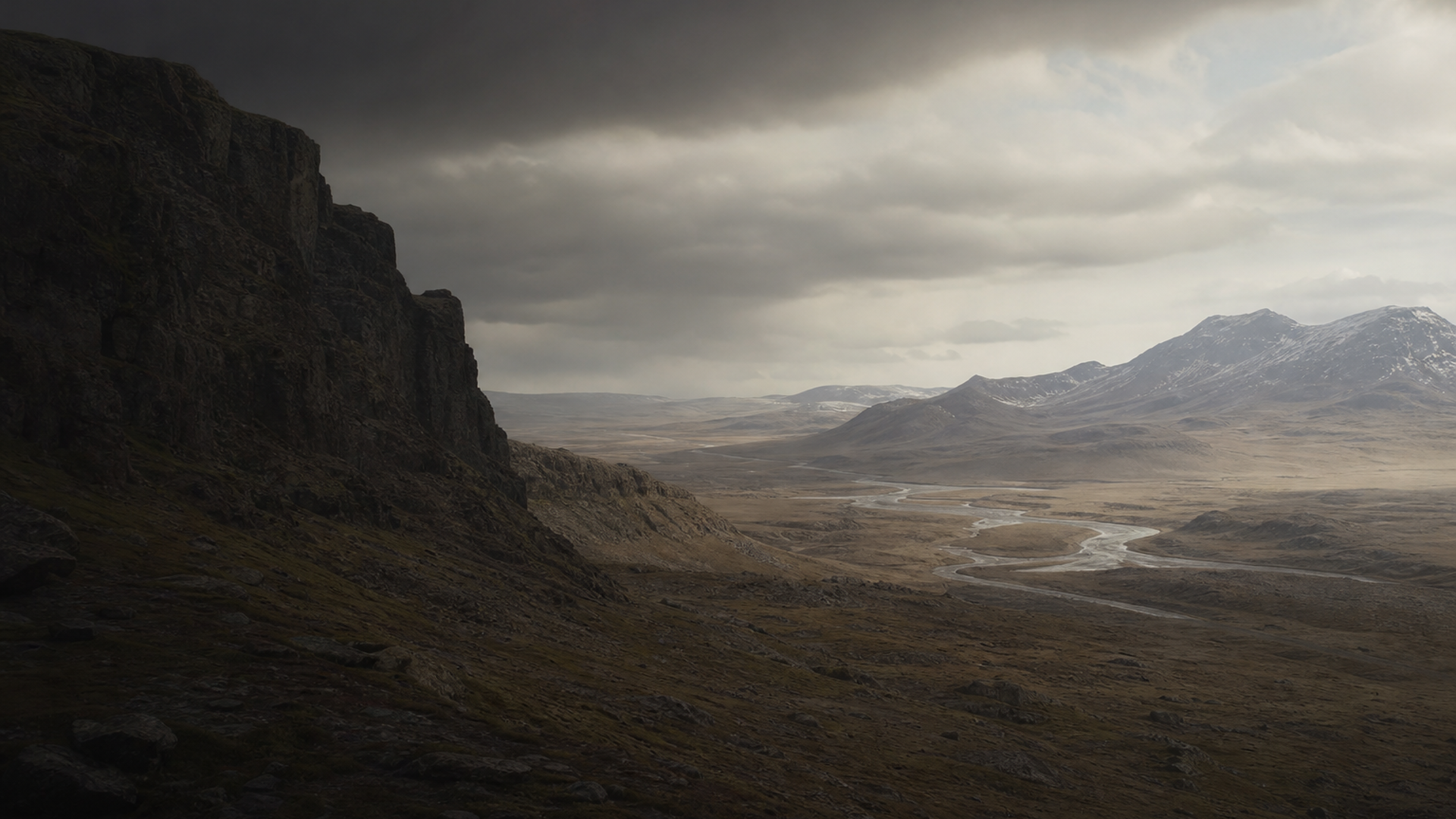
Qinghai province, Upper Yellow River, China
Desplázate para começar
Capítulo I

A História

Comprender la cultura Upper Yellow River: Qinghai Neolithic Echoes

Archaeogenetic and archaeological data from seven individuals (2866–1850 BCE) at Lajia and Jinchankou, Qinghai, reveal East Asian Y-haplogroups O and D and diverse maternal lineages (G, F1g, A18, B, F). Limited samples make conclusions preliminary but point to local continuity in the Upper Yellow River zone.

Time Period

2866–1850 BCE

Region

Qinghai province, Upper Yellow River, China

Common Y-DNA

O (4), D (1)

Common mtDNA

G, F1g, A18, B, F

Capítulo II

Cronologia

Momentos-chave da história desta cultura

2500 BCE

Settlements on Upper Yellow River

Communities at Lajia and nearby sites intensify millet cultivation and form nucleated villages along river terraces.

Capítulo III

Origins & Emergence

On the high terraces and river valleys of the Upper Yellow River, communities coalesced in the late Neolithic into settlement clusters whose echoes reach us through pottery sherds and house foundations. Archaeological data from Lajia (Minhe County) and Jinchankou (Huzhu County) place human activity between 2866 and 1850 BCE, a period of climatic fluctuations and shifting river dynamics. Limited evidence suggests small, nucleated villages exploiting millet agriculture and riverine resources; plant remains and grinding stones recovered at nearby sites in the region support this agricultural emphasis.

The material culture shows regional affinities with late Neolithic Upper Yellow River traditions, including cord-marked pottery and stone and bone tools adapted to upland life. Geological layers at Lajia preserve episodes of rapid sedimentation that archaeologists interpret as flood or seismic-related events that affected settlement continuity — a dramatic backdrop for human resilience.

Genetically, the individuals sampled from these sites fall into lineages common in broader East Asia, hinting at continuity with neighboring upland and lowland populations. Yet the small sample size (seven individuals) and uneven preservation mean that any narrative of origin remains provisional. Further excavation and targeted radiocarbon dating are needed to refine models of local emergence and interaction across the Upper Yellow River corridor.

  • Settlements at Lajia and Jinchankou dated 2866–1850 BCE
  • Archaeological evidence indicates millet cultivation and riverine resource use
  • Geological deposits at Lajia suggest flood/seismic disturbance affecting sites
Capítulo IV

Daily Life & Society

Life in the Upper Yellow River communities can be imagined through the artifacts and features left behind: pottery vessels for storing millet, stone knives and adzes for working wood and bone, and hearths that anchored family compounds. Archaeological excavations at Lajia revealed house foundations and middens that indicate tightly knit households and daily routines shaped by seasonal rhythms. Animal remains from nearby excavations indicate a mixed subsistence economy: domesticated millet crops supplemented by herded animals and wild resources from riverine and upland habitats.

Burial practices appear variable but sparse in the sampled record: limited funerary contexts suggest small, possibly kin-based interments close to living spaces rather than large cemetery complexes. Social organization likely emphasized local household networks rather than wide centralized polities — a pattern seen across contemporaneous Upper Yellow River sites.

Material culture shows workmanship tuned to a rugged landscape: thick-walled pottery for boiling, ground stone tools for processing grain, and bone implements for textile and leather work. Limited luxury goods and few clear signs of hierarchical burial goods imply relatively egalitarian social structures, although this interpretation is tentative given the small number of excavated burials and the uneven preservation of organic materials.

  • Subsistence centered on millet agriculture, supplemented by herding and wild resources
  • Household-focused settlements with modest material differentiation
Capítulo V

Genetic Profile

Genome-scale data from seven individuals recovered at Lajia and Jinchankou provide a first glimpse of the genetic landscape of the Upper Yellow River in the late Neolithic. Y-chromosome markers are dominated by haplogroup O (four individuals) with one instance of haplogroup D; both are characteristic of East Asian populations. Maternal lineages include G (two), F1g (two), A18, B, and F — a maternal spectrum widely found across northern and northeastern Asia.

These genetic signals are consistent with a population deriving much of its ancestry from long-standing East Asian lineages rather than large-scale recent input from distant regions. The presence of haplogroup D, which is relatively frequent in highland East Asian groups today, may reflect local micro-regional ancestry or ancient connections to upland populations.

Caveats are essential: with only seven samples, statistical power is limited and patterns could shift as more individuals are analyzed. The dataset hints at local continuity in the Upper Yellow River and genetic affinities with broader East Asian Neolithic populations, but it cannot resolve fine-scale migration, sex-biased gene flow, or the timing of admixture events. Archaeogenetic integration with expanded sampling, isotopic mobility studies, and high-resolution radiocarbon dating will be required to move from suggestion to robust models of population history.

  • Y-DNA: predominance of haplogroup O, one D — typical East Asian signatures
  • mtDNA: diverse East Asian lineages (G, F1g, A18, B, F); conclusions preliminary (n=7)
Capítulo VI

Legacy & Modern Connections

The genetic and archaeological traces from Qinghai's Upper Yellow River offer a living link to later cultural developments in northwest China. Archaeological continuity in pottery styles and agricultural practices suggests these upland communities contributed to the mosaic of populations that later interacted with Bronze Age societies across the Yellow River basin.

Genetically, the presence of canonical East Asian haplogroups aligns these individuals with ancestral threads still present in modern populations of the northeast Tibetan Plateau and adjacent lowlands. However, because the sample set is small, any direct line from these seven individuals to specific modern groups is tentative. The enduring value of these findings lies in their ability to anchor future comparisons: as more ancient genomes from Qinghai and neighboring regions become available, researchers will be able to trace the ebb and flow of ancestry, mobility, and cultural exchange along the Upper Yellow River more confidently.

  • Archaeogenetic signals suggest continuity with broader East Asian ancestral pools
  • Current conclusions are provisional; expanded sampling will refine modern connections
Com IA

Assistente de IA

Haz preguntas sobre la cultura Upper Yellow River: Qinghai Neolithic Echoes

Assistente de IA por DNAGENICS

Desbloquear esta função
Pregunta sobre la cultura Upper Yellow River: Qinghai Neolithic Echoes. El asistente con IA puede explicar hallazgos genéticos, contexto histórico, pruebas arqueológicas y conexiones modernas, con sus límites de interpretación.
Exemplo de análise com IA

La cultura Upper Yellow River: Qinghai Neolithic Echoes representa un capítulo de la historia humana...

A análise genética permite estudar semelhanças com populações anteriores e possíveis adaptações. As amostras de DNA antigo fornecem informações para investigar padrões migratórios e relações entre populações, com limites que dependem do estudo e do contexto arqueológico.

Esta é uma antevisão da análise com IA. Aceder ao assistente completo para explorar informações sobre:

  • Composição e similaridade genética
  • Padrões migratórios e origens
  • Vida cotidiana e práticas culturais
  • Contexto genético moderno

Explore mais culturas antigas

Descubra a história de civilizações de diferentes partes do mundo antigo