A preparar o relatório

A carregar as informações e as referências disponíveis

Consultando el registro arqueológico...

Recopilando registros antiguos

Saltar para o conteúdo principal
Voices of the Upper Yellow River
Cultura de destaque

Voices of the Upper Yellow River

Late Neolithic communities from Qinghai whose bones speak to lives at the roof of the Yellow River

2866 CE - 1850 BCE
Qinghai, Upper Yellow River (China)
Desplázate para começar
Capítulo I

A História

Comprender la cultura Voices of the Upper Yellow River

Archaeological and genetic traces from Lajia and Jinchankou (2866–1850 BCE) reveal a Late Neolithic Upper Yellow River population with Y haplogroups O and D and diverse maternal lineages. Small sample size makes conclusions tentative but evocative of regional continuity.

Time Period

2866–1850 BCE

Region

Qinghai, Upper Yellow River (China)

Common Y-DNA

O (majority), D (minor)

Common mtDNA

G, F1g, A18, B, F

Capítulo II

Cronologia

Momentos-chave da história desta cultura

2500 BCE

Community life documented at Lajia

Archaeological layers at Lajia record settled households, millet cultivation, and craft production amid episodic flooding that shaped occupation patterns.

Capítulo III

Origins & Emergence

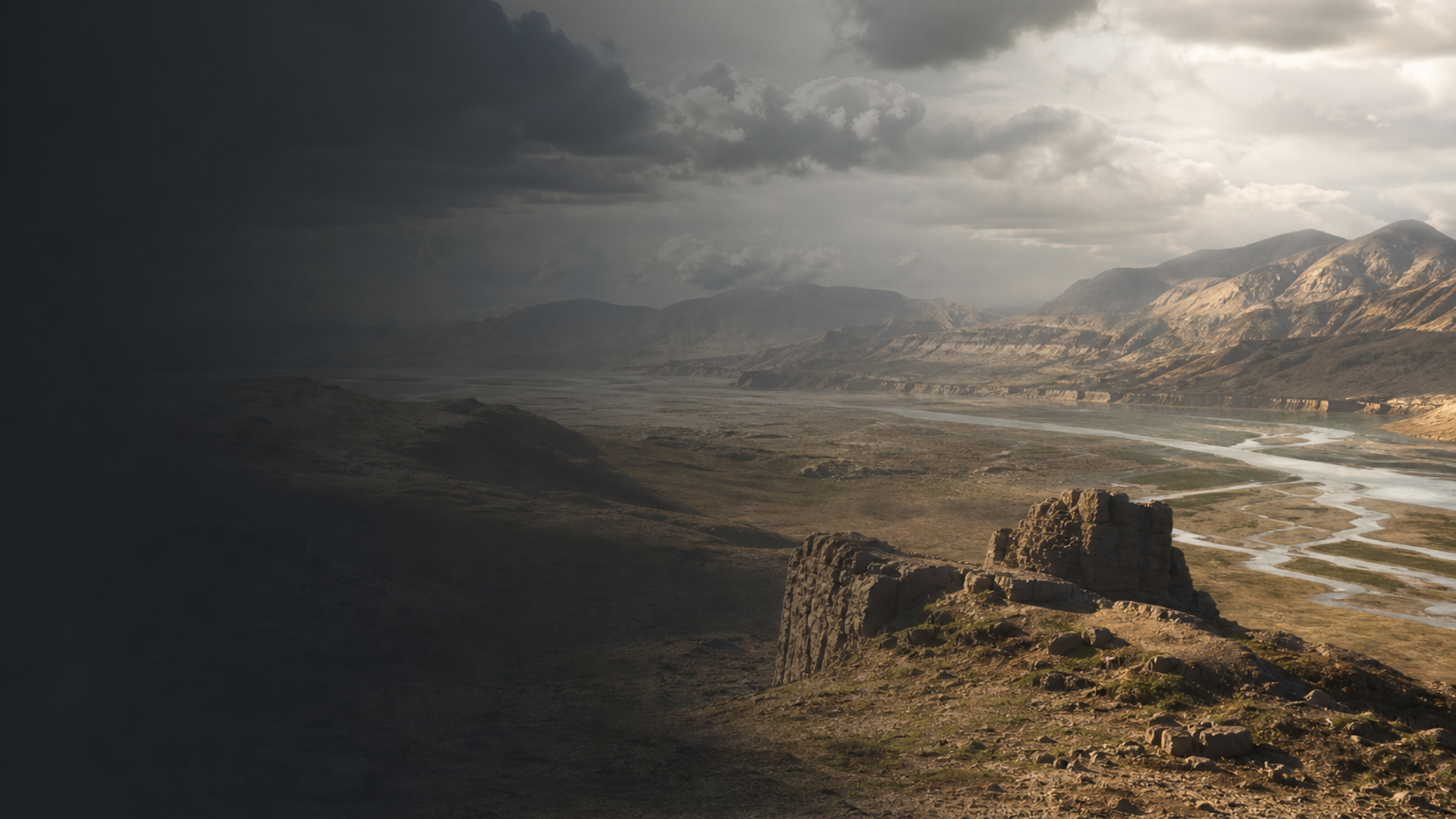
Along the high terraces and braided channels of the Upper Yellow River, communities at Lajia (Minhe County) and Jinchankou (Huzhu County) lived between roughly 2866 and 1850 BCE. Archaeological data indicates settlement clusters with semi-subterranean houses, millet agriculture, and craft production — signatures common to the Late Neolithic Upper Yellow River cultural horizon. Environmental archives and flood deposits at the Lajia site suggest episodic hydrological stress that shaped settlement patterns and mobility.

Genetically, the small assemblage of seven sampled individuals shows a dominance of Y-chromosome haplogroup O and a presence of D, lineages frequently observed in many East Asian populations today. Mitochondrial diversity (G, F1g, A18, B, F) points to a mix of maternal ancestries consistent with local continuity and regional connections across the Yellow River basin. Limited evidence suggests these communities were not isolated; material links and shared maternal lineages indicate exchange and possibly marriage networks with neighboring groups.

Because sample count is low (<10), inferences about population history are preliminary. Archaeological context and aDNA together illuminate emergence processes: a rooted local tradition interacting with broader Late Neolithic dynamics across North China.

  • Sites: Lajia (Minhe County) and Jinchankou (Huzhu County), Qinghai
  • Dates: 2866–1850 BCE, Late Neolithic Upper Yellow River
  • Evidence: settlements, flood deposits, millet agriculture
Capítulo IV

Daily Life & Society

The material remains from Lajia and Jinchankou evoke a landscape of river terraces where households clustered around fields of broomcorn and foxtail millet. Ceramic assemblages include cord-marked pottery and utilitarian wares, while stone tools and bone implements attest to a mixed economy of cultivation, herding, and fishing. Faunal remains and botanical residues suggest seasonal scheduling of tasks — sowing and harvest, flood-season fishing, winter meat preservation.

House plans recovered at Lajia show semi-subterranean rooms with hearths, indicating cold-season insulation strategies at higher altitudes. Social life likely centered on household compounds and small kin groups; crafted goods and burial variability hint at status differences but not pronounced inequality. Archaeological contexts indicating hurried abandonment at Lajia — interpreted by some scholars as flood events — capture a dramatic moment in daily life when environment and human resilience intersected.

Material culture and mortuary behavior combine with genetic data to suggest networks of interaction: shared pottery styles and maternal haplogroups imply marriage ties and movement of women between communities. Yet, with only seven genetic samples, reconstructing social rules of residency or kinship remains tentative.

  • Economy: millet agriculture, pastoral elements, fishing
  • Households: semi-subterranean houses with hearths; evidence of seasonal activities
Capítulo V

Genetic Profile

Ancient DNA from seven individuals recovered at Lajia and Jinchankou provides a cautious window into the genetic makeup of the Upper Yellow River during the Late Neolithic. Y-chromosome data show a predominance of haplogroup O (4/7) with a single occurrence of haplogroup D (1/7). Haplogroup O is widely distributed across East Asia and often associated with later Neolithic and Bronze Age expansions tied to agricultural populations; haplogroup D has a patchier distribution and can signal deep regional continuity in highland and island East Asia. These male-line markers suggest a demographic profile compatible with local East Asian ancestry rather than major influxes from the west.

Mitochondrial haplogroups are diverse: G (2), F1g (2), A18 (1), B (1), and F (1). This variety, particularly the presence of G and F subclades, aligns with maternal lineages common in northern and northeastern Asian contexts and indicates multiple maternal origins or sustained gene flow within the Yellow River corridor. Archaeological parallels — shared pottery styles and exchange goods — reinforce the genetic evidence for regional interaction and marriage networks.

Given the low sample count (<10), these genetic signals are provisional: they reveal patterns consistent with regional continuity and internal diversity but cannot alone resolve migration magnitudes, sex-biased mobility, or fine-scale population structure. Future wider sampling from Qinghai and adjacent basins will be essential to test these preliminary conclusions.

  • Dominant Y-DNA: O; minor presence of D
  • mtDNA diversity: G, F1g, A18, B, F — suggesting regional maternal connections
Capítulo VI

Legacy & Modern Connections

The genetic and archaeological imprint of China_Upper_YR_LN resonates in the long arc of Yellow River prehistory. Maternal and paternal lineages observed among these Late Neolithic individuals echo haplogroups still found in modern East Asian populations, suggesting threads of biological continuity across millennia. Cultural practices—millet cultivation, regional exchange, and adaptive house forms—contributed to lifeways that later Bronze Age societies inherited and transformed.

However, caution is essential: the seven available samples provide only a faint chorus from a populous region. Limited evidence suggests continuity rather than wholesale replacement, but larger datasets are required to trace direct ancestry to modern groups. Where genetics and archaeology intersect here, they tell a story of resilient communities negotiating environment, mobility, and social ties at the upper reaches of the Yellow River.

  • Genetic continuity: lineages seen today point to long-term regional ancestry
  • Cultural inheritance: agricultural and settlement practices contributed to broader Yellow River developments
Com IA

Assistente de IA

Haz preguntas sobre la cultura Voices of the Upper Yellow River

Assistente de IA por DNAGENICS

Desbloquear esta função
Pregunta sobre la cultura Voices of the Upper Yellow River. El asistente con IA puede explicar hallazgos genéticos, contexto histórico, pruebas arqueológicas y conexiones modernas, con sus límites de interpretación.
Exemplo de análise com IA

La cultura Voices of the Upper Yellow River representa un capítulo de la historia humana...

A análise genética permite estudar semelhanças com populações anteriores e possíveis adaptações. As amostras de DNA antigo fornecem informações para investigar padrões migratórios e relações entre populações, com limites que dependem do estudo e do contexto arqueológico.

Esta é uma antevisão da análise com IA. Aceder ao assistente completo para explorar informações sobre:

  • Composição e similaridade genética
  • Padrões migratórios e origens
  • Vida cotidiana e práticas culturais
  • Contexto genético moderno

Explore mais culturas antigas

Descubra a história de civilizações de diferentes partes do mundo antigo