A preparar o relatório

A carregar as informações e as referências disponíveis

Consultando el registro arqueológico...

Recopilando registros antiguos

Saltar para o conteúdo principal
Whispers of La Tène in Lower Austria
Cultura de destaque

Whispers of La Tène in Lower Austria

Iron Age lives at Pottenbrunn seen through artifacts and ancient DNA

500 CE - 200 BCE
Lower Austria (St. Pölten vicinity)
Desplázate para começar
Capítulo I

A História

Comprender la cultura Whispers of La Tène in Lower Austria

Archaeological and genetic glimpses from three Iron Age burials at Pottenbrunn (500–200 BCE) illuminate La Tène presence in Lower Austria. Limited ancient DNA (3 samples) yields maternal haplogroups H, T2b, U7b but Y-DNA remains undetermined; conclusions are preliminary.

Time Period

500–200 BCE

Region

Lower Austria (St. Pölten vicinity)

Common Y-DNA

Undetermined (few samples)

Common mtDNA

H, T2b, U7b (each in 1 sample)

Capítulo II

Cronologia

Momentos-chave da história desta cultura

500 BCE

Local emergence of La Tène expressions

La Tène-style artifacts and burial forms appear in Lower Austria, marking regional adoption of Iron Age cultural traits (archaeological signal, Pottenbrunn area).

Capítulo III

Origins & Emergence

The archaeological landscape of Austria in the early Iron Age was shaped by the spread of the La Tène cultural horizon, a dynamic tapestry of metalwork, mobility, and new social forms that coalesced across Central Europe after c. 500 BCE. At Pottenbrunn, near St. Pölten in Lower Austria, burial contexts and surface finds align stylistically with La Tène artistic vocabulary: curvilinear motifs, elaborated metal fittings and weapons that speak to long-distance exchange and local craft specialization. Archaeological data indicates a region at the crossroads of Hallstatt traditions and emerging La Tène expressions, where elite display and warrior identities become archaeologically visible.

Genetic and isotopic research across Europe suggests that the spread of La Tène material culture did not always coincide with large-scale population replacement; instead, a mix of mobility, cultural transmission, and local continuity is often evident. For Pottenbrunn specifically, the sample set is small (three individuals), so interpretations must remain cautious. Limited evidence suggests communities there participated in the broader networks of the La Tène world—trade, marriage ties and mobility—while retaining regional continuities rooted in earlier Iron Age practices.

Taken together, the archaeological traces at Pottenbrunn form a cinematic scene: smiths shaping bronze and iron, decorated brooches glinting in torchlight, and households negotiating local identity within a pan-European La Tène horizon. However, the biological dimensions of who these people were remain only faintly sketched by the available DNA.

  • La Tène-style artifacts and burial traits found at Pottenbrunn
  • Regionally blended traditions from Hallstatt into La Tène
  • Small sample size (3) limits demographic conclusions
Capítulo IV

Daily Life & Society

Pottenbrunn's material culture offers windows into everyday rhythms and social performance. Household assemblages recovered in the St. Pölten area include iron tools, agricultural implements and personal adornments that suggest mixed economies of farming, animal husbandry and specialized craft production. Cemetery evidence from nearby La Tène sites indicates variation in grave goods: some interments are richly furnished with weapons and ornaments, while others are modest—an archaeological signal of social differentiation.

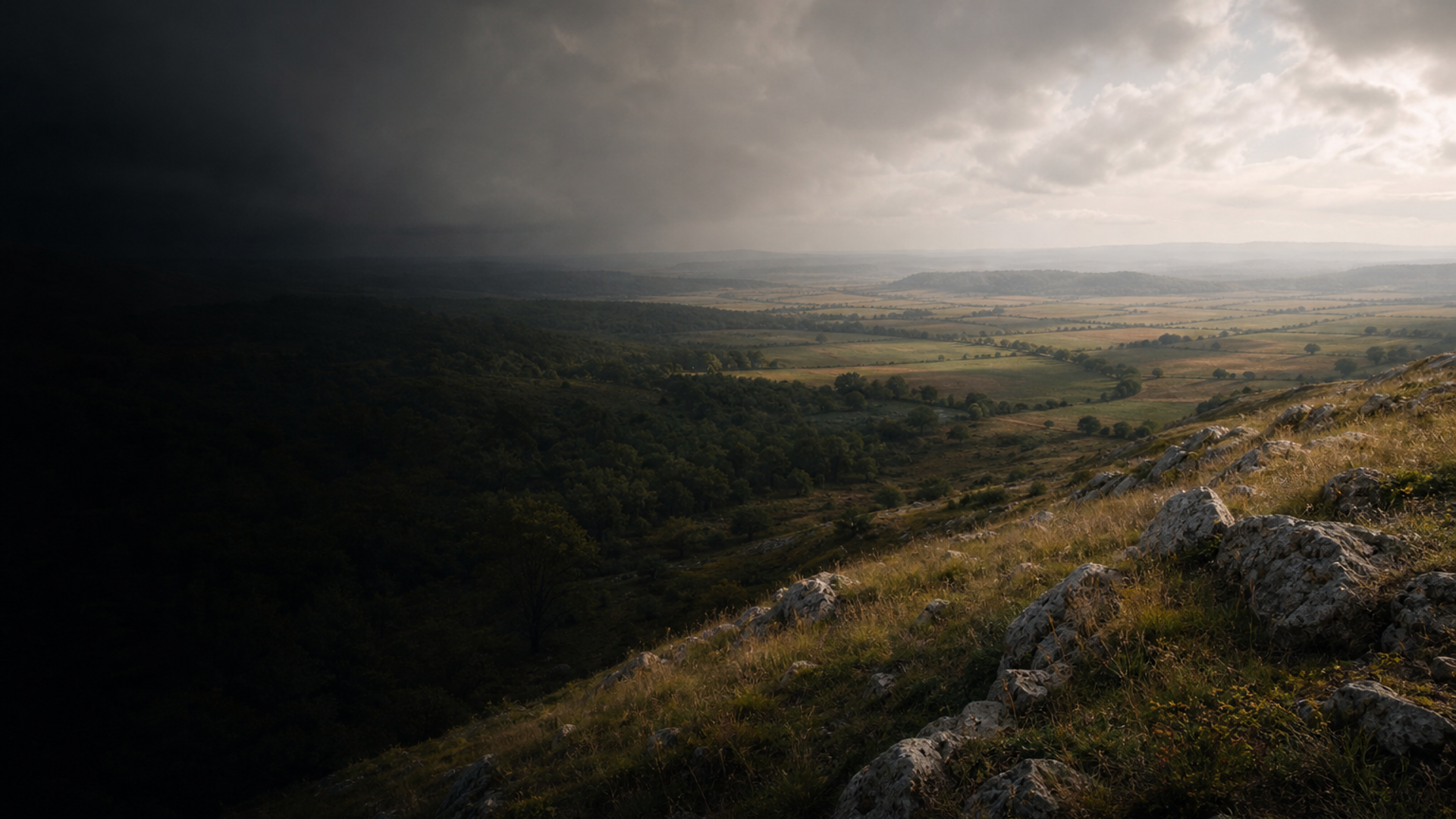
Cinematic reconstructions imagine a landscape of patchwork fields, riverine routes facilitating travel, and settlements clustered on defensible or resource-rich terrain. La Tène artisans in the region practiced sophisticated metallurgy—ironworking for tools and weapons paired with continued expertise in bronze ornamentation. Seasonal mobility for pasture or exchange fairs may have linked Pottenbrunn households to broader exchange networks across the Danubian corridor.

Osteological and contextual data (where available) can suggest age-at-death profiles, workload markers, and dietary signals; yet for Pottenbrunn, those biological datasets are limited. Archaeological interpretation therefore leans on comparative evidence from better-sampled La Tène sites in Austria and neighboring regions, always noting that local variation was likely substantial.

  • Mixed farming, craft production and exchange characterize local economy
  • Grave goods at La Tène sites show social differentiation
Capítulo V

Genetic Profile

Three ancient mitochondrial genomes from Pottenbrunn provide a preliminary maternal snapshot of La Tène-era Lower Austria. The detected mtDNA lineages are H (1 sample), T2b (1 sample) and U7b (1 sample). Haplogroup H is widespread across Europe in prehistoric and modern contexts and often reflects broad maternal continuity; T2b appears in Neolithic and later European contexts and can indicate connections to early farming-derived maternal lineages. U7b is less common in Central Europe today and may signal more complex southern or eastern connections, but with a single sample its presence should be treated as an intriguing hint rather than a definitive signal.

Notably, no consistent Y-DNA profile emerges from these burials—either because Y-chromosome data were not preserved or because male samples were not recovered/sequenced reliably. Consequently, statements about paternal ancestry, patrilineal continuity, or migrations into Lower Austria cannot be made from this dataset.

When placed in the broader ancient DNA landscape, these maternal results are compatible with scenarios of local continuity mixed with mobility: La Tène cultural expression often overlays a genetic substrate formed by earlier Bronze Age and Neolithic ancestries, with periodic influxes of people along trade routes. Given the sample count (n=3), all conclusions must remain preliminary; additional sampling across burial grounds and settlements at Pottenbrunn and surrounding Lower Austria is essential to distinguish local structure from individual variation.

  • mtDNA: H, T2b, U7b observed (each in one of three samples)
  • Y-DNA: undetermined—insufficient data for paternal conclusions
Capítulo VI

Legacy & Modern Connections

The echoes of La Tène life around Pottenbrunn continue to shape regional identity and archaeological imagination. La Tène art and metalwork left a visible legacy in craft traditions, while burial practices inform modern understandings of Iron Age social landscapes in Lower Austria. Genetically, the limited maternal diversity seen in these three samples is compatible with modern populations that carry deep European maternal lineages alongside later admixtures; however, direct links between individual modern surnames or communities and these burials cannot be claimed from such sparse data.

For communities interested in ancestry, the Pottenbrunn samples illustrate how material culture and DNA together can hint at continuity amid change—local peoples adopting La Tène forms while remaining biologically connected to earlier inhabitants. Researchers and the public should view these results as a beginning: evocative, locally specific, but far from comprehensive. Expanded excavation and targeted ancient DNA sampling will be needed to illuminate the full human story of La Tène Austria.

  • Material culture endures in regional archaeological heritage
  • Genetic hints suggest continuity but require many more samples
Com IA

Assistente de IA

Haz preguntas sobre la cultura Whispers of La Tène in Lower Austria

Assistente de IA por DNAGENICS

Desbloquear esta função
Pregunta sobre la cultura Whispers of La Tène in Lower Austria. El asistente con IA puede explicar hallazgos genéticos, contexto histórico, pruebas arqueológicas y conexiones modernas, con sus límites de interpretación.
Exemplo de análise com IA

La cultura Whispers of La Tène in Lower Austria representa un capítulo de la historia humana...

A análise genética permite estudar semelhanças com populações anteriores e possíveis adaptações. As amostras de DNA antigo fornecem informações para investigar padrões migratórios e relações entre populações, com limites que dependem do estudo e do contexto arqueológico.

Esta é uma antevisão da análise com IA. Aceder ao assistente completo para explorar informações sobre:

  • Composição e similaridade genética
  • Padrões migratórios e origens
  • Vida cotidiana e práticas culturais
  • Contexto genético moderno

Explore mais culturas antigas

Descubra a história de civilizações de diferentes partes do mundo antigo