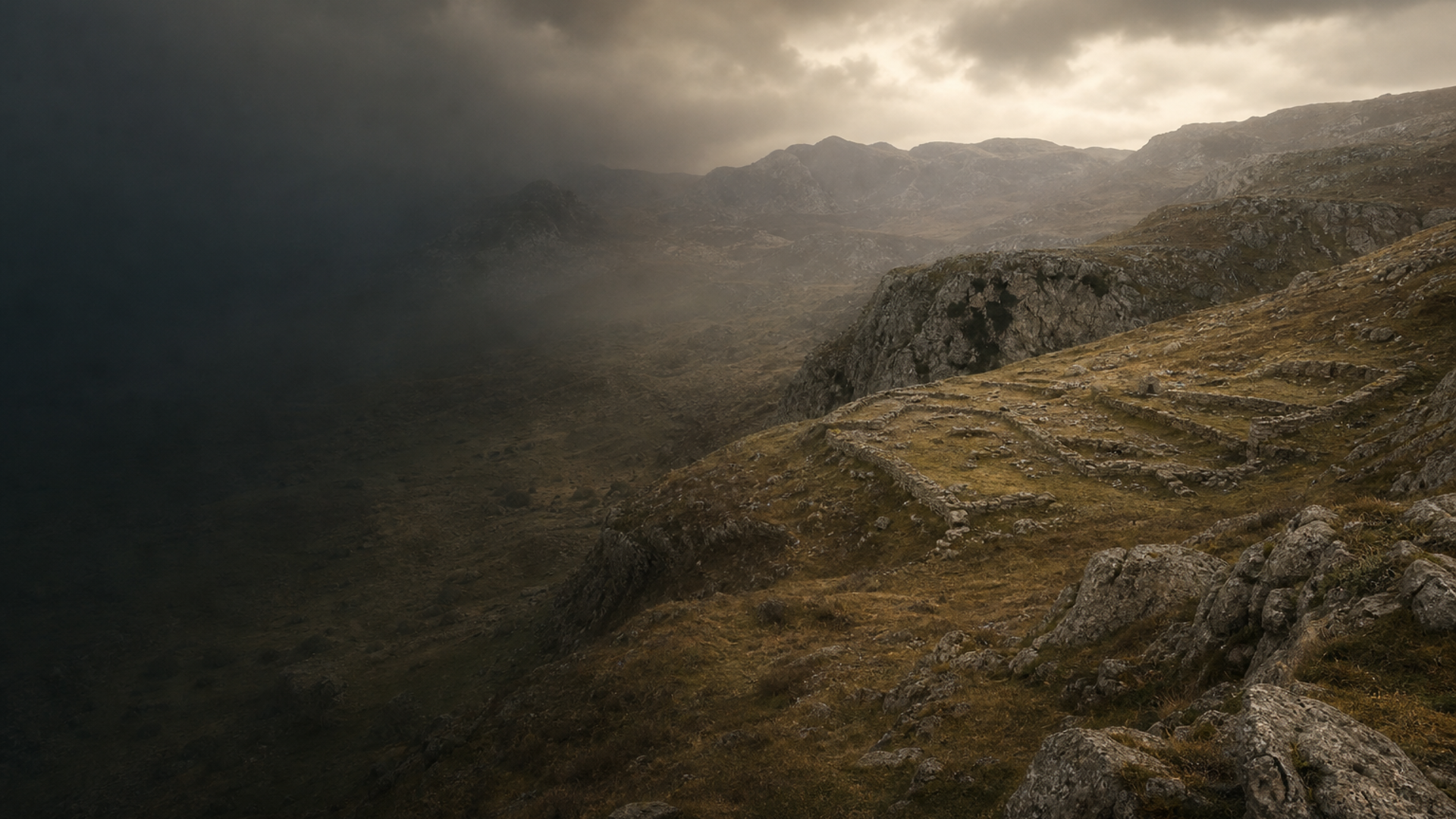
Archaeology paints the Iron Age Balkans as a mosaic of small communities, hillforts, and valley settlements where everyday life revolved around mixed farming, pastoralism, and localized craft production. In the Kukës area, people would have tended cereals, pulses, and herds of sheep and goats; seasonal grazing across uplands created rhythms of movement that left traces in tool assemblages and landscape modifications.
Ceramic fragments and metal finds from regional contemporaries suggest households skilled in pottery, ironworking, and ornament craft. Trade—both local barter and longer-distance exchange—brought Mediterranean goods and ideas into contact with indigenous forms. Burial practices in the region vary, but the presence of inhumations and grave goods at nearby Iron Age sites indicates social differentiation: some individuals were interred with personal adornments or weapons, hinting at status, mobility, or craft specialization.
Visually, imagine a dusk-lit clearing above a river valley: smoke from hearths against a backdrop of climbing shepherds, children learning weaving techniques, and artisans hammering bronze and iron into tools and trinkets. Archaeological data indicates daily life was pragmatic but infused with the symbolic languages of identity and exchange—bowls, pins, and brooches serving as both utilitarian objects and markers of belonging.
Key uncertainties
- Direct household data from Çinamak are sparse; regional analogies inform most reconstructions.