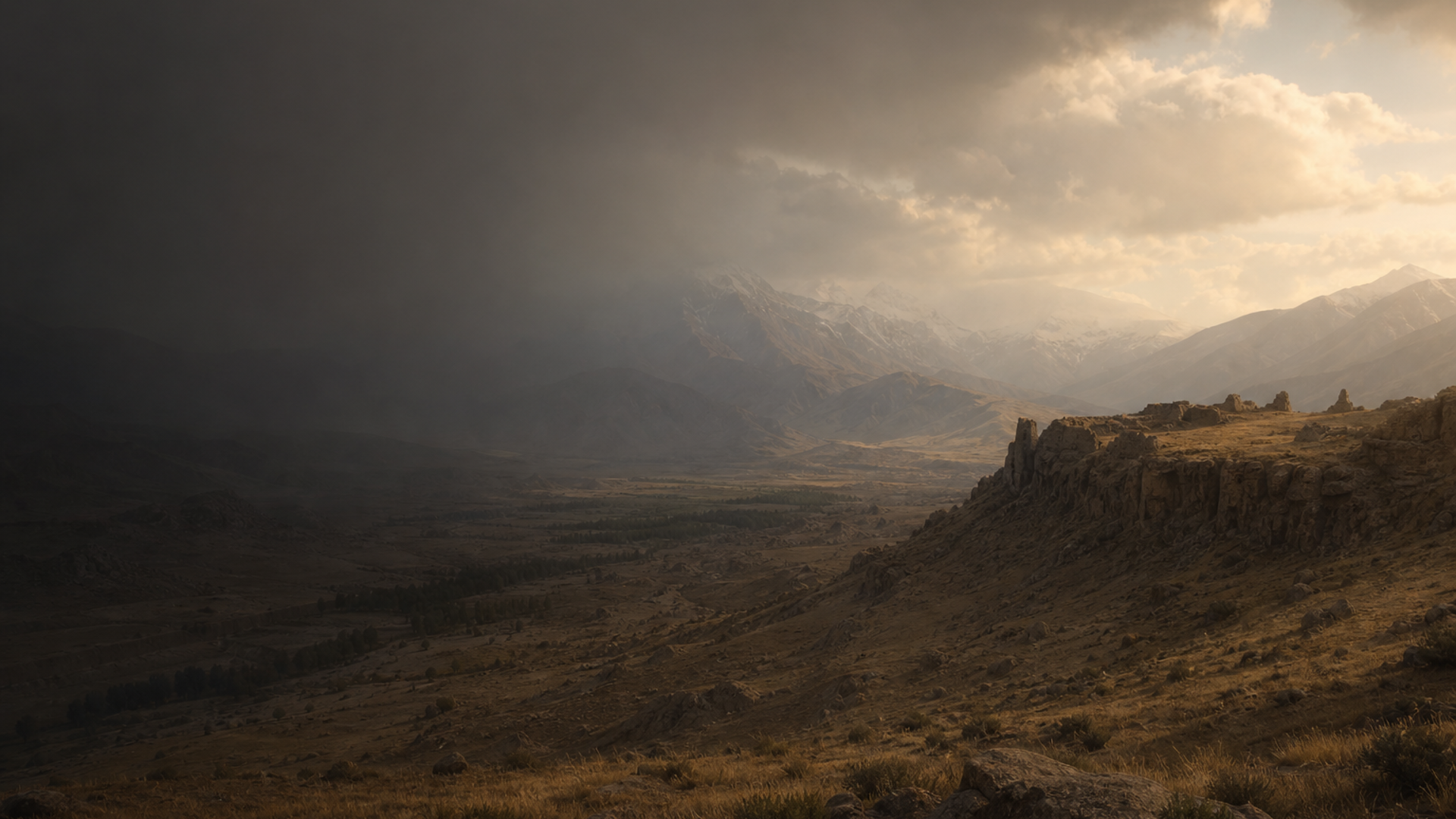
Archaeological data for daily practices at Abusanteer are limited, but the site's placement in the fertile Yili valley and along east–west corridors hints at a mixed lifeway. The surrounding landscape supports both pastoralism and small-scale agriculture; in the Iron Age Yili region, communities often combined herding (sheep, goats, possibly horses) with cultivation in riverine oases. This ecological balance would have produced a seasonal rhythm of movement, exchange, and settlement.
The cinematic image of Abusanteer is of tents and courtyards against mountain light, flocks moving across steppe margins, and caravan goods passing through on long-distance routes. Archaeological parallels in the broader region show burial practices that sometimes include personal items and animal remains, suggesting social distinctions and ritual behaviors tied to livestock economies. Trade goods and craft techniques circulating through the Yili corridor would have introduced new materials and ideas, while local traditions persisted in pottery, textiles, and foodways.
Because excavation reports specific to Abusanteer are still limited, these reconstructions rely on regional analogies. The material texture of everyday life—tools, dwellings, and diet—awaits fuller publication to move from evocative scenario to detailed portrait.