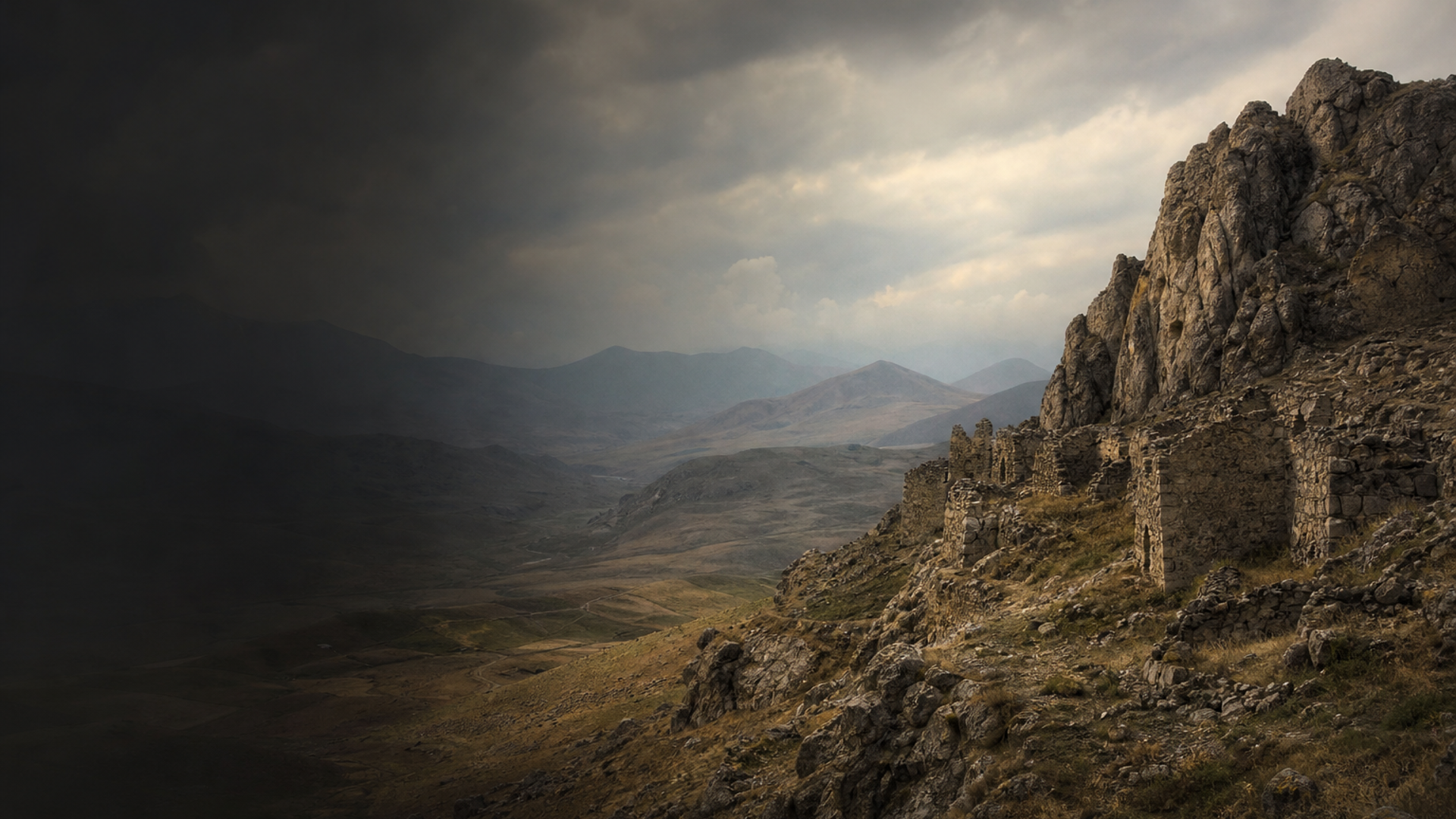
Life in medieval Agarak can be imagined from pottery sherds, hearths, and burial goods. Houses were modest, built with local stone and mudbrick; household assemblages reveal cooking wares, loom weights, and agricultural tools that point to mixed farming, textile production, and small-scale craft. Animal bone assemblages indicate sheep, goats, and cattle were central to diet and economy, while occasional exotic imports—fine glazed ceramics or metalwork—imply access to wider trade routes.
Burials at Agarak, though few, show variability: primary inhumations with personal items and occasional secondary deposits. Funerary practice reflects Christianized Armenian rites by this period, layered over older local traditions. Social life likely revolved around kin networks, village-level elites, and church institutions that mediated landholding and dispute resolution. Archaeological data indicates the community experienced cycles of prosperity and stress, likely tied to shifting tribute demands and the movements of armies across the Caucasus.
These everyday traces are evocative but incomplete; excavation areas remain limited and many domestic contexts are poorly preserved, so reconstructions emphasize plausible scenarios grounded in comparable regional sites.