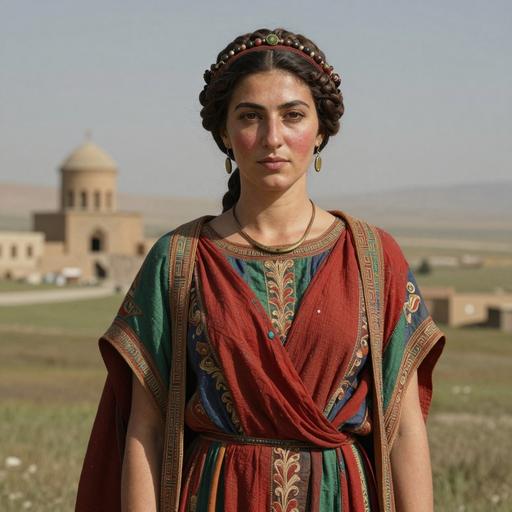
Three mitochondrial genomes recovered from Aghitu yield haplogroups W, T2h, and H. These mtDNA lineages are broadly distributed across West Eurasia: haplogroup H is the most common European maternal lineage and also present in the Near East; W is less frequent but present across Europe and western Asia; T2h is a subclade of T2 with Near Eastern and European occurrences. Together, the trio points to maternal ancestry components common to the larger West Eurasian gene pool rather than to a unique, isolated signature.
Crucially, only three samples were analyzed and no Y-chromosome haplogroups are reported for these individuals; therefore any broader claims about population structure, sex-biased migration, or continuity with later groups are preliminary. Limited evidence suggests affinities with regional maternal lineages known from Late Iron Age and Hellenistic contexts across the southern Caucasus and Near East, but genome-wide data and larger sample sizes would be necessary to test models of admixture, migration, and kinship. Ancient DNA methods — careful contamination controls, damage-pattern authentication, and direct radiocarbon dating — enable confident recovery of these mitochondrial sequences, yet the small n mandates caution: these sequences are illustrative vignettes rather than definitive population summaries.