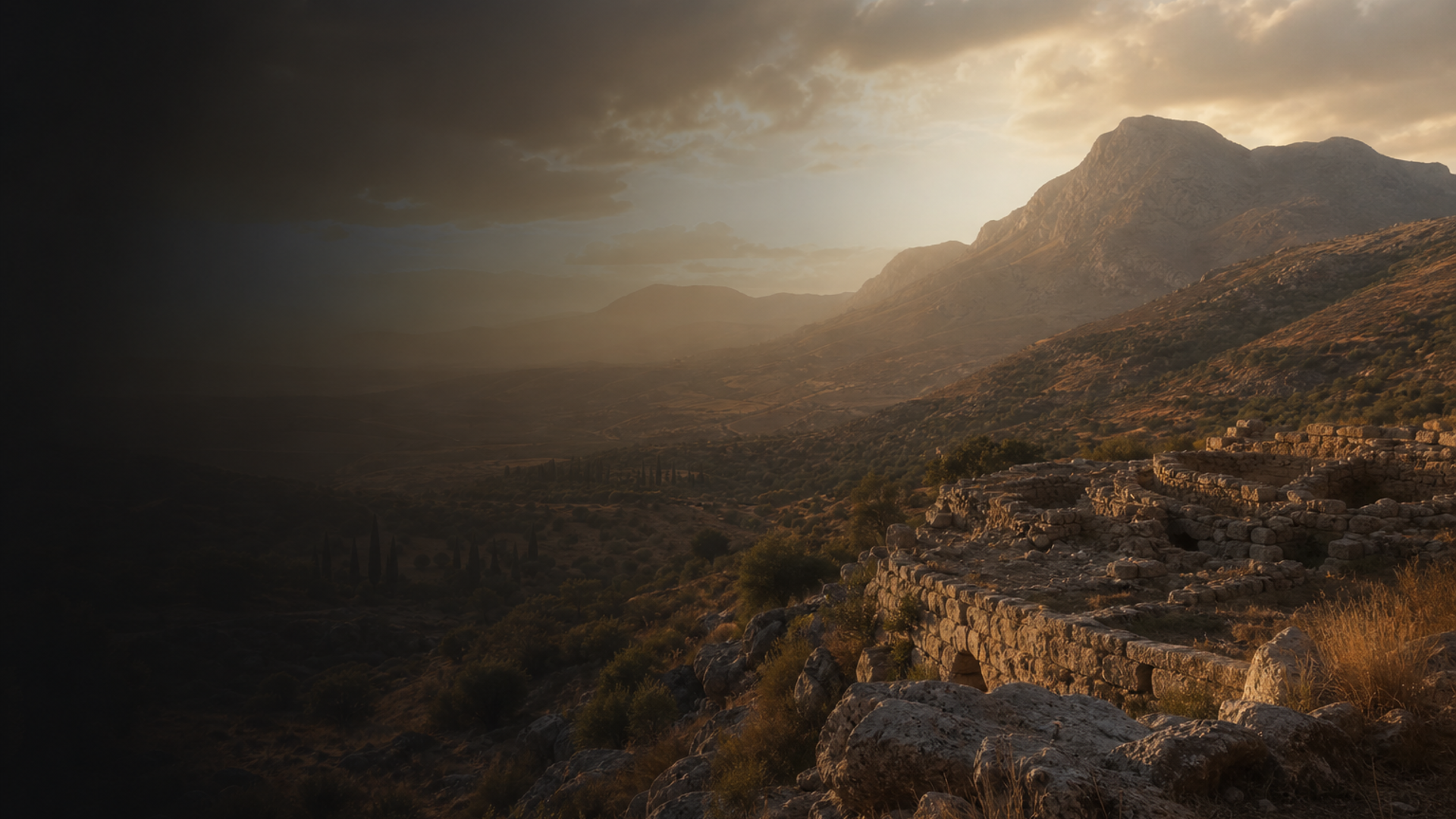
Archaeological traces from Late Helladic sites in the Peloponnese—house plans, storage vessels, decorated pottery, and burial assemblages—evoke a society organized around agriculture, craft specialization, and long-distance exchange. At Aidonia, the landscape of limestone ridges and fertile valleys would have supported olive cultivation, grain production, and pastoralism, while routes down to the Corinthian Gulf enabled movement of goods and ideas.
Burials and tomb architecture across the region suggest social differentiation: richness of grave goods and monumentality vary, indicating households with differing resources. Craft production—metallurgy, pottery manufacturing, and textile work—left imprints in workshop debris and standardized vessel forms found at Late Helladic sites. Ritual life likely fused local traditions with broader Mycenaean religious expressions visible in iconography and cultic objects across Peloponnese communities.
Genetic data offers complementary insights: the mix of maternal and paternal lineages among the nine samples is consistent with a population shaped by local continuity and episodic mobility. This pattern aligns with a community that maintained stable village life while engaging in broader networks that brought visitors, traders, or new household members.
Archaeological interpretations remain interpretive: without extensive settlement excavation at Aidonia the social picture is reconstructed from scattered finds and regional analogies.