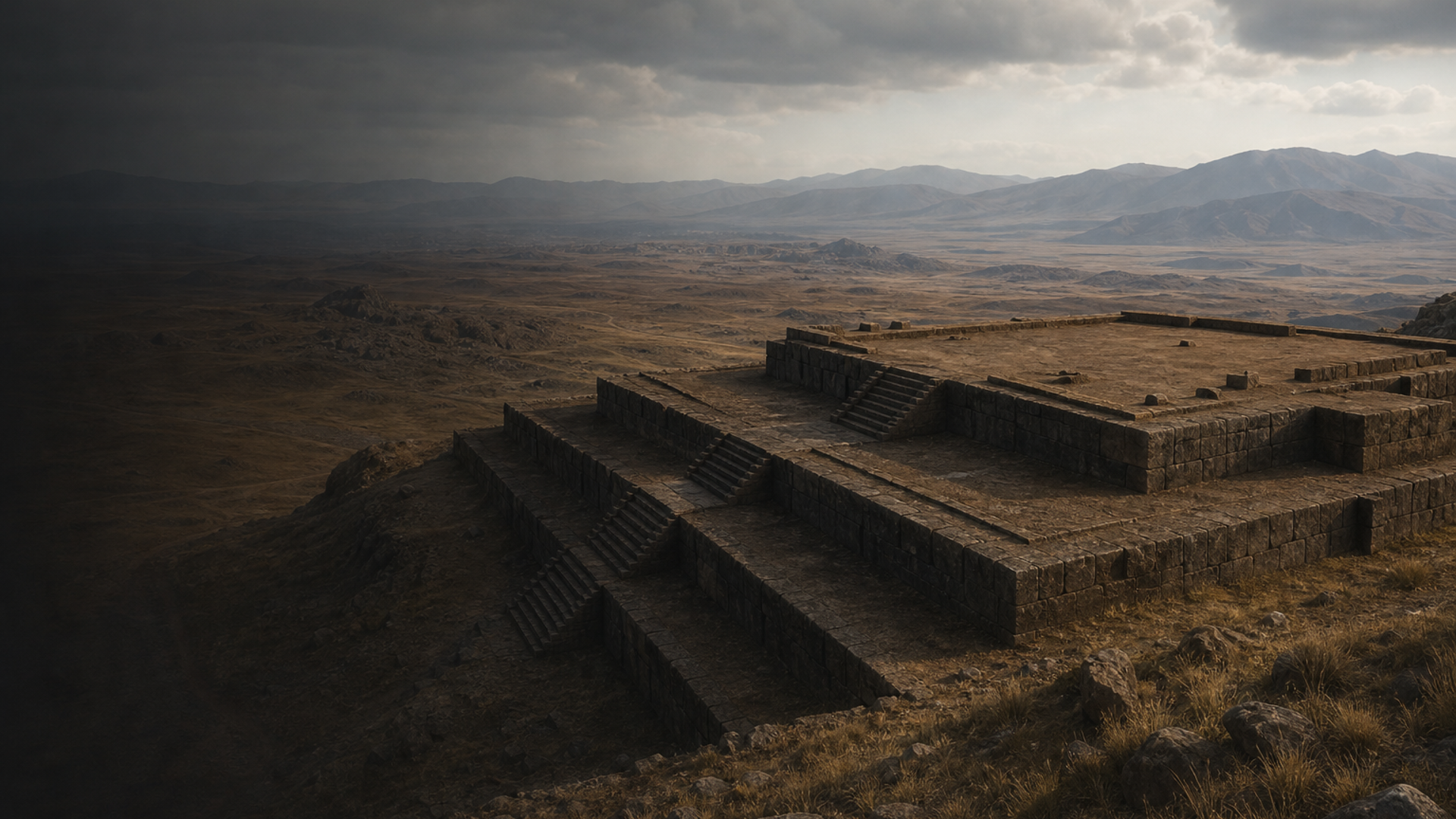
Five individuals sampled from archaeological contexts at Akapana and directly dated between 773 and 1047 CE provide an initial genetic window into the Tiwanaku core. Three of the five males carry Y-chromosome haplogroup Q, a lineage widespread among Indigenous peoples across the Americas and commonly observed in Andean ancient DNA. The mitochondrial diversity—C1b, B2, D1, B2b, and C1c—reflects multiple founding Native American maternal lineages and suggests maternal heterogeneity within the sampled group.
These genetic signatures are consistent with archaeological expectations of Indigenous Andean ancestry at Tiwanaku, implying broad continuity with pre-contact populations of the highlands. However, two important cautions shape interpretation: first, the sample count is low (n=5). With fewer than ten genomes, conclusions about population structure, sex-biased mobility, or admixture are preliminary. Second, sampling from a monumental, ritual locus may bias the dataset toward individuals selected for particular roles or origins—burial practices can concentrate non-local or high-status individuals.
Genetic affinities to modern Aymara and Quechua-speaking groups are plausible given regional continuity, but formal comparisons require larger ancient and modern reference panels. Future sampling across social contexts, peripheral settlements, and broader chronologies will be essential to test hypotheses about local continuity, regional gene flow, and the biological dimensions of Tiwanaku interaction networks.