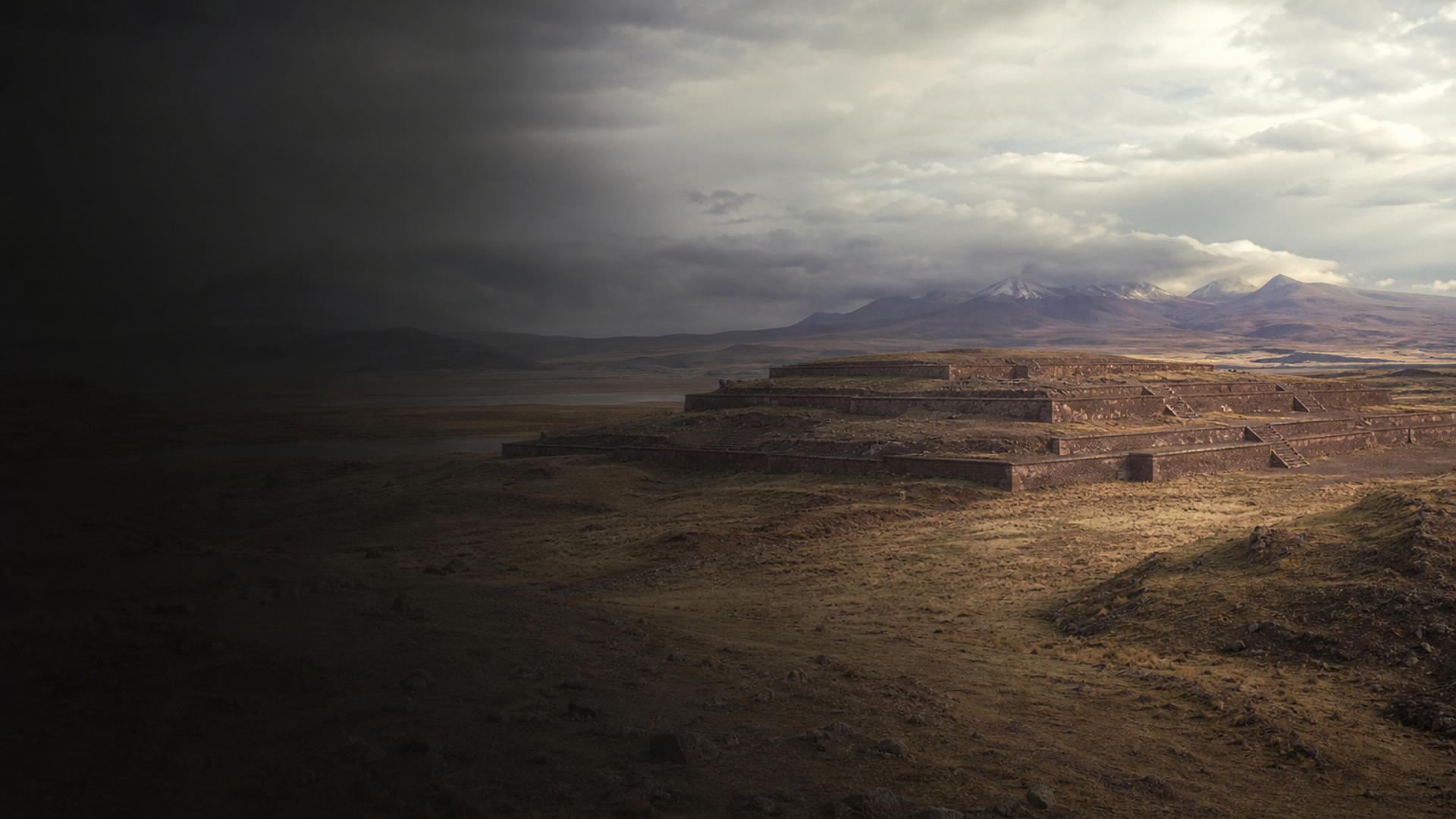
Ancient DNA from five individuals excavated at Akapana (773–1047 CE) provides a slender but evocative window into the human landscape of Tiwanaku. Three of the five male-line profiles carry Y‑DNA haplogroup Q — a lineage widespread among Native American populations and commonly observed across Andean ancient and modern groups. This dominance of Q in the small male sample aligns with broad hemispheric patterns but cannot alone reveal fine-scale population structure.
The mitochondrial (maternal) haplogroups are diverse: C1b (1), B2 (1), D1 (1), B2b (1), and C1c (1). Such diversity in mtDNA within this tiny set suggests that multiple maternal lineages were present around Akapana — a pattern consistent with highland demographic complexity and potential mobility of women through marriage or pilgrimage networks. Archaeogenetic comparisons with other published Andean datasets often reveal continuity between precontact highland populations and some modern Andean groups, but with regional variation.
Because the sample count is low (<10), all genetic inferences are preliminary. Limited evidence suggests affinity with broader Altiplano genetic profiles, but further sampling is required to test hypotheses about kinship structure at Akapana, sex-biased mobility, and connections to surrounding provinces. Future integrated analyses — combining ancient genomes, isotopes, and archaeology — will clarify whether Akapana’s burials represent local lineages, regional elites, or a cosmopolitan mix.