Aknashen Neolithic: Dawn in the Armenian Highlands

Download PDF creates a visual, rasterized copy. Use Print for selectable text and better assistive-technology support.

Skip to main content
Civilization Spotlight

Aknashen Neolithic: Dawn in the Armenian Highlands

Two early Neolithic individuals from Aknashen offer a tentative window into 6th‑millennium BCE life

5985 CE - 5742 BCE
Aknashen, Armavir Province, Armenia

The Story

Archaeological and genetic data from two Neolithic individuals (c. 5985–5742 BCE) at Aknashen, Armavir Province, Armenia, suggest links to regional farming networks. Limited sample size makes conclusions provisional, but mtDNA (I1, T1a) hints at connections across the Caucasus and Near East.

Time Period

c. 5985–5742 BCE

Region

Aknashen, Armavir Province, Armenia

Common Y-DNA

Not reported / unknown

Common mtDNA

I1 (1), T1a (1)

Timeline

5900 BCE

Aknashen occupation (early Neolithic)

Archaeological layers and radiocarbon dates indicate habitation and farming activity at Aknashen around 5900 BCE, reflecting early Neolithic settlement in the Armenian highlands.

Origins & Emergence

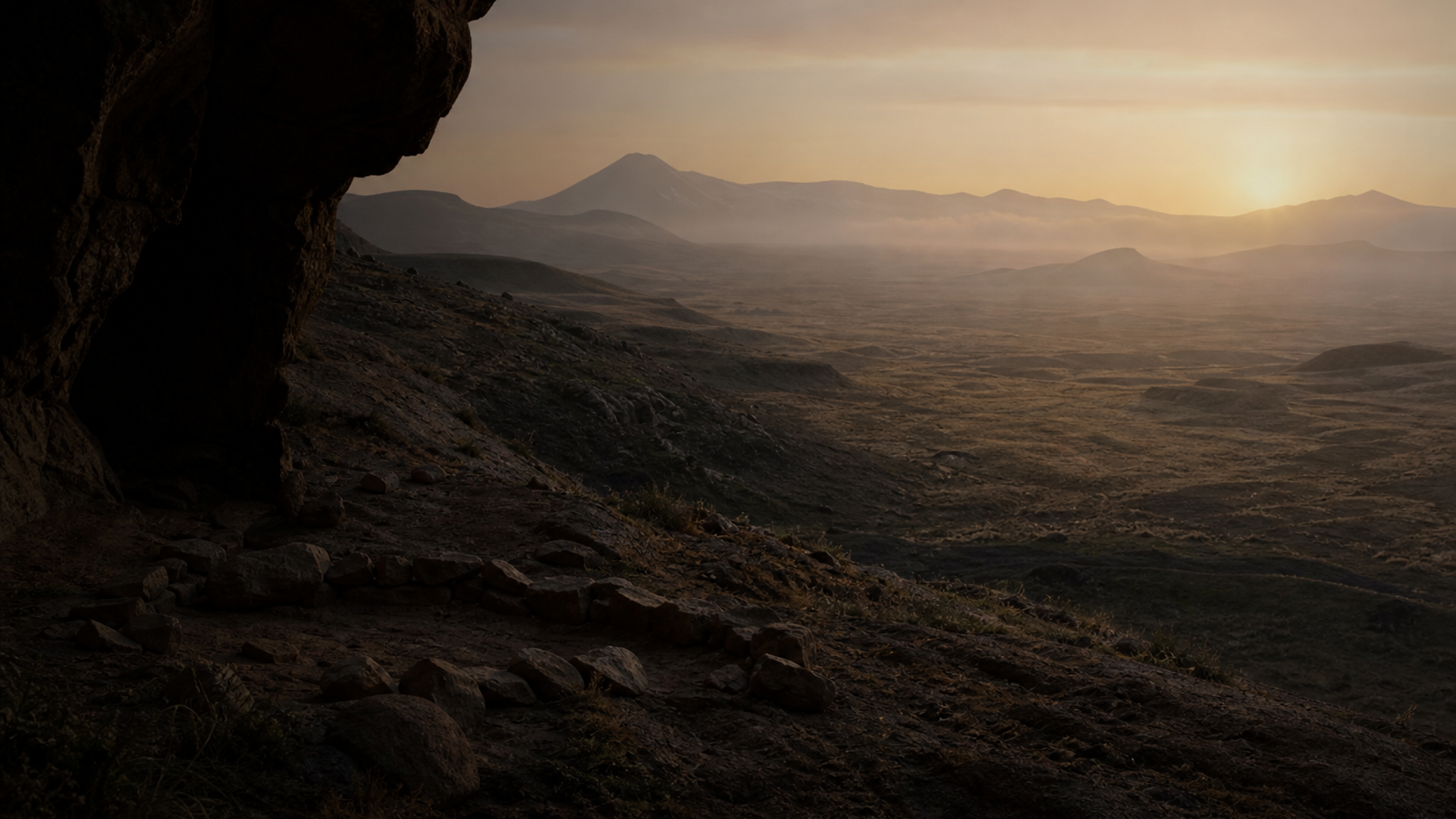
Aknashen sits on the fertile plains west of modern Vagharshapat in Armavir Province. Archaeological data indicates human presence and growing sedentism in the mid‑6th millennium BCE. Radiocarbon dates associated with the site place the sampled individuals between c. 5985 and 5742 BCE, in the heart of the Neolithic transition across the southern Caucasus. Excavations at Aknashen have revealed stratified habitation layers, domestic structures and evidence for cultivated plants and managed animals, situating the settlement within a broader pulse of farming expansion from the Anatolian and northern Mesopotamian spheres into the Armenian highlands.

Cinematic landscapes—ploughed fields, reed‑lined hearths, and storerooms carved from clay—frame a story of communities adapting to new lifeways. Archaeological data indicates networks of exchange and shared technologies across the region, but the precise routes and cultural mechanisms remain open questions. Limited genetic sampling from Aknashen means population‑level inferences are tentative. Nevertheless, the site exemplifies how local foragers and incoming farmer groups could have met and merged in this mountainous crossroads, setting the stage for long‑term demographic and cultural transformations in the Caucasus.

  • Site: Aknashen (Armavir Province, Vagharshapat District), Armenia
  • Dates: c. 5985–5742 BCE (early Neolithic)
  • Archaeological indicators: sedentary settlement with farming signatures

Daily Life & Society

Material remains from Neolithic settlements in the Armenian highlands paint an evocative portrait of daily life: cultivated fields rippling under open skies, hearths that warmed clustered houses, and communal labor shared across small villages. Archaeological data indicates households stored surplus grain, produced simple pottery, and curated stone and bone toolkits for sowing, harvesting and processing food. Animal bones at contemporaneous sites show early management of sheep, goats and cattle, while archaeobotanical remains point to cereals and pulses adapted to upland conditions.

Social life likely blended kinship and cooperation. Aggregations of houses and shared features—storerooms, pits, and possibly ritual installations—suggest neighborhood-scale organization. Decorative motifs and craft debris demonstrate aesthetic expression and long‑distance contacts through traded items or shared stylistic languages. Because Aknashen’s genetic record currently includes only two sampled individuals, linking specific household lineages to genetic kinship patterns remains speculative. Archaeological evidence, however, strongly supports a community oriented around farming, animal husbandry, and seasonal rhythms of work and ceremony.

  • Economy: small‑scale farming, animal husbandry, storage
  • Social structure: household clusters, cooperative labor

Genetic Profile

Ancient DNA from Aknashen is extremely limited: two individuals yield mitochondrial haplogroups I1 and T1a (one each). These maternal markers are informative but far from conclusive. Haplogroup T1a is commonly associated in ancient DNA studies with Neolithic and later populations across Southwest Asia and parts of Europe, suggesting potential connections with wider farming networks. Haplogroup I1 (observed here on the maternal line) is less frequent in published ancient Near Eastern samples and may reflect local or regionally diverse maternal lineages present in the southern Caucasus during the 6th millennium BCE.

No robust Y‑chromosome signal is reported for these individuals, so paternal lineages and male‑mediated migration patterns remain unknown. With only two samples, population‑level patterns—such as admixture between Anatolian farmers and local hunter‑gatherers or continuity into later Caucasian groups—cannot be established with confidence. Limited evidence suggests these individuals participated in the genetic mosaic of early Neolithic Armenia: a blend of incoming farmer ancestries and local genetic substrate. Future sampling from Aknashen and neighboring sites will be crucial to test hypotheses of demographic continuity, migration corridors, and the role of the Armenian highlands as a genetic crossroads.

  • mtDNA observed: I1 and T1a (each in one individual)
  • Sample size low (n=2): conclusions are preliminary

Legacy & Modern Connections

The footprints of Aknashen’s early farmers may echo faintly in the genetic and cultural landscape of modern Armenia. Archaeological continuities—agricultural terrace systems, long‑term settlement in river valleys, and craft traditions—suggest cultural resilience in the highlands. Genetically, limited ancient mtDNA points to maternal lineages that are part of the wider Neolithic tapestry across the Near East and Caucasus, but firm claims about direct ancestry to modern Armenians are premature.

The true legacy of Aknashen is twofold: material—foundations for later social complexity in the region—and methodological—showing how even a small set of ancient genomes can illuminate local histories when integrated with archaeology. As ancient DNA sample sizes grow, researchers will better resolve whether sites like Aknashen contributed directly to the gene pool of later Bronze Age populations or represent a now‑diluted chapter in the Caucasus’s deep past. For now, Aknashen remains a poignant, partially lit scene in the long human drama of the Armenian highlands.

  • Cultural continuity: agricultural practices and settlement patterns in the region
  • Genetic continuity: possible but unproven—more ancient DNA needed

AI Assistant

AI Assistant by DNAGENICS

Unlock this feature
Ask questions about the Aknashen Neolithic: Dawn in the Armenian Highlands culture. Our AI assistant can explain genetic findings, historical context, archaeological evidence, and modern connections.
Sample AI Analysis

The Aknashen Neolithic: Dawn in the Armenian Highlands culture represents a fascinating chapter in human history...

Genetic analysis reveals connections to earlier populations while showing evidence of unique adaptations and cultural innovations. The ancient DNA samples provide insights into migration patterns, social structures, and the biological relationships between ancient populations.

This is a preview of the AI analysis. Unlock the full AI Assistant to explore detailed insights about:

  • Genetic composition and ancestry
  • Migration patterns and origins
  • Daily life and cultural practices
  • Modern genetic legacy
Use code for 30% off • Expires Nov 15




