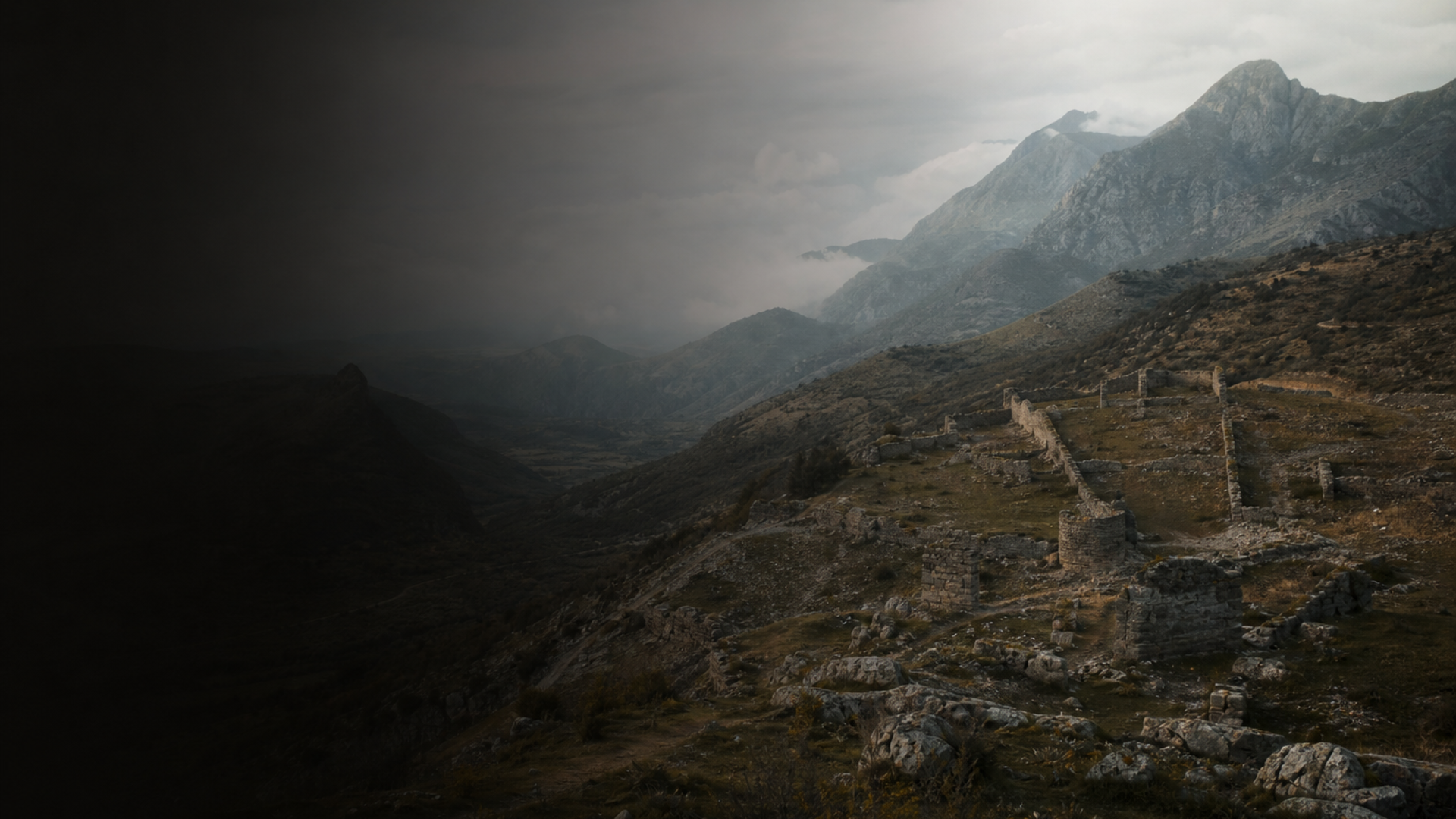
Archaeological traces associated with these sites evoke a landscape of terraced fields, small hamlets, and regional markets. Pottery fragments, building foundations, and isolated finds recovered in surveys and limited excavations suggest households oriented around mixed farming, pastoralism, and seasonal exchange. Bardhoc, in the mountainous Kukes District, would have experienced rugged highland subsistence strategies, while Pazhok in central Albania sat closer to trade routes and administrative centers.
Social life in this period was layered: family and kin networks structured labor and property, while Ottoman administrative ties and wartime pressures reshaped obligations and mobility. Coins, imported ceramics, and repairs to local dwellings point to economic links beyond village bounds. Funerary deposits and burial orientations recorded at some nearby cemeteries align with Christian and, later, mixed religious practices reflecting the region’s complex spiritual landscape.
Archaeological data indicates resilience: crafts and rural lifeways persisted, even as communities negotiated taxation, military demands, and market integration. Yet these reconstructions are grounded in material remains that are unevenly preserved. Limited excavations mean many aspects of everyday life — diet, health, household composition — remain inferential and would benefit from further bioarchaeological and isotopic study.