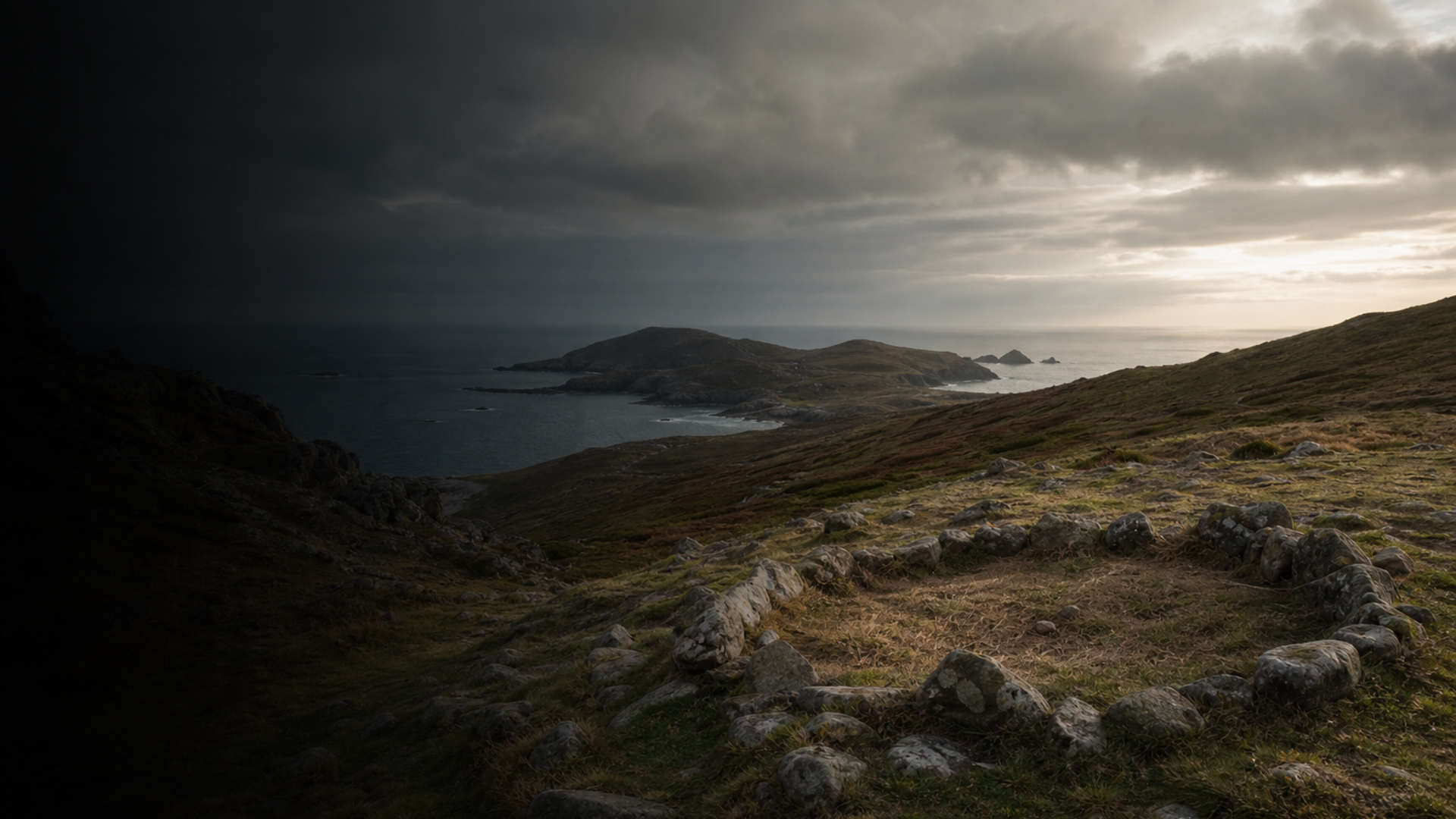
Life on Alderney in the late Iron Age would have been sculpted by the sea: boats, nets and salt were as decisive as plough and herd. Archaeological indicators from Longis Common — hearths, fragmented pottery, and carved bone tools — suggest households organized around combined marine and terrestrial resources. Faunal remains hint at diets rich in fish and shellfish, supplemented by sheep, cattle, and small grain cultivation where soils permitted.
Settlement layout at Longis Common likely balanced defensive needs and access to foraging territories; natural promontories and ridgelines provided vantage points for both watching the horizon and structuring community space. Craft activities, including textile production and bone-working, would have supported both local needs and traded commodities. Material parallels with sites in Guernsey, Jersey, and the nearby Normandy coast point to regular movement of goods, ideas and people across the Channel.
Socially, these island communities were small and tightly connected; kin networks, maritime knowledge, and seasonal rhythms framed social identity. Burial evidence on the islands is patchy, making household and communal practices difficult to reconstruct; archaeologists therefore interpret daily life through artifact assemblages and environmental proxies.