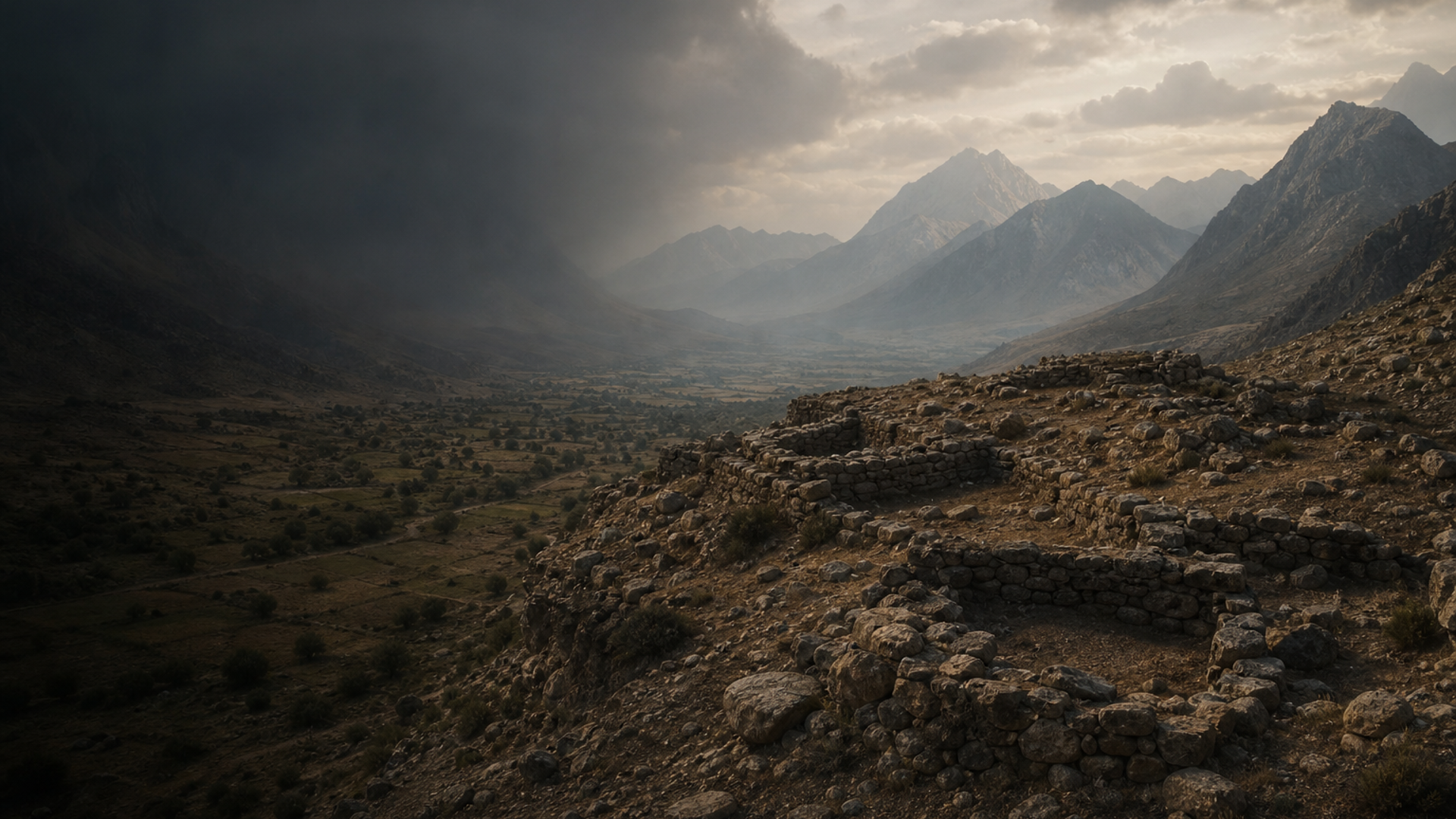
The everyday world at Aligrama can be imagined through hearth-smoke, iron tools, and the clink of traded metal—yet the archaeological record is fragmentary. Excavated features suggest households operating on mixed strategies: agriculture on valley floors, pastoral grazing on slopes, and exploitation of woodland resources. Iron tools and probable implements hint at agricultural intensification and craft activities; pottery sherds and small ornaments point to local ceramic traditions and personal adornment.
Burial practices at nearby Swat Valley sites show variability across the Iron Age, and though burials at Aligrama remain limited, they indicate social differentiation and enduring ties of kinship and place. Textural traces—floor surfaces, post-holes, hearths—suggest compact domestic compounds rather than sprawling settlements. Seasonal rhythms of planting, herding, and exchange with valley and highland neighbors would have structured labor, ritual, and identity.
Archaeological data indicates that Aligrama’s inhabitants participated in broader networks of exchange, receiving raw materials and ideas while maintaining a resilient, locally adapted lifeway. Because excavation coverage is partial, interpretations of household composition, craft specialization, and social hierarchy are necessarily cautious and open to revision.