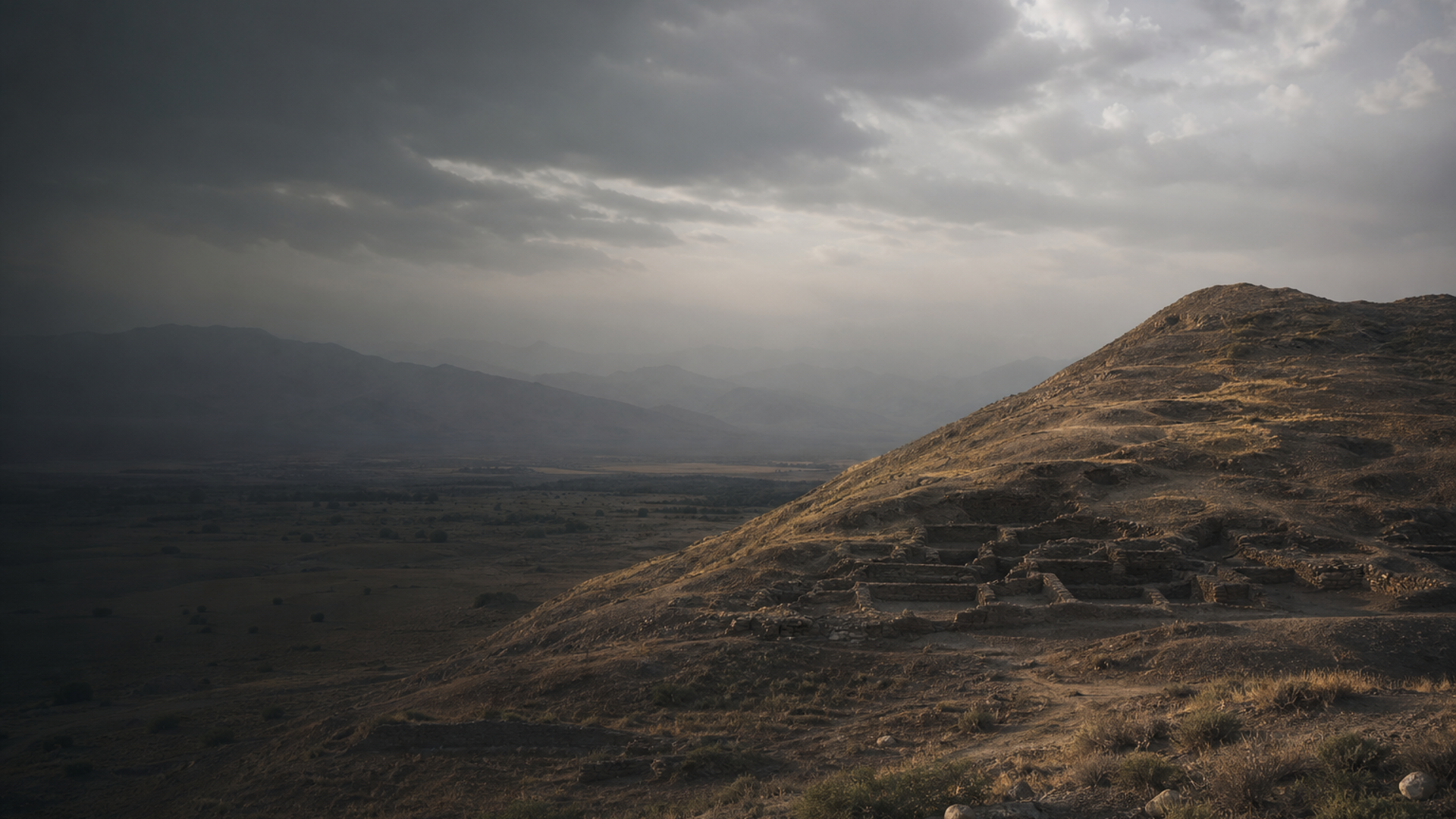
Life in the southern Caucasus lowlands during the Late Chalcolithic would have unfolded between river channels, cultivated plots and seasonal pastures. Archaeological remains from contemporaneous sites in Azerbaijan show communities balancing farming, herding and emerging craft production. Pottery shapes and toolkits hint at household economies where women and men likely shared labor across ceramic manufacture, textile production, and food processing.
Material culture from nearby Chalcolithic sites suggests a palette of fired-clay vessels, stone and bone tools, and early copper artifacts—each object a tangible trace of daily choices and social identities. Burial practice at Alkhantepe, though represented by a single interment, contributes to this picture: funerary placement and associated grave goods (if present) can reflect kinship ties, status distinctions, and community values.
Seasonal mobility for pastoralists, exchange relationships for obsidian and copper, and local agricultural intensification would have structured rhythms of life. Yet without more extensive excavation and a larger sample of burials, social reconstructions remain cautious and richly provisional.
The cinematic contours of everyday existence—smoke from hearths, the ring of a copper awl, children trailing along irrigation banks—are inferred from scattered finds and regional parallels rather than direct evidence at Alkhantepe alone.