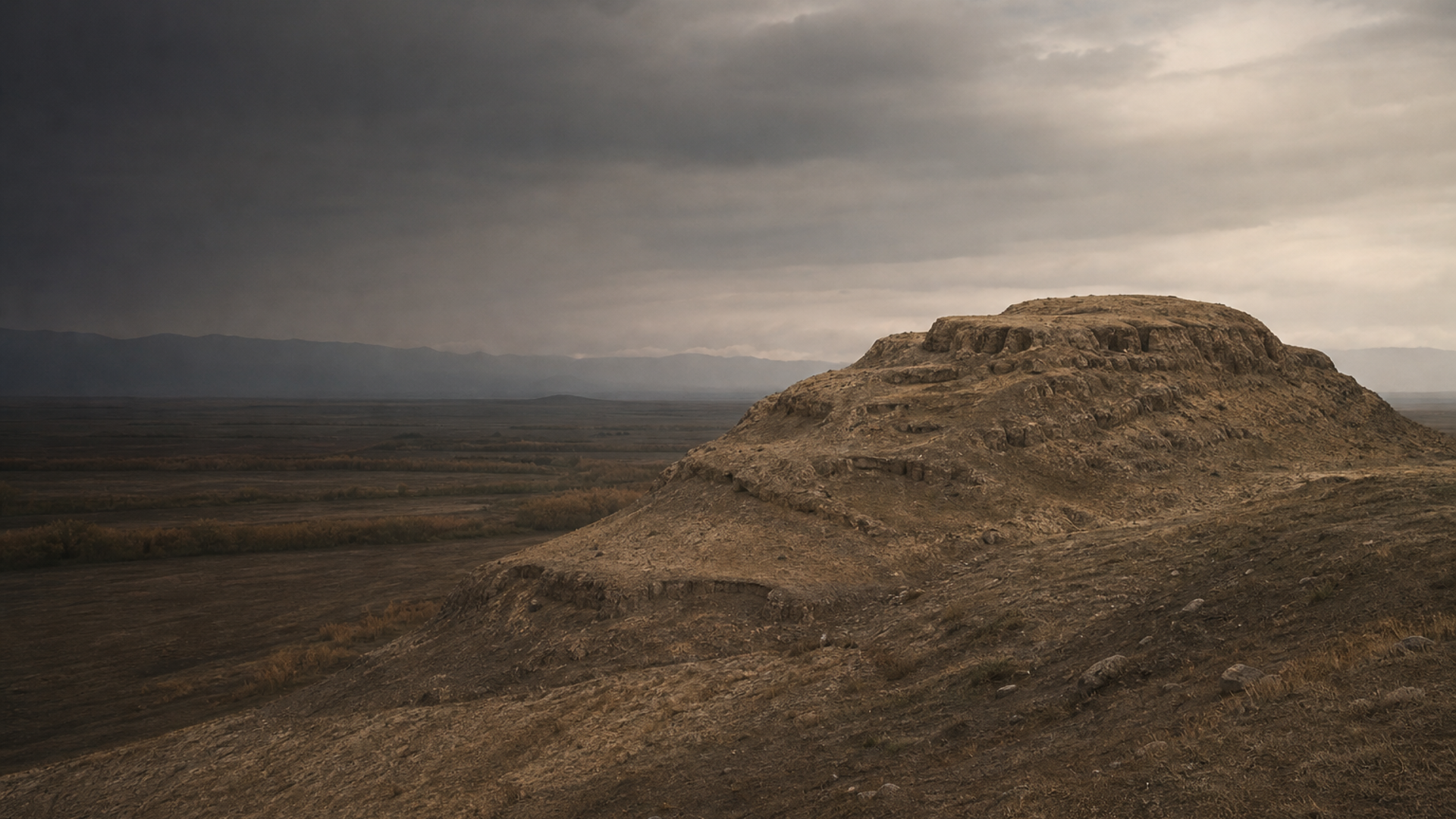
Archaeological evidence from Late Chalcolithic sites in the Azerbaijan lowlands suggests a life shaped by seasonal rhythms, craft specialization and exchange. At places like Alkhantepe, people likely combined small-scale agriculture on fertile floodplains with pastoral practices on nearby uplands. Pottery styles and toolkits found across the region indicate household-based production, with specialized items—stone and early metal tools—pointing to emerging craft specialists.
Settlement layouts across the lowlands often include clusters of dwellings, storage pits and middens, implying household economies oriented toward family groups and local exchange. Funerary behavior from contemporaneous sites in the region shows variability: some burials are simple, others accompanied by personal ornaments or food offerings, hinting at social differentiation. Trade or contact with neighboring zones brought exotic materials or stylistic influences, creating a cultural mosaic in which Alkhantepe participated.
Within this lived world, daily life would have been sensory and risky: seasonal flooding, the work of tending crops and herds, and the constant movement of goods and ideas along ancient routes. The single genetic sample from Alkhantepe offers a biological fragment of this wider tapestry, but cannot alone reconstruct the full complexity of social life.