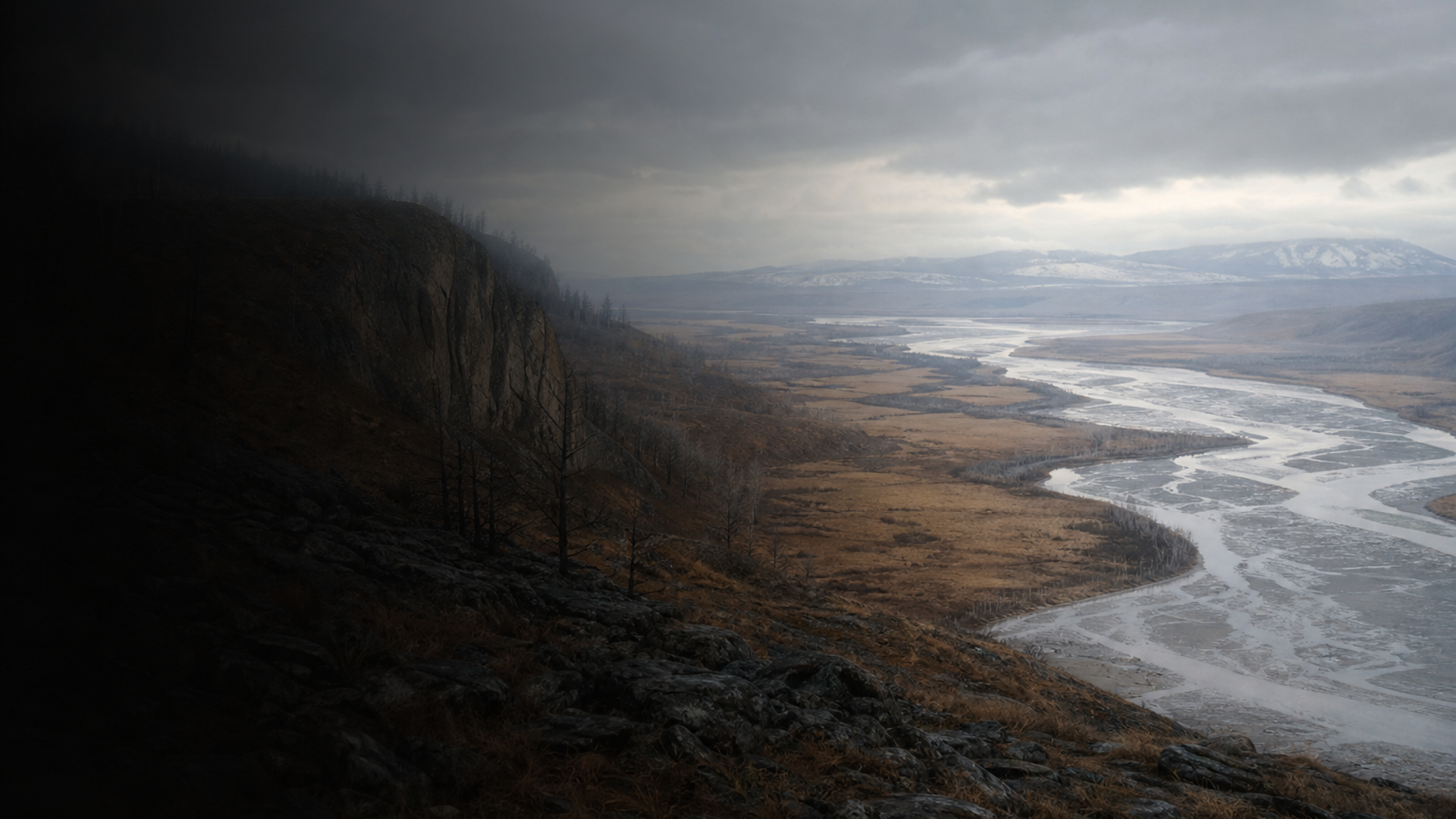
Life along the Amur would have been sculpted by water: seasonal floods and fish runs, icebound winters, and spring pulses of productivity. Archaeological indicators — lithic scatters, hearth lenses, and faunal assemblages — imply small, mobile bands exploiting riverine fish, freshwater mollusks, riparian plants, and large mammals such as deer and elk. Bone and antler fragments in some Late Paleolithic contexts suggest composite tools and points optimized for fishing and hunting in heavily vegetated riparian zones.
Sites in this region tend to preserve ephemeral camp structures rather than dense occupation layers, consistent with logistical mobility: groups moving between winter shelters and spring/summer fishing camps. Social organization likely centered on kin-based bands with flexible alliances for exploiting seasonally abundant resources. Organic artifacts (wooden implements, textiles) seldom survive, so much of the material culture is inferred from stone toolkits and zooarchaeological patterns. Burial evidence for this specific dataset is scarce; therefore, rituals and mortuary practices remain poorly understood.
Archaeological data indicates a resilient economy tuned to pulses of abundance. The cinematic image is of small human groups moving along braided channels, following salmon runs, and keeping intimate knowledge of riverine micro-environments.