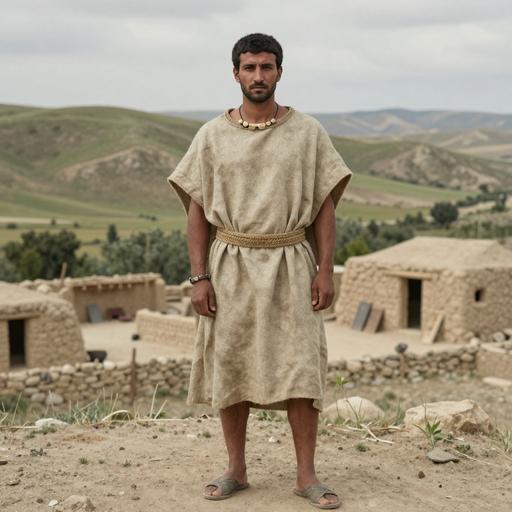
Ancient DNA from 64 individuals spanning 3340–100 BCE offers a substantial window into Anatolian population dynamics. Common mitochondrial lineages include H (10), U (9), K (9), J (8), and T (3), reflecting maternal diversity typical of Near Eastern and European‑adjacent populations. On the paternal side, haplogroup J appears among the documented Y‑DNA calls (3 instances), a lineage frequently found in the Near East and parts of Anatolia in both ancient and modern datasets.
Genomic data suggest a pattern of regional continuity with episodes of admixture. Broadly, individuals cluster genetically with other Anatolian and Near Eastern groups rather than with distant steppe populations, although isolated signals of external gene flow appear at particular times and places. Because samples are distributed across multiple sites—Gordion, Kuriki Höyük, Tilbe ar Höyük, Oylum Höyük, Çavuştepe, Muradiye, Tatika, Yassıtepe, Devret Höyük, and Harmanören‑Göndürle Höyük—we can begin to trace subregional variation, but uneven site representation means some local trends remain tentative.
These genetic patterns align with archaeological evidence for deep local roots combined with sustained contact across Anatolia and beyond. Statistical ancestry models indicate mixtures of local Neolithic‑derived ancestry with additional components consistent with Near Eastern gene pools; the timing and source of these inputs vary by site and period. While 64 samples provide robust regional signals, finer chronological and spatial sampling will refine models of migration, elite mobility, and family structure.