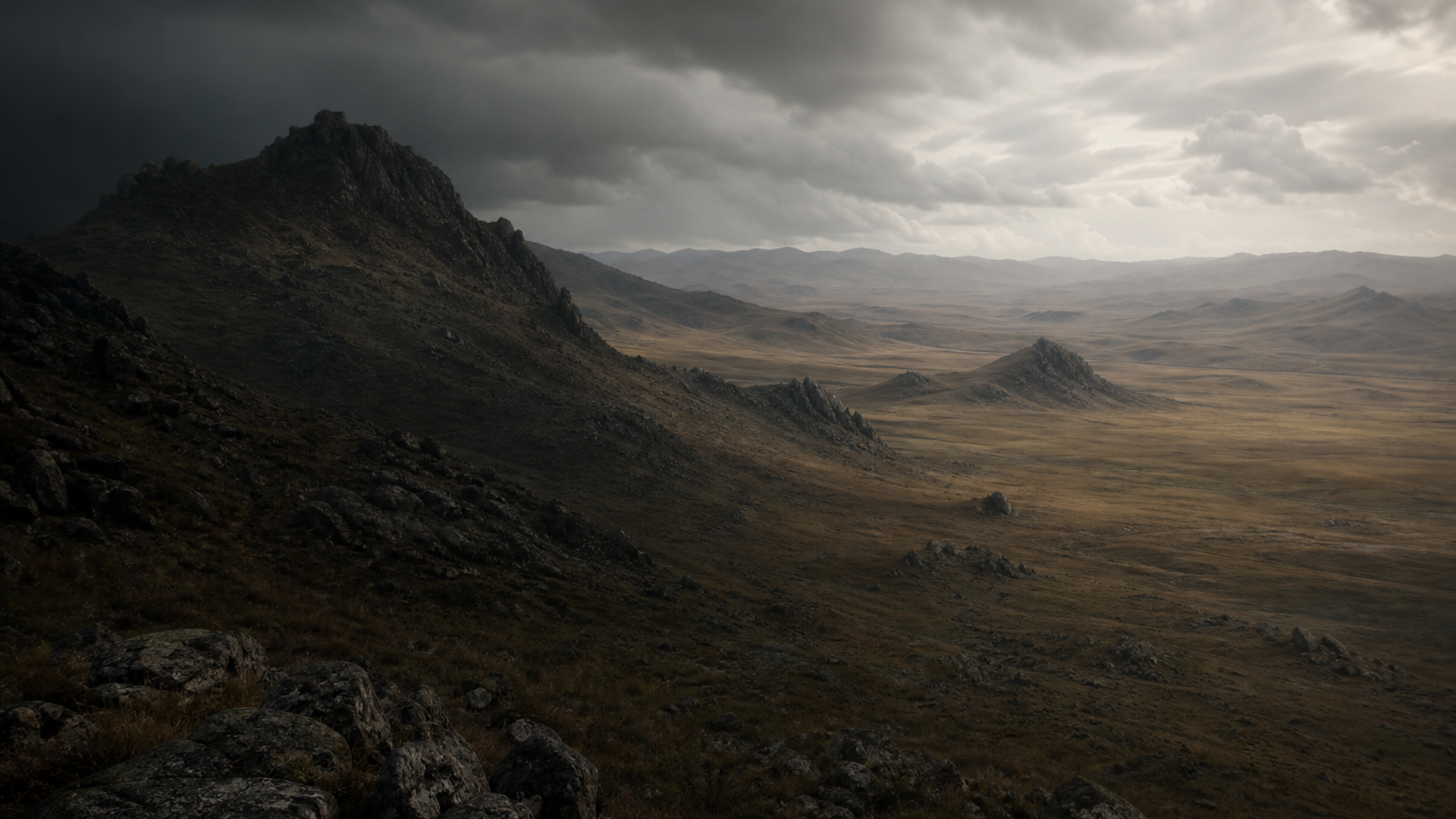
Life in Arkhangai’s uplands during the Late Medieval centuries would have been dominated by movement — herds driven between summer highlands and sheltered wintering grounds, families living in lightweight dwellings, and a material economy organized around animals, wool, and mounted mobility. Archaeological traces at the named sites are consistent with camp sequences: concentrations of charcoal, hearth lenses, and fragmented bone suggesting butchery and food processing. Ornamental objects and small tools, when present, reflect practical, portable manufacture rather than sedentary industry.
Social organization is difficult to resolve from the current archaeological dataset. The cemeteries and isolated burials at Melkhii Chuluu and Khanui show variability in burial placement and goods, which may index household-level differentiation or ritual variation. Grave architecture tends to be modest, aligning with pastoralist funerary traditions across Mongolia. The period also overlaps historically with expansive political horizons — including the 13th-century Mongol unification — that would have affected trade routes, tribute networks, and movement of peoples. Yet archaeological data from these three sites points to resilient local lifeways: families adapting herding strategies to Arkhangai’s valleys and river corridors.
Given the limits of the material record, interpretations of social hierarchy, craft specialization, and long-distance exchange remain tentative pending further excavation and multi-proxy analyses.