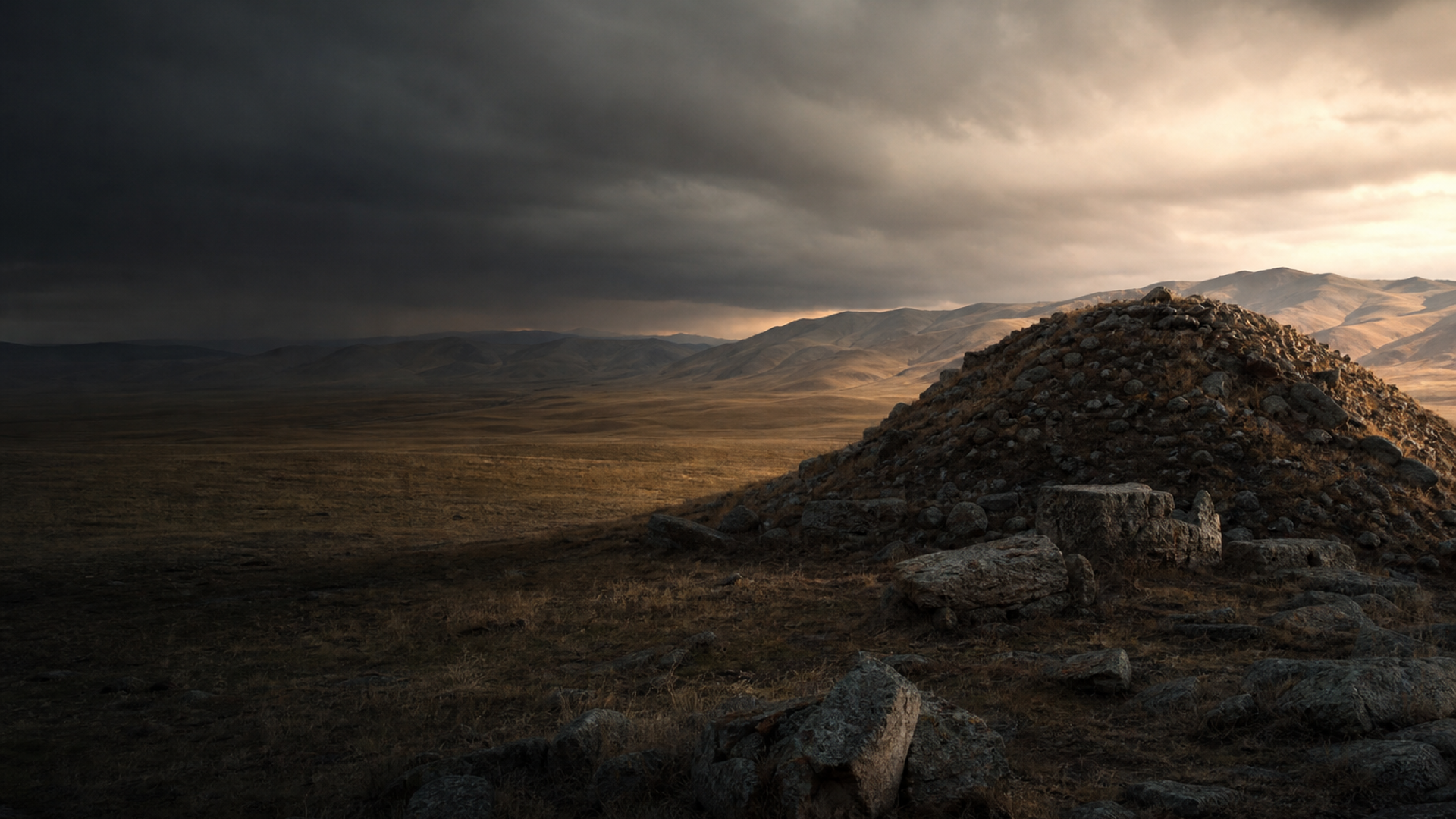
Archaeological traces from Arkhangai hint at lifeways shaped by mobility, seasonal pasturing, and the demands of a steppe economy. While the specific artifact inventories for Burkhan Tolgoi vary by burial, regional parallels in Xiongnu-era contexts point to mixed pastoralism centered on horses, sheep, and cattle, with mobile households exploiting river valleys and upland grasslands. Grave constructions and burial placement reflect social choices — status differentiation is often visible in the presence or absence of personal ornaments, weaponry, and exotic goods in contemporaneous sites elsewhere in Mongolia. Ethnographic analogy and landscape archaeology suggest families and small corporate groups organized around herd management, with social ties maintained by marriage, exchange, and periodic aggregation for trade or political ends. Daily diet likely leaned heavily on animal protein and dairy, consistent with pastoral economies on the steppe; however, direct dietary inferences for these individuals should be considered provisional until isotopic results from Arkhangai samples are published. The human stories—of movement, kinship, and adaptation—are written in both the earth of their graves and the minute alleles preserved in ancient DNA, offering complementary windows into a resilient, mobile social world.