Menu
Currency
Store
Blog
Armenia EBA: Voices from the Highlands
Armenia_EBA Armenia (Caucasus)

Armenia EBA: Voices from the Highlands

Stone, copper and kin—genomes from Kalavan to Karnut illuminate Early Bronze Age Armenia.

3350 CE - 2354 BCE
5 Ancient Samples
Scroll to begin
Chapter I

The Story

Understanding the Armenia EBA: Voices from the Highlands culture

Archaeological and genomic snapshots from five Early Bronze Age individuals (3350–2354 BCE) in Armenia. Site contexts—Kalavan, Talin, Karnut—combine with mitochondrial and Y-chromosome evidence to suggest diverse maternal lineages and the presence of R paternal ancestry. Conclusions remain preliminary.

Time Period

3350–2354 BCE

Region

Armenia (Caucasus)

Common Y-DNA

R (1 sample)

Common mtDNA

U (2), X2f (1), H (1), U7b (1)

Chapter II

Timeline

Key moments in the history of this culture

2500 BCE

Early Bronze communities in Armenia

Communities across Armenian highlands practice mixed farming, metallurgy and distinctive burial rites, forming networks across the southern Caucasus.

Chapter III

Origins & Emergence

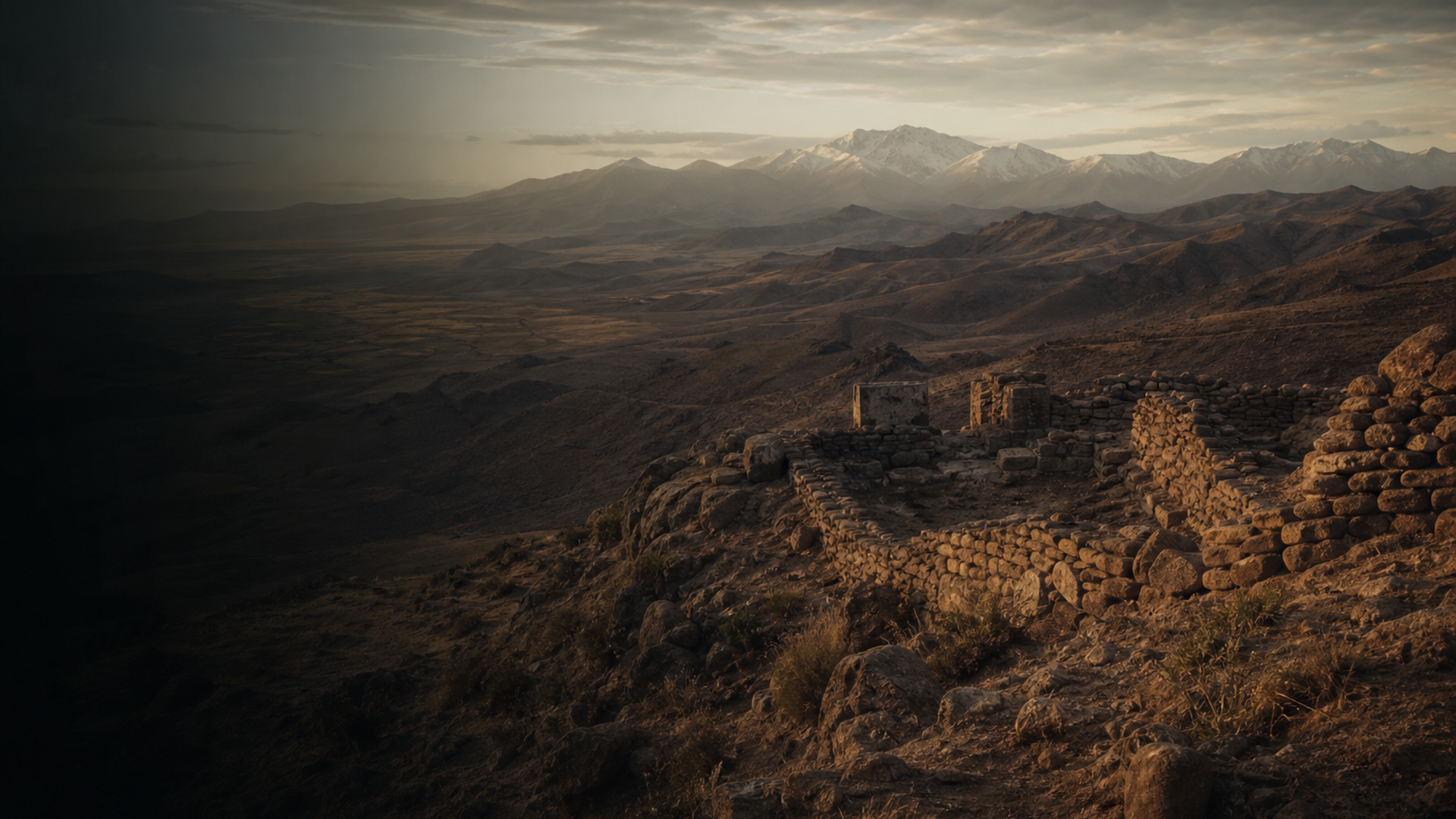
The Early Bronze Age in Armenia (ca. 3350–2354 BCE) unfolds across high plateaus and river valleys where long-established communities intensified metallurgy, pastoralism, and settled farming. Archaeological data from sites such as Kalavan, Talin (including the Talin cemetery), and the Karnut Archaeological Complex reveal ritualized burial practices and emerging social differentiation. Pottery styles, metal artifacts, and burial forms suggest continuity with late Chalcolithic traditions while also reflecting new connections across the southern Caucasus.

Genetic data for this cultural horizon are sparse: five individuals sampled from the above sites provide a narrow but evocative window. Limited evidence suggests a mix of maternal lineages (notably haplogroup U variants, H, and the rarer X2f and U7b) and at least one paternal lineage assigned to haplogroup R. These markers hint at diverse maternal ancestries typical of the wider Near Eastern–Caucasus corridor and at the presence of a broadly Eurasian paternal lineage.

Because sample coverage is very small, interpretations of population formation, migration, and local continuity are provisional. Archaeological and genomic synthesis points to a dynamic horizon in which local traditions persisted even as new social networks and biological connections emerged across the region.

  • Sites: Kalavan, Talin (and Talin cemetery), Karnut Archaeological Complex
  • Period of change: 3350–2354 BCE, Early Bronze Age Armenia
  • Evidence suggests local continuity with incoming connections; interpretations are provisional
Chapter IV

Daily Life & Society

Life in Early Bronze Age Armenian settlements would have been shaped by seasonal cycles, mixed farming, herding, and growing metalworking skills. Archaeological contexts at settlement sites and cemeteries indicate households organized around long-lived agropastoral economies, with communal access to pastures and craft specialists producing copper-alloy objects. Burials from Talin and Karnut show variability in grave goods and treatment, suggesting emerging status differences and differentiated social roles within communities.

Material culture—pottery shapes, toolkits, and fragments of metalworking hearths—speaks to both everyday activity and regional exchange. Roads and mountain passes of the southern Caucasus funneled goods, people, and ideas: obsidian sources, metal ores, and stylistic motifs moved across surprisingly long distances. Archaeological data indicate that funerary spaces were important stages for identity expression, with grave assemblages reflecting kinship, craft affiliation, or regional ties.

Although genomic sampling is limited, combining skeletal, material, and DNA evidence can illuminate household composition, patrilineal or matrilineal tendencies, and mobility. With only five genomes, such reconstructions are tentative, but they invite a picture of vibrant communities negotiating continuity and change on the highland margins of the Near East.

  • Economy: mixed farming, herding, and emerging metallurgy
  • Burials show variability—possible status differentiation and social roles
Chapter V

Genetic Profile

Five Early Bronze Age individuals sampled from Armenia (Kalavan, Talin, Talin cemetery, Karnut) produce a compact but informative genetic snapshot. Maternal lineages are dominated by haplogroup U variants (two samples), with single occurrences of X2f, H, and U7b. These mitochondrial haplogroups are consistent with a broad Eurasian and Near Eastern maternal pool: U and H are widespread in prehistoric Europe and the Caucasus, X2f is less common and can indicate deeper regional diversity, and U7b has connections to Near Eastern maternal lineages.
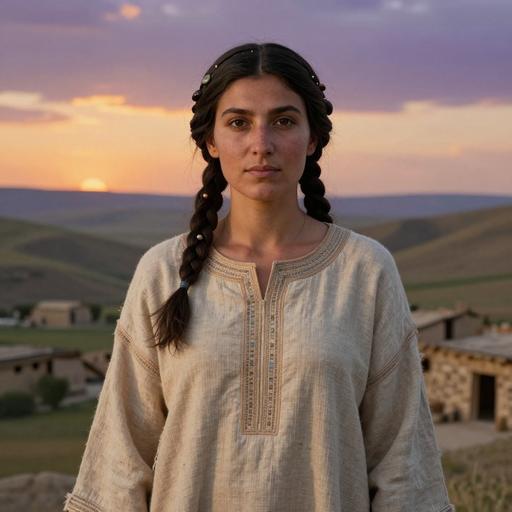
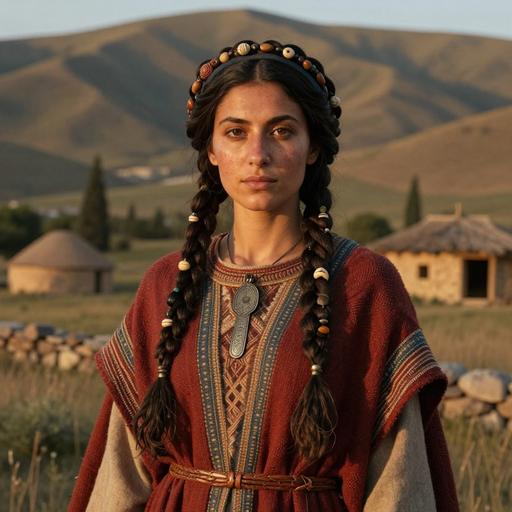
On the paternal side, one Y-chromosome sample falls into haplogroup R. Haplogroup R includes many sublineages distributed across Eurasia; a single R result among five samples signals the presence of this broad paternal lineage but cannot by itself define population-wide patterns.

Crucially, the sample count is low (<10), so genetic inferences are preliminary. Archaeogeneticists must therefore treat patterns here as suggestive rather than definitive. Nevertheless, when integrated with archaeological context, these genetic signals point toward a population with mixed maternal ancestry and at least some western–Eurasian paternal influence. Future, larger datasets from the southern Caucasus will be essential to resolve questions of continuity, migration, and the degree to which Early Bronze Age communities contributed to the genetic foundations of later Armenian populations.

  • mtDNA: U (2), X2f (1), H (1), U7b (1) — diverse maternal lineages
  • Y-DNA: R observed (1 sample); sample size too small for firm paternal patterns
Chapter VI

Legacy & Modern Connections

The biological and cultural traces of Early Bronze Age communities in Armenia contribute to a long and complex regional story. Archaeological continuity in settlement and mortuary practices suggests enduring local traditions, while genetic hints of maternal diversity and the presence of haplogroup R point to connections that cross the Caucasus corridor.

Linking these ancient genomes to modern populations must be done cautiously. Limited ancient sampling constrains direct claims of ancestry or continuity to present-day Armenians. Yet these individuals form part of the deep-time mosaic that, together with later population movements and historical events, shaped the genetic landscape of the South Caucasus. Each new archaeological excavation and ancient genome will refine how we understand cultural persistence, migration, and the human stories embedded in the Armenian highlands.

  • Contributes to long-term regional mosaic; continuity and connections evident
  • Direct links to modern populations remain tentative given small sample size
Chapter VII

Sample Catalog

5 ancient DNA samples associated with the Armenia EBA: Voices from the Highlands culture

Ancient DNA samples from this era, providing genetic insights into the people who lived during this period.

5 / 5 samples
Portrait Sample Country Era Date Culture Sex Y-DNA mtDNA
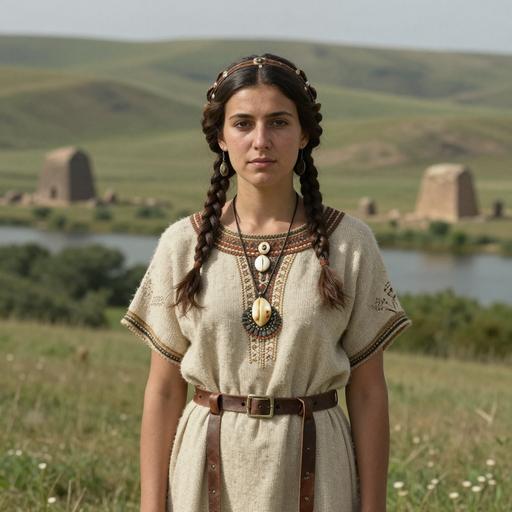
Portrait of ancient individual I1658 from Armenia, dated 3350 BCE
I1658
Armenia Armenia_EBA 3350 BCE Ancient Near Eastern Civilization F - U3a2
Portrait of ancient individual I1633 from Armenia, dated 2621 BCE
I1633
Armenia Armenia_EBA 2621 BCE Ancient Near Eastern Civilization F - H1u*
Portrait of ancient individual I1657 from Armenia, dated 3339 BCE
I1657
Armenia Armenia_EBA 3339 BCE Ancient Near Eastern Civilization F - U3a2a
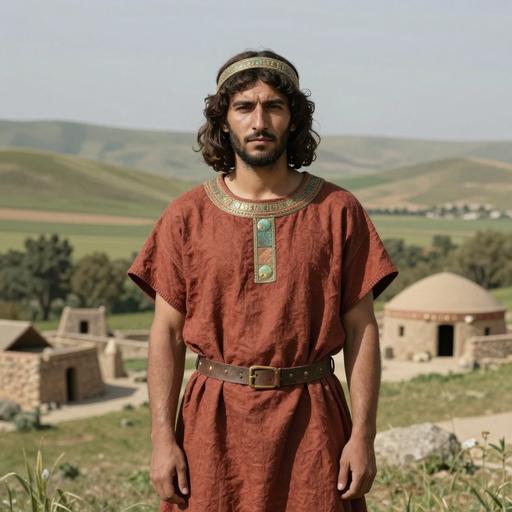
Portrait of ancient individual I1635 from Armenia, dated 2623 BCE
I1635
Armenia Armenia_EBA 2623 BCE Ancient Near Eastern Civilization M R1b1 X2f
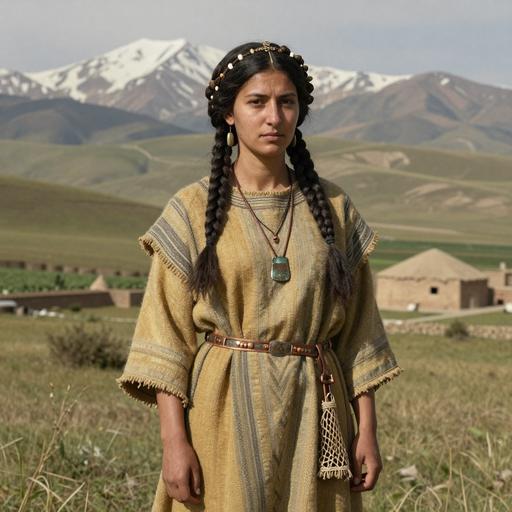
Portrait of ancient individual I14812 from Armenia, dated 3000 BCE
I14812
Armenia Armenia_EBA 3000 BCE Ancient Near Eastern Civilization F - U7b
AI Powered

AI Assistant

Ask questions about the Armenia EBA: Voices from the Highlands culture

AI Assistant by DNAGENICS

Unlock this feature
Ask questions about the Armenia EBA: Voices from the Highlands culture. Our AI assistant can explain genetic findings, historical context, archaeological evidence, and modern connections.
Sample AI Analysis

The Armenia EBA: Voices from the Highlands culture represents a fascinating chapter in human history...

Genetic analysis reveals connections to earlier populations while showing evidence of unique adaptations and cultural innovations. The ancient DNA samples provide insights into migration patterns, social structures, and the biological relationships between ancient populations.

This is a preview of the AI analysis. Unlock the full AI Assistant to explore detailed insights about:

  • Genetic composition and ancestry
  • Migration patterns and origins
  • Daily life and cultural practices
  • Modern genetic legacy
Use code for 40% off Expires May 31