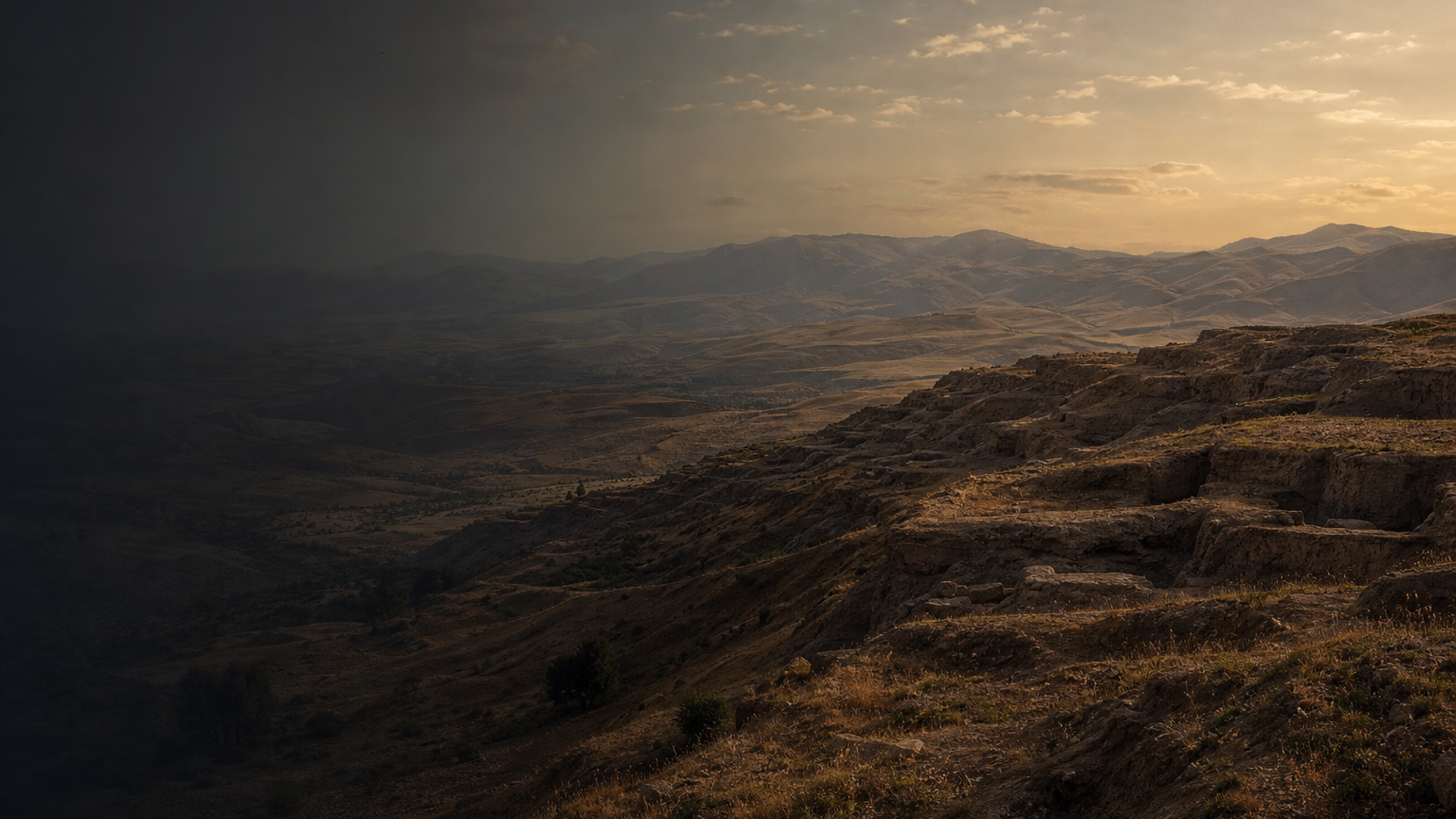
Ceramic workshops, storage pits, and metallurgy debris evoke a community of artisans and administrators. Archaeological assemblages at Arslantepe include painted and burnished pottery, metal artifacts, and sealings that imply control over production and redistribution. Residences and public structures in the Late Chalcolithic levels imply differentiated household sizes and craft specialization, while burial practices—variable in grave goods and treatment—hint at social hierarchy.
Subsistence likely combined dry farming, herding, and irrigation-fed plots along the Euphrates tributaries. Botanical and faunal remains from the region (where published) indicate cereals, pulses, sheep, goats and cattle as staples; such economies support both local consumption and surplus generation for exchange. Isotopic and skeletal analyses remain limited for this dataset, so reconstructions of diet and mobility are provisional.
Material culture and skeletal finds together sketch a lived world where kin networks, craft production, and long-distance exchange shaped daily rhythms. The presence of sealings and standardized weights in related stratigraphic layers suggests administrative practices that would later characterize Bronze Age urbanism.