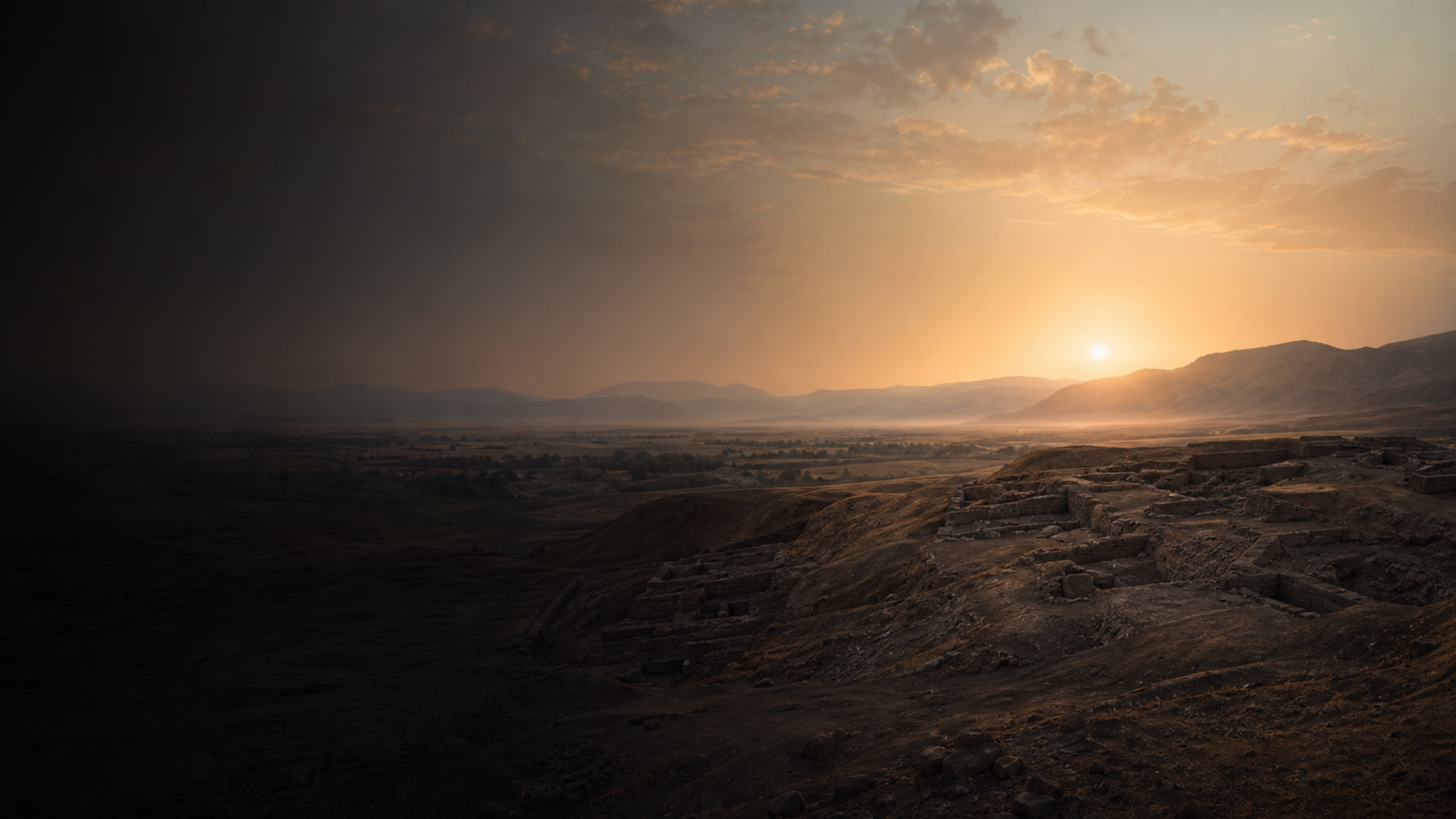
Arslantepe’s streets and courtyards would have thrummed with the work of metalworkers, potters, and scribes. Archaeological layers contain kilns, slag and crucible fragments, and finely made metal ornaments that imply skilled workshops and control over metallurgical knowledge. Domestic spaces show storage facilities and household tools, while larger administrative buildings suggest redistribution of goods and possibly tribute.
Dietary remains, where recovered, indicate a mixed agricultural base—cereals, pulses, and domestic animals—augmented by craft economies that produced prestige items and practical tools. Funerary practices at nearby cemeteries are variable, reflecting social differentiation: some burials include grave goods and metal objects, while others are simpler. The material record implies a society negotiating inequality, craft specialization, and long-distance trade.
Arslantepe’s built landscape—fortifications and public buildings—speaks to concerns about defense and the projection of authority. These archaeological signals combine with genetic data to help reconstruct who these people were: their ancestries, their family connections, and how migration or local continuity shaped daily life.