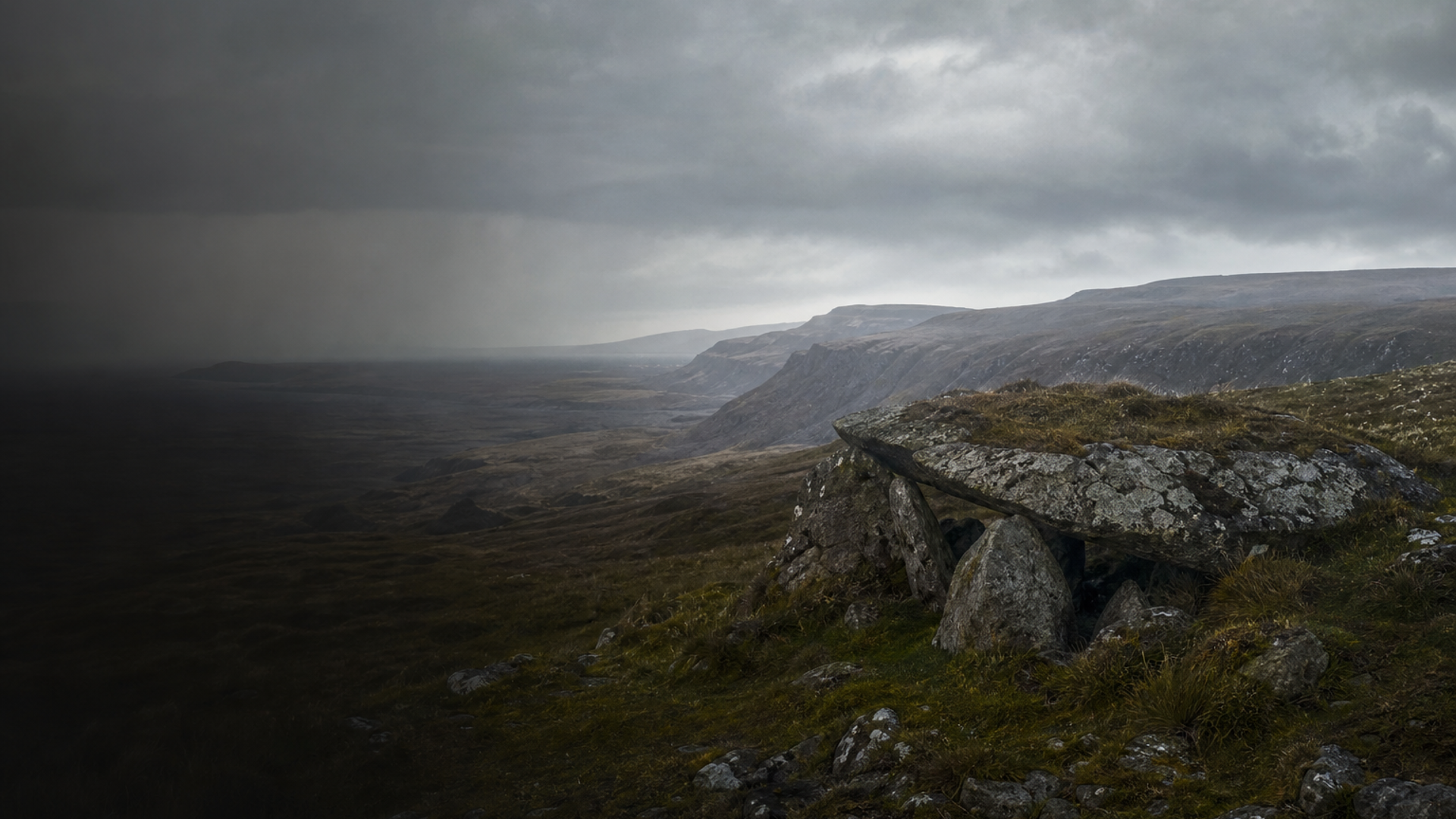
Genome-wide data from five individuals (Ireland_EN_MN) dated to 3764–3521 BCE reveal a striking concentration of Y-chromosome haplogroup I in four males and mitochondrial haplogroups dominated by U (three individuals), with single instances of T and V. Haplogroup I is often linked to long-standing male lineages in parts of Europe; its predominance here may reflect local continuity, male-biased survival of Mesolithic lineages, or early admixture patterns.
Mitochondrial U is commonly associated with pre-Neolithic hunter-gatherer maternal lineages in Europe, so its presence in three of the five samples suggests that maternal ancestry from local forager populations persisted into the Neolithic horizon sampled at these sites. Haplogroups T and V are also known from Neolithic and later contexts across Europe, underscoring a mixed maternal landscape.
These genetic signals fit a model of admixture between incoming early farming groups and local hunter-gatherers, but caution is essential: the sample count is very small (n=5). With fewer than ten genomes, statistical power is limited and patterns could change as more samples are analyzed. Archaeogenetic interpretation should therefore be framed as provisional, highlighting plausible scenarios rather than firm demographic reconstructions. Continued sampling from Ashleypark, Parknabinnia, Poulnabrone and other Neolithic sites in Ireland will be needed to test whether the Y-I predominance and mtDNA mix reflect broader population structure or local, temporally restricted events.