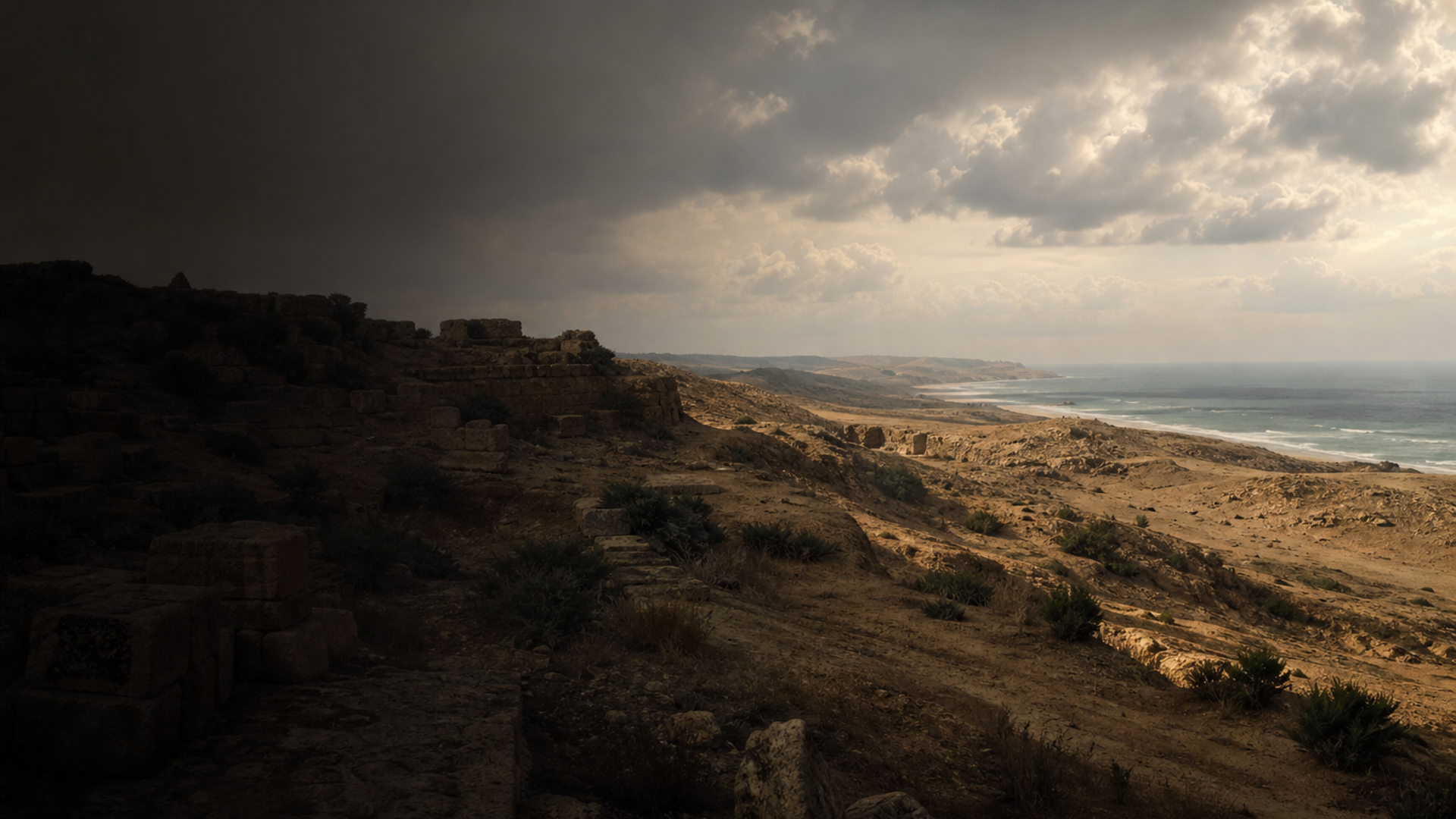
Walk the shoreline of Iron Age Ashkelon and you would have seen a layered cityscape: warehouses and docks by the water, densely packed houses and workshops inland, and cemeteries on the margins. Archaeological remains — storage jars, loom weights, imported amphorae, metal tools, and culinary remains — suggest an economy built on mixed agriculture, craft production, and maritime trade.
Social life was likely cosmopolitan and hierarchical. Craft specialists, sailors, merchants, and farmers shared a landscape shaped by seasonal trade winds and regional networks. Burial customs recovered in the cemeteries around Ashkelon reveal a diversity of mortuary practices; some graves display local traditions while others include exotic goods, hinting at wide social horizons.
Archaeological layers dated to the 12th–11th centuries BCE record both disruption and adaptation: households reused earlier structures, incorporated foreign objects, and negotiated new identities in a changing geopolitical scene. These shifting lifeways form the human backdrop to the tiny genetic sample we have from the site.