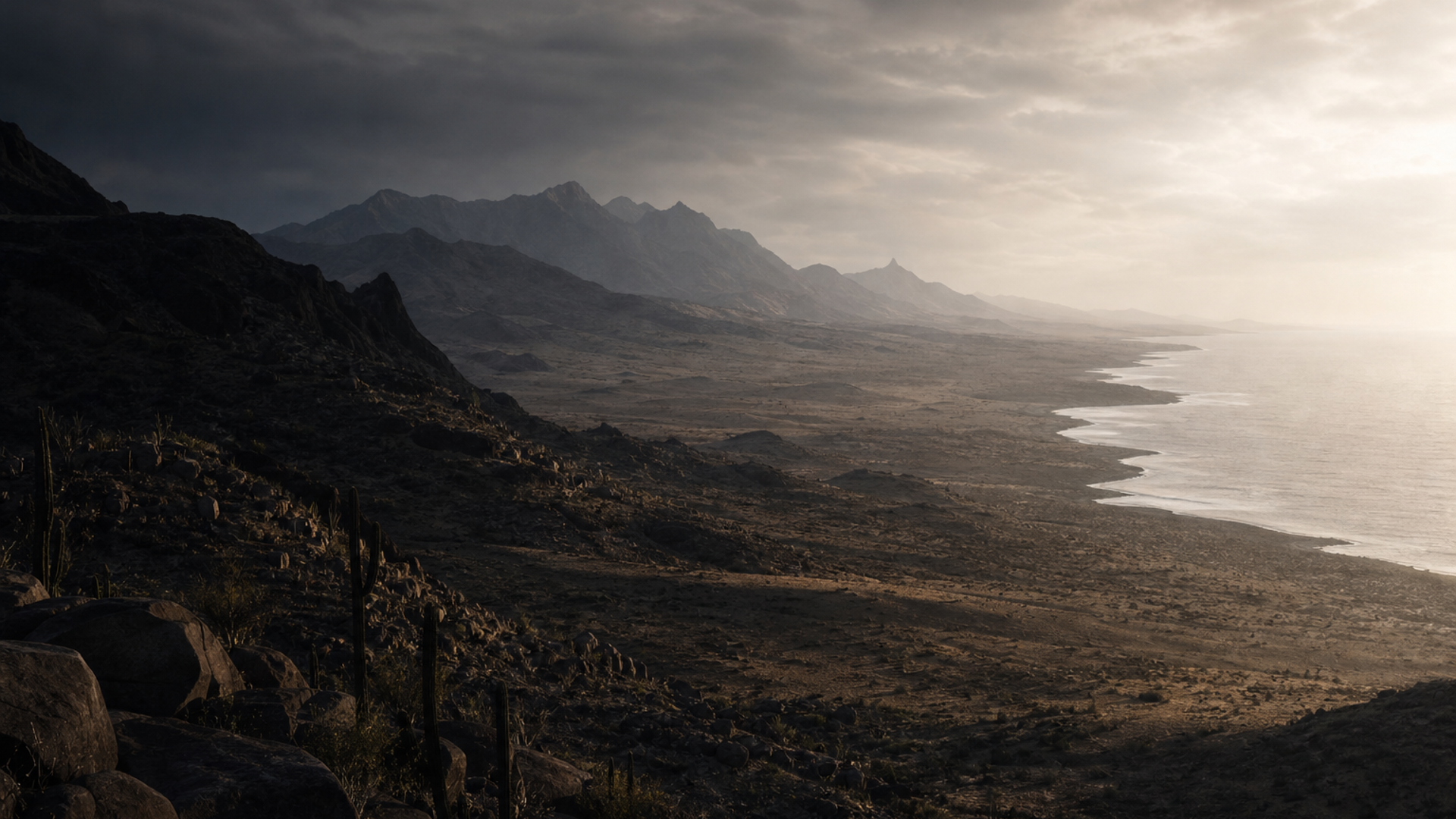
Daily life on the Baja shoreline was shaped by tide and season. Shell middens and hearth features excavated at Iron Springs and Comondú preserve a tangible diet: abundant marine shellfish, fish remains, and episodic terrestrial hunting. Archaeological data indicates small, mobile household groups exploiting rocky shorelines, estuaries, and intermittent freshwater sources. Sheltered coves would have served as temporary base camps for processing catches, repairing nets or lines, and social exchange.
Material culture is modest but expressive. Stone tools—small blades, scrapers, and ground stone fragments—speak to routine tasks: filleting fish, working hides, and preparing plant foods. Occasional ornaments and modified shells suggest personal adornment and social signaling. Spatial patterns of middens and hearths imply short-term aggregations rather than permanent nucleated villages, consistent with ethnographic analogues of coastal hunter-gatherers.
Social organization likely emphasized kin ties and flexible alliances, with mobility strategies tailored to tidal and seasonal productivity. Yet because excavation footprints are limited and ancient DNA samples are only two, reconstructions of social complexity remain tentative. The archaeological traces evoke a resilient human presence shaped by the light, wind, and sea of Baja’s shores.