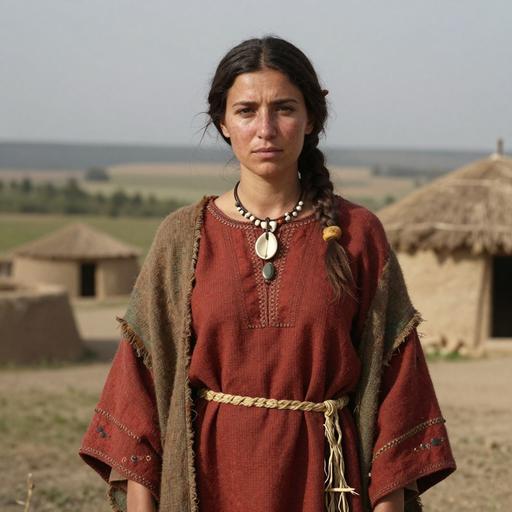
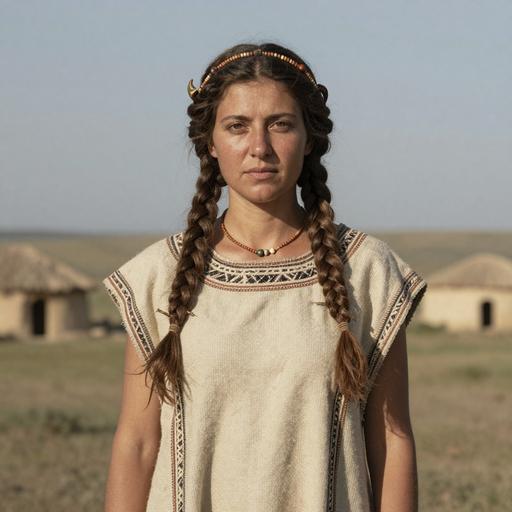
Domestic life in the Balkan Chalcolithic is visible in house plans, storage pits and workshop areas where people repaired tools, processed grain and produced copper objects. Tells such as Yunatsite and Tell Ezero preserve layered floors and hearths that suggest multi‑generational reuse of space. Ceramic assemblages include both finely burnished ware and more utilitarian coarse pots, implying varied culinary practices and household economies.
Burial practice is heterogeneous: inhumations in cemeteries like Merichleri Kairyaka necropolis and occasional intramural burials show variable body orientation, grave goods and placement, hinting at differences in status, age or belief. Funerary objects — bone tools, pottery and occasional metal items — suggest social differentiation, though most burials contain modest assemblages. Subsistence is dominated by mixed farming: archaeobotanical remains indicate cereals and pulses, while faunal remains point to domesticated sheep, goats, cattle and pigs with continued exploitation of wild resources.
Craft specialization is evidenced by small copper working areas and polished stone tool production; trade networks appear to have connected inland tells with river routes and the Adriatic coast, visible in non-local raw materials. Social life likely combined kin-based household organization with broader communal rituals centered on seasonal cycles and material exchange. Archaeological evidence indicates a resilient, adaptive society negotiating new technologies and long‑standing local practices.