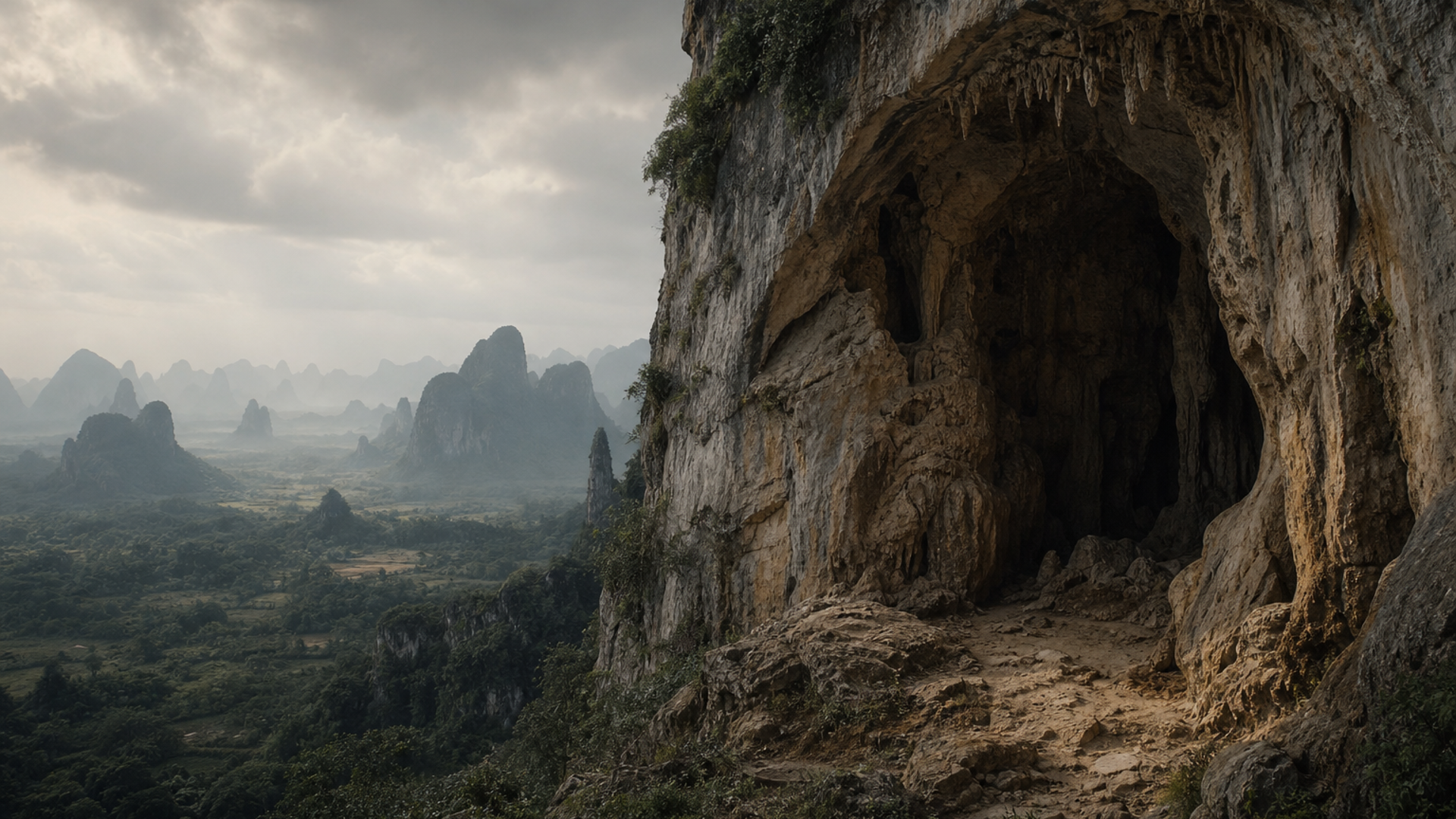
Archaeological traces from Guangxi’s lowlands and caves suggest a lifeway adapted to subtropical environments: wet-rice cultivation in river valleys, supplemented by fishing, foraging, and hill-side horticulture. Although detailed artifact inventories from Balong Cave are limited, the cave context itself implies varied mortuary practices — cave interments or secondary deposition are common in south China’s limestone landscapes and reflect both practical and symbolic choices.
Socially, the era saw heightened regional interaction: trade routes carried ceramics, metals, and ideas between inland valleys and coastal ports. Local communities would have negotiated these flows, adopting new material forms while maintaining vernacular craft traditions. Ethnic identities in the historical record are fluid; present-day Yao and other southern groups occupy the region, but direct cultural continuity to early medieval populations at Balong Cave cannot be assumed without stronger archaeological and genetic linkage.
Preservation in cave contexts can bias what archaeologists recover — bone survivorship, selective burials, and sparse grave goods mean our window into daily life is partial. The existing assemblage offers evocative glimpses rather than a complete portrait.