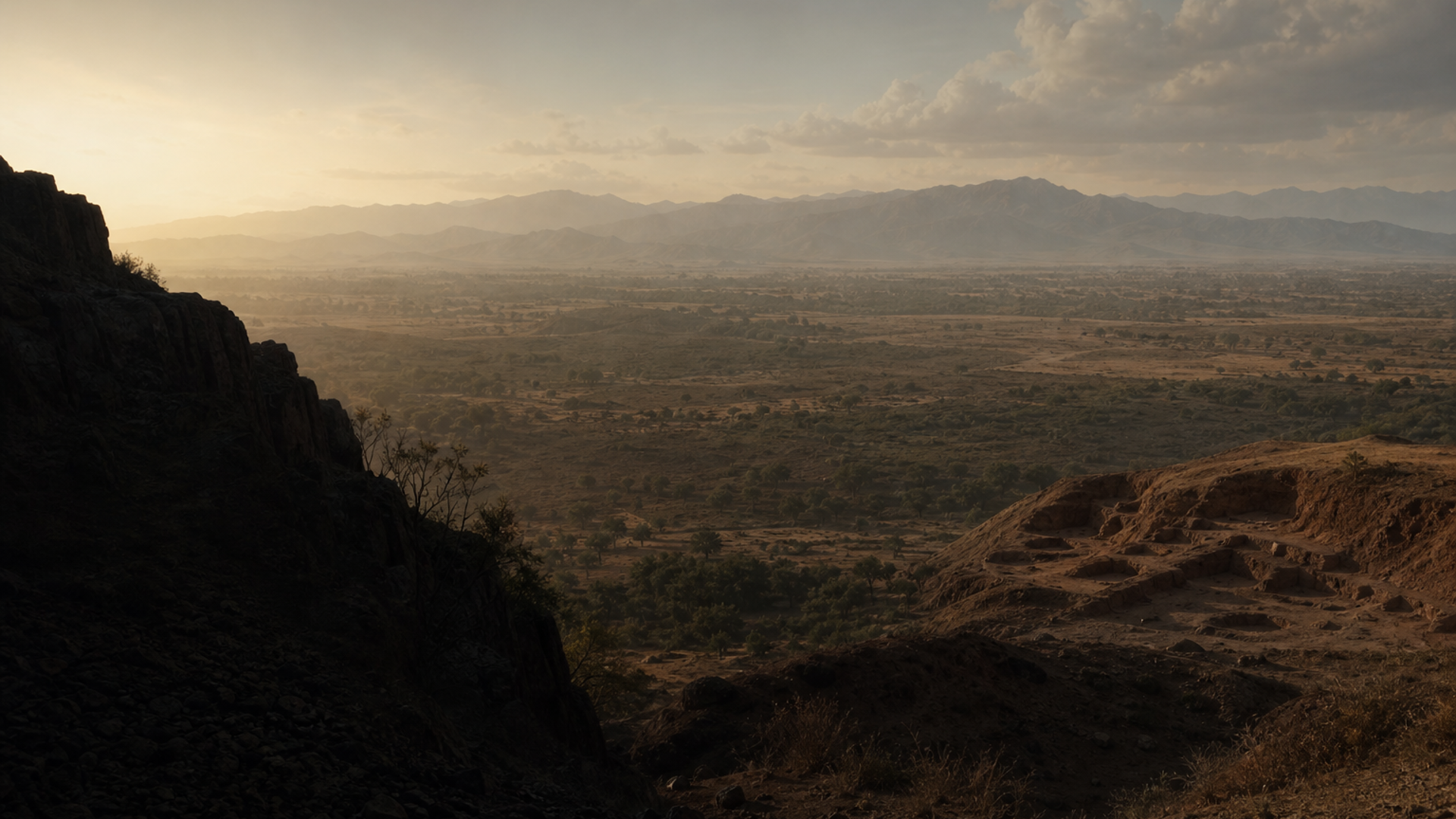
Ban Chiang sits like a bright jewel in the red earth of northeastern Thailand, its stratified mounds whispering the emergence of Bronze Age lifeways between roughly 1200 and 547 BCE. Archaeological data indicates a long sequence of occupation marked by painted pottery, early copper-alloy experimentation, and varied burial treatments at the eponymous site of Ban Chiang (Udon Thani province). Cultural continuity in ceramic styles and metallurgy suggests local innovation rather than wholesale population replacement. The modest set of four ancient genomes from this period provides a first molecular window: maternal lineages (mtDNA haplogroups M, R, and B) align with lineages common across prehistoric Mainland Southeast Asia, while a single observed Y-DNA NO lineage indicates paternal affinity with broader East/Southeast Asian clades. Limited evidence suggests these people were part of a dynamic tapestry of local foragers, incoming agriculturalists, and regional networks of exchange. Because the genetic sample size is very small, any narrative about migration, demographic shifts, or language spread must remain provisional. Still, when bones, bronzes, and genomes are read together, Ban Chiang emerges as a place where technological creativity and deep ancestral ties to Southeast Asian maternal and paternal lineages coalesced into recognizable Bronze Age communities.